Economy
Consumers Are Pulling Back—and Growth Is at Risk
Spending stalled in early 2026, raising pressure for rate cuts
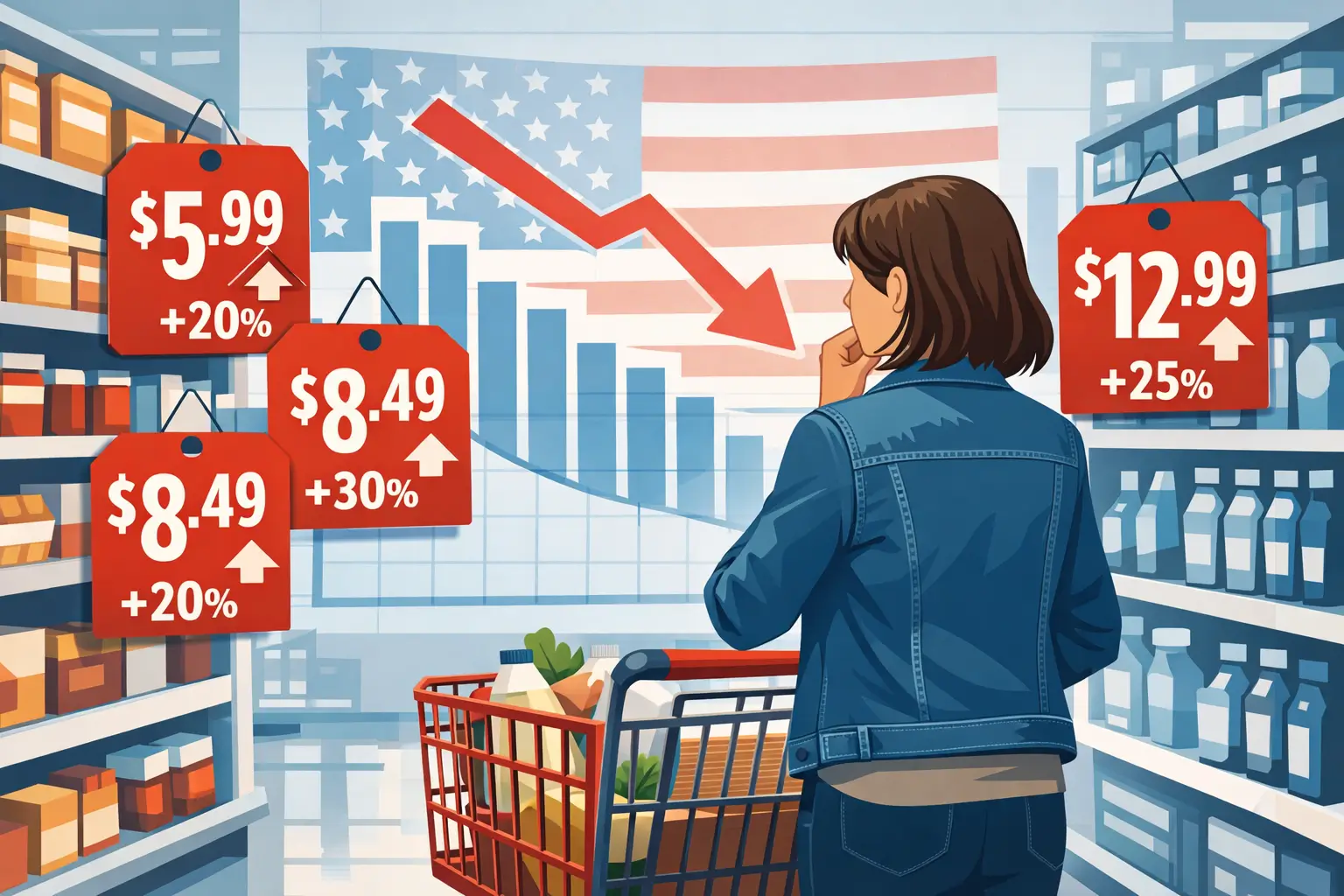
U.S. spending has stalled, and the risk to growth is rising.
Inflation-adjusted consumer spending rose just 0.1% in February 2026 after no growth in January, according to data released 03/28/2026 (ET). That slowdown matters because household spending drives roughly two-thirds of U.S. economic output.
Even small changes in demand can quickly affect hiring, corporate sales, and interest-rate decisions. Markets are now watching this shift closely because the consumer has been the economy’s strongest support since 2021.
Rising Costs Are Changing Behavior
Households are feeling pressure again.
Consumer sentiment fell sharply in April 2026, reaching one of its weakest readings in more than a decade. At the same time, energy prices moved higher as tensions in the Middle East disrupted oil supply, pushing fuel costs up and reducing purchasing power.
This is already changing how people spend.
Consumers are delaying large purchases such as travel, electronics, and home upgrades while continuing to pay for essentials. Retailers are responding with more discounts, and service-sector growth has slowed as demand becomes less predictable.
Companies are starting to prepare for weaker sales in the second half of the year.
The Federal Reserve Is Approaching a Turning Point
The U.S. consumer has carried the economy for years. That support is now showing signs of strain.
If spending remains weak through mid-2026, the Federal Reserve may face a difficult decision. Keeping interest rates high could slow the economy further. Cutting rates too soon could push inflation back up.
Markets are already adjusting expectations for possible rate cuts later in 2026. Investors understand that consumer behavior is becoming the key signal for the economic outlook.
The next few months will be critical. If spending stabilizes, growth may continue at a slower pace. If demand weakens further, businesses could reduce hiring, and recession risks would rise.
A sustained drop in consumer spending would likely force earlier rate cuts and could mark the start of a broader economic slowdown.
See also: Next CPI Report Could Shift Rate Cut Expectations in 2026
---
FAQ
Why is consumer spending so important to the economy?
Consumer spending represents roughly two-thirds of U.S. GDP, making it the primary driver of economic growth.
What changed in early 2026?
Real spending stalled, rising just 0.1% in February 2026 after no growth in January, while consumer confidence dropped sharply in April.
How could this affect Federal Reserve policy?
Persistent weakness in spending would increase pressure on policymakers to lower interest rates later in 2026.
Does slower spending mean a recession is coming?
Not immediately, but continued declines in demand often signal rising recession risk.
---
Sources and Further Reading
- Personal Income and Outlays — Bureau of Economic Analysis — 03/28/2026 — https://www.bea.gov
- Surveys of Consumers — University of Michigan — 04/11/2026 — https://www.sca.isr.umich.edu
- Federal Reserve Policy Statement — Federal Reserve — 03/19/2026 — https://www.federalreserve.gov
---