Economy
What the Latest CPI and Jobs Data Mean for the Fed’s Next Move
February inflation near target meets softer payrolls, complicating the path to rate cuts
Inflation Stabilizes but Remains Uneven
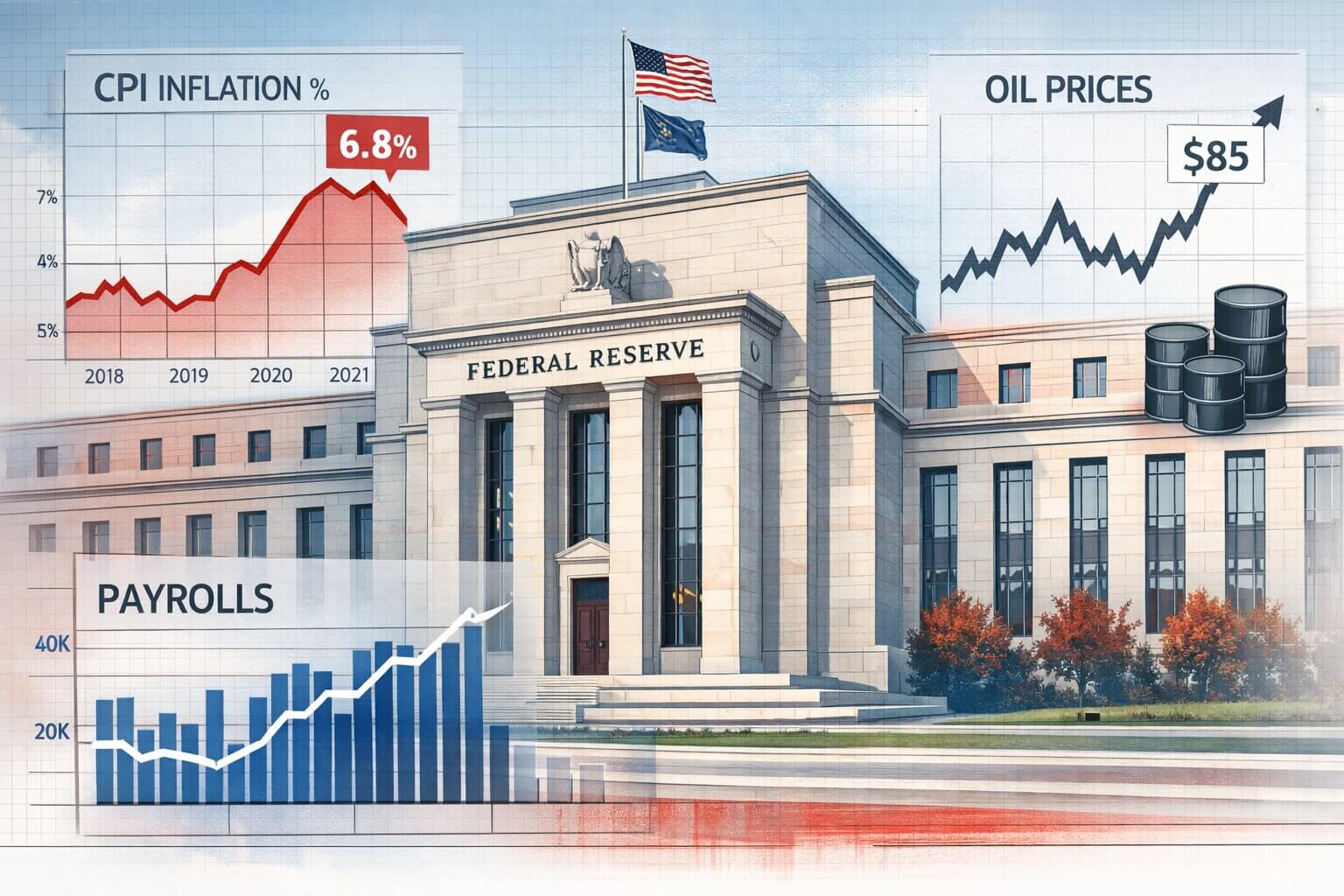
U.S. inflation data released on 03/12/2026 (ET) showed the Consumer Price Index (CPI) continuing its gradual convergence toward the Federal Reserve’s 2% target. Headline CPI rose 2.4% year-over-year in February 2026, while core CPI—excluding food and energy—held at 2.6%. On a monthly basis, both measures posted modest gains, reinforcing the narrative of disinflation.
Yet beneath the surface, the composition remains uneven. Services inflation, particularly in housing and healthcare, continues to run above 3%, suggesting sticky price pressures in labor-intensive sectors. Goods prices, by contrast, remain subdued.
Labor Market Shows Signs of Cooling
At the same time, labor market data released on 03/07/2026 (ET) points to a gradual slowdown. Nonfarm payrolls increased by 145,000 in February, down from prior months, while the unemployment rate ticked up to 4.1%.
Wage growth also moderated, with average hourly earnings rising 3.8% year-over-year. For policymakers, this combination signals easing demand pressures without a sharp deterioration—so far.
Energy Prices Reintroduce Inflation Risk
Complicating the picture, energy markets have turned volatile. As of 03/15/2026 (ET), Brent crude traded near $92 per barrel, reflecting renewed geopolitical tensions in key producing regions.
Higher energy costs risk feeding back into headline inflation, potentially delaying further progress toward the Fed’s target. This dynamic underscores the fragility of the current disinflation trend.
Fed Policy Path: Soft Landing or Slowdown?
The Federal Reserve now faces a narrowing policy window. With the federal funds rate held at 5.25%–5.50% as of 03/17/2026 (ET), markets are increasingly pricing in potential rate cuts later this year.
But the question remains: is the economy heading for a soft landing—or an eventual slowdown?
Cooling employment data supports the case for easing, yet persistent services inflation and rising energy prices argue for caution. Premature rate cuts could reignite inflation, while holding rates too high risks overtightening.
For investors, this tension is likely to define market volatility in the months ahead. The Fed’s next move will depend not just on headline inflation, but on whether underlying pressures truly fade.
AlphaPulse’s view: the path to rate cuts is no longer a question of “when,” but “how safely.”
---
FAQ
What does the latest CPI report show?
February 2026 CPI indicates inflation is nearing the Fed’s 2% target, though services inflation remains elevated.
Why is the labor market important for inflation?
A cooling labor market reduces wage pressure, which can help lower services inflation over time.
How do oil prices affect inflation?
Rising oil prices increase transportation and energy costs, which can push overall inflation higher.
---
Sources and Further Reading
- Consumer Price Index Summary — U.S. Bureau of Labor Statistics — 03/12/2026 — https://www.bls.gov/news.release/cpi.nr0.htm
- Employment Situation Summary — U.S. Bureau of Labor Statistics — 03/07/2026 — https://www.bls.gov/news.release/empsit.nr0.htm
- Oil Market Report — International Energy Agency — 03/2026 — https://www.iea.org/reports/oil-market-report-march-2026
- Federal Reserve Policy Statement — Federal Reserve — 01/31/2026 — https://www.federalreserve.gov/monetarypolicy.htm
- U.S. Economic Outlook — Reuters — 03/15/2026 — https://www.reuters.com/markets/us
---