Personal Finance
Credit Card Rates Near 24% Are Squeezing Consumers
High borrowing costs are starting to slow spending now
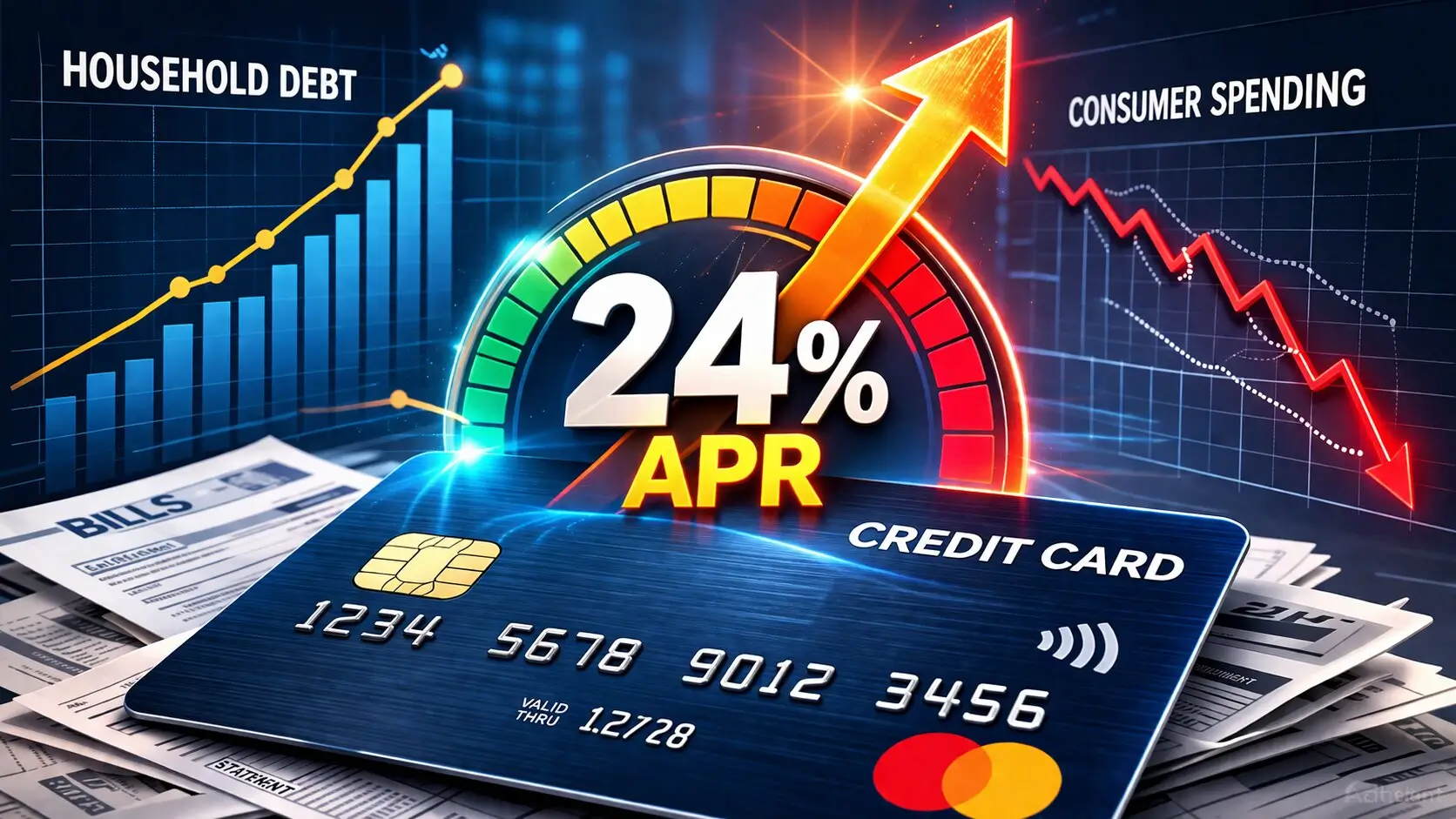
Credit card costs remain high — and household budgets are tightening.
As of 04/15/2026, average credit card APRs are still running between 20% and 24%, even after the Federal Reserve began cutting interest rates on 12/18/2025. That mismatch is becoming a clear warning signal. Borrowing remains expensive, and repayment pressure is building.
At the same time, total U.S. credit card balances have crossed $1 trillion, according to data released 02/13/2026. Delinquencies are rising, and spending growth is beginning to cool. What looked like a temporary rate spike is turning into a structural strain on consumers.
---
Rate Cuts Happened — But Borrowing Costs Stayed High
The Federal Reserve shifted toward easing in late 2025 to support economic growth. Financial markets expected relief to reach households quickly.
Instead, credit card rates have barely moved.
Unlike mortgages or auto loans, credit card pricing reflects risk and profit margins more than policy rates. Banks tend to keep rates elevated when repayment risk increases, even as benchmark rates fall.
That dynamic matters now. If borrowing costs remain near 24%, households are likely to reduce discretionary spending through 2026. Investors are already watching retail and consumer earnings for early signs of weakness.
---
Debt Levels Are Reaching a Breaking Point
Crossing the $1 trillion credit card balance mark signals more than strong demand. It shows growing reliance on revolving debt during a period of high interest costs.
That combination increases financial stress.
Delinquencies have been trending higher since 2024, particularly among lower-income borrowers. Retail sales data released 03/17/2026 shows early signs of slower momentum. When credit becomes expensive, consumers typically cut back on travel, dining, and big-ticket purchases first.
Those shifts can ripple quickly into corporate revenue and hiring decisions.
---
What Markets Are Watching Next
High credit card rates are now influencing both consumer behavior and financial policy.
Borrowers are moving toward balance transfers and personal loans to reduce costs. Lenders are tightening standards as risk rises. Policymakers are again debating interest rate caps ahead of the 2026 election cycle, adding regulatory uncertainty for banks.
The immediate threat is not a sudden financial crisis.
It is a gradual slowdown.
If credit card rates stay near current levels while wage growth cools, consumer demand could weaken faster than expected — a risk that could pressure retail sales, bank earnings, and overall economic growth later in 2026.
---
FAQ — Credit Card Rates and Consumer Risk
Why are credit card rates still high after Federal Reserve cuts?
Banks set credit card rates based on risk and profitability. When delinquency risk rises, rates tend to remain elevated even if policy rates fall.
How high are credit card interest rates in 2026?
As of April 2026, average U.S. credit card APRs remain roughly between 20% and 24%.
Why does $1 trillion in credit card debt matter?
It indicates heavy reliance on borrowing at high rates, increasing the likelihood of repayment stress and slower consumer spending.
What should investors watch next?
Monitor delinquency rates, retail sales trends, and credit availability. These indicators will signal whether consumer pressure is spreading.
---