Markets
Earnings Volatility Is Suddenly Driving Stocks
Guidance risk is moving markets right now.
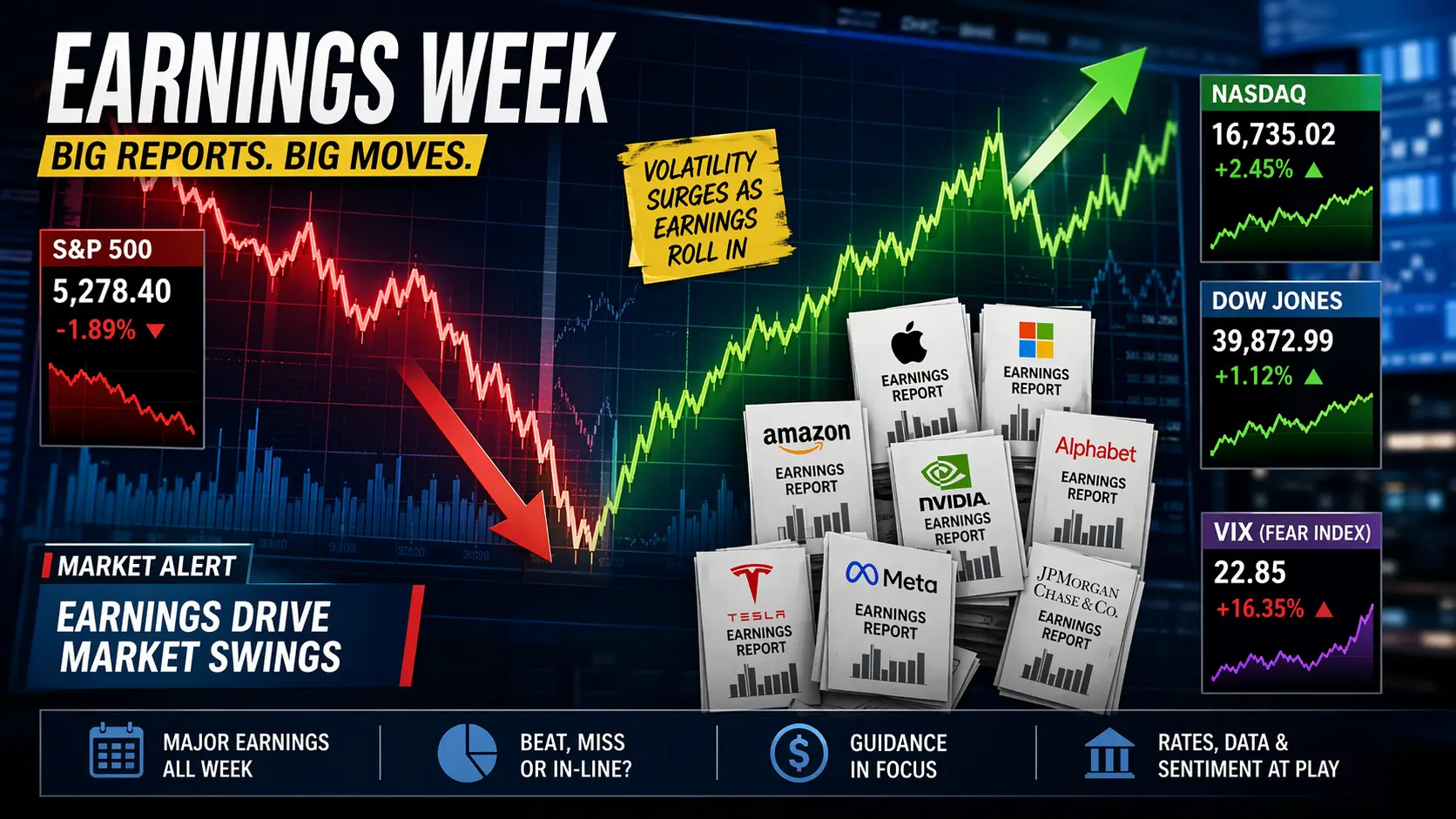
Stocks are swinging sharply as earnings guidance resets expectations.
A dense wave of corporate reports through 04/23/2026 is forcing investors to reassess growth and margins in real time. The shift accelerated after Tesla reported weaker profitability and a softer delivery outlook, triggering immediate volatility across major indices.
The pressure is spreading quickly. Several high-weight companies are reporting within the same few trading sessions, amplifying daily moves in the S&P 500 and Nasdaq. Investors are reacting less to past results and more to what companies signal about demand for the rest of 2026.
This shift—from earnings beats to forward guidance—has become the dominant driver of daily market direction.
Why Guidance Matters More With Rates Still High
Interest rates remain restrictive, and equity valuations are still elevated. That combination raises the stakes for every earnings call.
Investors are focusing on three signals right now:
- Margins: Are costs stabilizing or still rising?
- Demand: Are consumers pulling back or holding steady?
- Spending: Are companies delaying investment plans?
Even small changes in these signals can move markets quickly. When executives lower expectations, stocks often fall within minutes. When guidance holds firm, markets stabilize just as fast.
This sensitivity is new. In the low-rate years, strong earnings often supported stocks regardless of outlook. Today, forward demand visibility matters more than backward-looking results.
What Happens Next for Markets
The immediate risk is a chain reaction of weaker outlooks.
If several large companies signal slower sales or tighter margins, analysts are likely to cut earnings forecasts for the second half of 2026. That would pressure valuations and extend volatility into the next quarter.
But stability remains possible. If guidance holds steady—especially in technology and consumer sectors—stocks could regain momentum despite high borrowing costs. That would signal demand is stronger than feared.
For now, earnings week is acting like a stress test for the market. The next round of corporate guidance will determine whether volatility fades—or becomes a persistent risk into mid-2026.
---
FAQ
Why are markets moving more during this earnings week?
Many large companies are reporting within the same few days, causing rapid changes in expectations and heavier trading activity.
Why is guidance more important than earnings right now?
High interest rates make future demand and profitability more important than past results.
Could weak earnings guidance push stocks lower in 2026?
Yes. Broad downward revisions to earnings forecasts would likely pressure valuations and increase volatility.
What is the key signal investors should watch next?
Forward revenue and margin guidance from major technology and consumer companies.
---
Sources and Further Reading
- Tesla Q1 Financial Results — Tesla Investor Relations — 04/22/2026 — https://ir.tesla.com
- Corporate Profits and Economic Outlook — Federal Reserve — 04/2026 — https://www.federalreserve.gov
---