Business
GE Vernova Surge Signals AI Power Supply Risk
Data center growth is forcing investors to rethink energy capacity
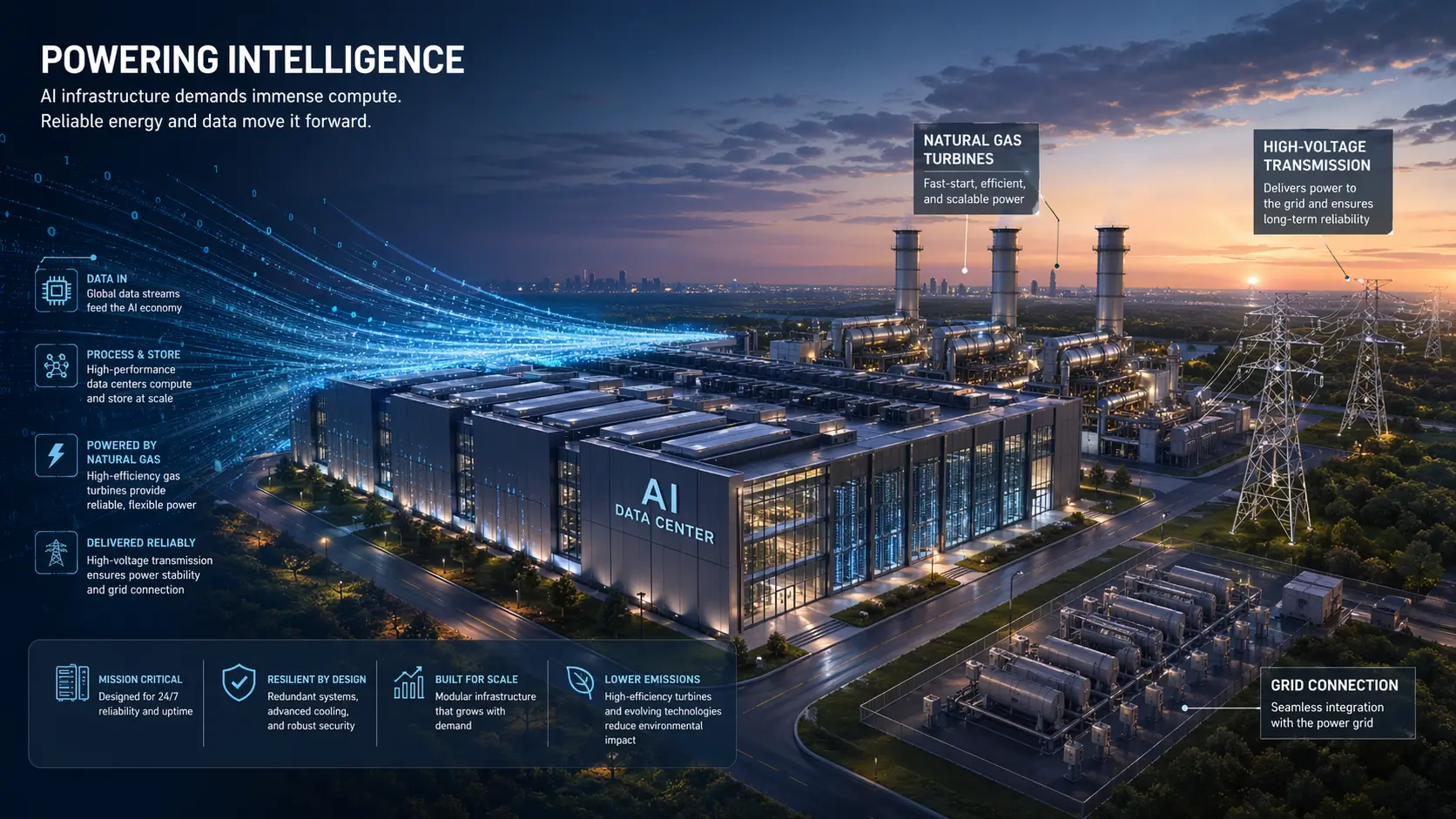
GE Vernova shares jumped on 04/22/2026 after the company raised its full-year outlook.
The move signaled a new constraint in the AI economy: electricity supply is becoming the limiting factor.
Investors are rapidly repricing power equipment companies as long-term infrastructure plays, not cyclical industrial stocks.
---
Guidance Upgrade Confirms Demand Is Accelerating
What changed on 04/22/2026
GE Vernova lifted its 2026 revenue and margin outlook after reporting stronger orders tied to AI-driven electricity demand. The company directly linked the revision to data center expansion and grid investment.
Key signals released on 04/22/2026 (ET):
- Higher full-year revenue guidance for 2026
- Expanding backlog for generation and grid equipment
- Rising demand for gas turbines supporting AI data centers
- Improved margin expectations tied to tighter supply capacity
This was not a routine earnings update.
It was a visibility shift.
Large infrastructure orders lock in revenue for years. Markets react quickly when that predictability increases.
---
AI Is Turning Electricity Into the Next Bottleneck
Electricity demand from AI systems is rising faster than expected. That pressure is now driving capital spending across utilities and energy infrastructure providers.
Industry projections entering 2026 indicate:
- U.S. data center electricity demand could double before 2030
- Grid expansion projects are accelerating nationwide
- Utilities are committing to multi-year investment cycles
This changes how investors think about the AI supply chain.
The first phase of the AI boom focused on semiconductors and cloud computing. The next phase depends on physical capacity — turbines, transmission lines, and grid reliability.
Power equipment companies are becoming strategic assets in that transition.
---
What Investors Should Watch Next
The next stage of the AI economy will depend on how quickly energy infrastructure expands. Execution speed now matters as much as technology development.
Investors should monitor four signals closely:
- New turbine and grid equipment orders from hyperscale operators
- Utility capital spending growth in 2026 and 2027
- Equipment delivery timelines and supply constraints
- Electricity demand forecasts tied to AI deployment
The biggest risk is delay. If permitting slows, grid capacity tightens, or data center construction pauses, revenue growth across the power sector could shift later into the cycle.
---
## Recommended Reading
Energy Stocks Are Quietly Staging a Comeback in 2026
Rising infrastructure demand is reshaping the outlook for the energy sector.
---
FAQ
Why did GE Vernova stock surge on 04/22/2026?
The company raised its 2026 guidance after reporting stronger demand for power generation and grid equipment supporting AI data centers.
Why does artificial intelligence increase electricity demand?
AI systems require massive computing infrastructure, which consumes large amounts of power and forces utilities to expand generation and grid capacity.
Which sectors benefit from rising AI electricity demand?
Utilities, turbine manufacturers, grid technology providers, and energy infrastructure companies are likely beneficiaries.
What is the main risk to this trend?
Infrastructure delays — including permitting, supply chain constraints, or slower data center construction — could postpone expected revenue growth.
---
Sources and Further Reading
- U.S. Data Center Electricity Demand Forecast — International Energy Agency — 02/2026 — https://www.iea.org
- AI Infrastructure and Power Consumption Outlook — Goldman Sachs Research — 03/2026 — https://www.goldmansachs.com
- Utility Capital Spending Trends and Grid Investment — U.S. Energy Information Administration — 01/2026 — https://www.eia.gov
---