Markets
How Big Money Actually Moves Markets
Institutional flows, liquidity zones, and dealer hedging often drive price swings more than headlines
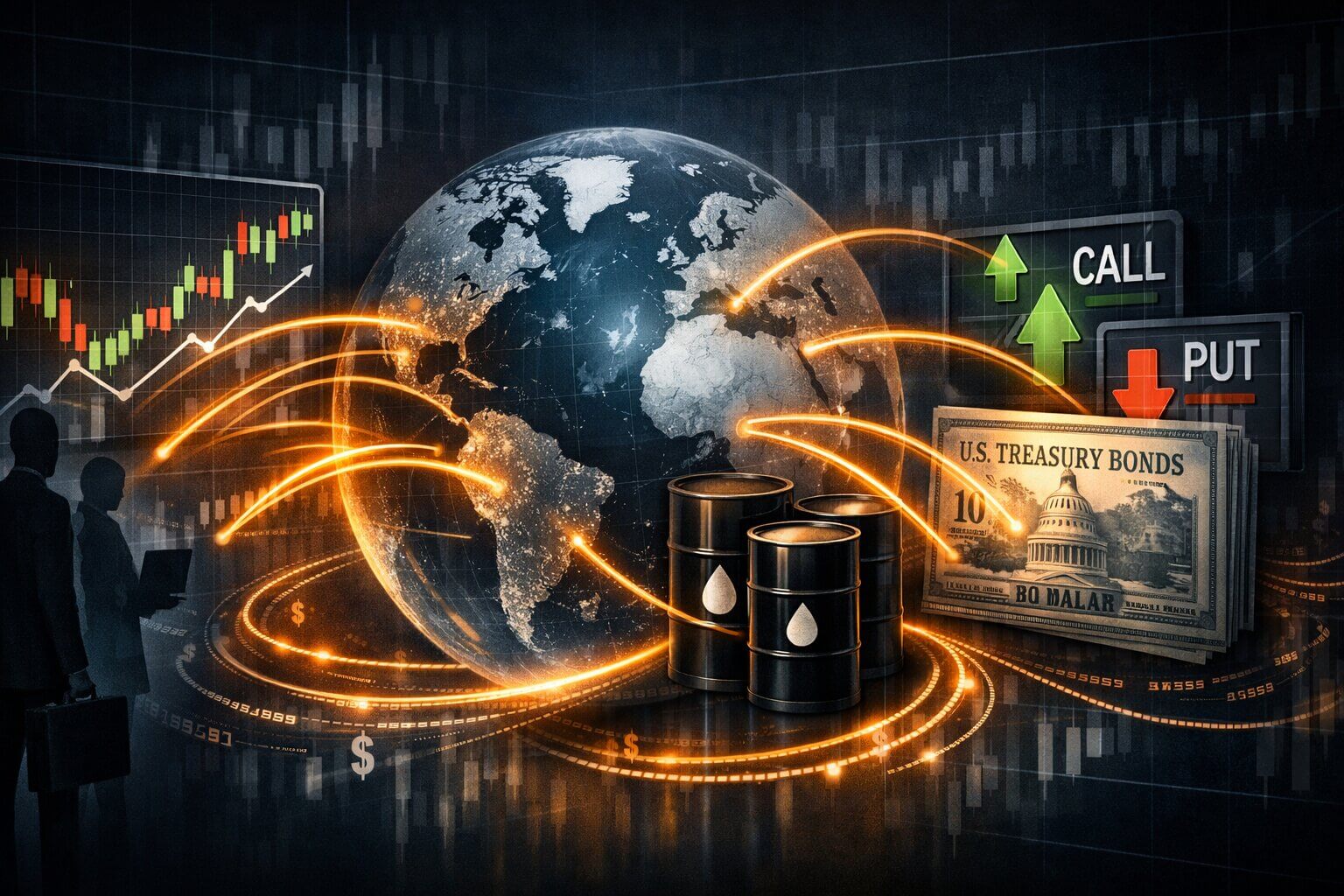
Financial markets often appear to move in response to headlines: an inflation report surprises investors, oil prices spike, or a central bank signals policy changes. Yet beneath these visible catalysts lies a deeper force that frequently determines the scale and speed of market moves—institutional capital flows.
In March 2026, markets are experiencing precisely this dynamic. Oil-driven volatility, equity fund outflows, and shifting hedge-fund positioning have created a fragile environment where liquidity conditions and portfolio adjustments amplify price swings across equities, bonds, and commodities.
Understanding these forces requires looking beyond the daily news cycle and focusing instead on how large pools of capital reposition themselves.
---
Markets Don’t Move on Headlines Alone
Retail investors often interpret market movements through the lens of breaking news. But professional traders understand that headlines tend to act as catalysts rather than root causes.
Short-term price action is frequently shaped by the mechanical behavior of institutional portfolios. Large asset managers, pension funds, and hedge funds collectively control tens of trillions of dollars in capital. When these investors adjust their exposures—even slightly—the resulting flows can overwhelm day-to-day liquidity.
Recent data illustrate the point. In the week ending 03/14/2026, global equity funds recorded notable outflows while energy-related assets attracted inflows amid rising oil prices. Such reallocations can create supply-demand imbalances that move markets regardless of broader narratives.
This dynamic explains why markets sometimes move sharply even when news appears relatively modest.
---
The Institutional Flow Machine
Hedge Funds and Tactical Positioning
Hedge funds often serve as the fastest-moving institutional participants. Using leverage, derivatives, and short selling, they rapidly adjust exposures based on macro signals and momentum.
Prime brokerage data from major investment banks in mid-March 2026 indicate that hedge funds have increased exposure to energy-linked trades while trimming equity risk in technology and growth sectors.
These adjustments are not merely directional bets—they often involve complex relative-value strategies. For instance, funds may simultaneously short equity indexes while buying commodity futures, or rotate capital across sectors to reflect macro expectations.
When many funds implement similar trades at once, markets can experience sudden bursts of volatility, particularly in sectors with limited liquidity.
---
Pension Funds, Asset Managers, and Portfolio Rebalancing
While hedge funds move quickly, long-term institutional investors—such as pension funds and insurance companies—move far larger sums.
These investors periodically rebalance portfolios to maintain target allocations between stocks and bonds. When markets move significantly, rebalancing flows can become substantial.
For example, if equities outperform bonds during a quarter, pension funds may sell stocks and buy bonds to restore their allocation targets. These adjustments often occur around month-end or quarter-end windows, creating predictable bursts of trading activity.
Passive investment vehicles also play a growing role. ETF flows, index rebalancing, and benchmark adjustments can channel billions of dollars into or out of specific securities in short periods.
---
Liquidity Zones and Market Microstructure
Dealer Hedging and Options Gamma
Another powerful force shaping markets lies within the options market.
Market makers who sell options typically hedge their exposure dynamically by buying or selling the underlying assets. This hedging activity creates what traders refer to as gamma effects, where price movements trigger additional trading flows.
If large numbers of options are clustered around certain strike prices, those levels can act as liquidity zones where dealer hedging amplifies moves.
In practical terms, this means that once a market approaches a key options level, small price changes can cascade into larger movements as dealers rebalance their hedges.
---
Liquidity Gaps and Volatility Cascades
Liquidity is rarely uniform across financial markets. Instead, it tends to cluster around specific price levels or trading sessions.
When markets move quickly through these areas, liquidity gaps can appear—zones where few orders exist to absorb large trades.
In such environments, relatively modest flows can produce disproportionate price changes. Algorithmic trading systems may accelerate these moves by reacting to momentum signals and volatility thresholds.
The result is a familiar market pattern: a sudden surge in volatility that appears disconnected from the initial news catalyst.
---
Oil, Macro Risk, and the March 2026 Backdrop
The current market environment provides a textbook example of how macro developments interact with institutional flows.
In recent weeks, oil prices have experienced renewed volatility amid geopolitical tensions and supply uncertainty. Higher energy prices have raised concerns about inflation persistence, pushing investors to reassess expectations for central-bank policy.
These developments have rippled across asset classes.
Treasury yields have fluctuated as investors adjust rate expectations, while equity markets have seen sector rotations favoring energy and defensive industries. Commodity-linked currencies and emerging markets have also experienced increased volatility.
Importantly, much of this movement reflects positioning adjustments rather than purely new information.
---
Central Banks as the Ultimate Liquidity Signal
Despite the importance of market microstructure, the ultimate driver of institutional flows remains monetary policy.
Central banks influence markets primarily through liquidity conditions. When interest rates rise or fall, the discount rate applied to future cash flows changes, altering asset valuations across the financial system.
As of 03/16/2026, investors remain highly focused on the Federal Reserve’s next policy moves. Inflation data released earlier in March showed continued pressure in key price categories, reinforcing uncertainty about the timing of potential rate cuts.
This uncertainty keeps institutional investors cautious. Many funds are maintaining defensive positioning while waiting for clearer policy signals.
---
What Investors Should Watch Next
For investors seeking to understand short-term market dynamics, three indicators often matter more than daily headlines.
First, fund flows reveal where institutional capital is moving. Persistent inflows or outflows can shape market trends for weeks.
Second, options positioning highlights potential liquidity zones where dealer hedging could amplify price movements.
Third, central-bank communication remains the dominant macro catalyst guiding institutional portfolios.
Together, these forces form the underlying architecture of modern markets.
In the end, headlines may explain why markets move, but institutional flows often determine how far and how fast they go.
From the AlphaPulse perspective, understanding this distinction is essential. In a market increasingly dominated by algorithms, derivatives, and massive institutional portfolios, the real story often lies not in the news itself—but in the capital reacting to it.
---
FAQ
What are institutional flows in financial markets?
Institutional flows refer to the movement of capital by large investors such as hedge funds, pension funds, asset managers, and sovereign wealth funds. These investors control large portfolios and can significantly influence market prices when they rebalance or adjust positions.
What are liquidity zones in trading?
Liquidity zones are price levels where large volumes of orders or derivatives positions exist. When markets approach these areas, trading activity can increase and price movements may accelerate.
How do options markets affect stock prices?
Market makers hedge their options exposure by buying or selling the underlying asset. This hedging activity—often referred to as gamma hedging—can amplify price movements when markets approach key options levels.
Why do central banks influence institutional positioning?
Central banks control interest rates and liquidity conditions. Changes in monetary policy affect asset valuations, borrowing costs, and investment strategies across global markets.
---
Sources and Further Reading
- U.S. CPI Summary — Bureau of Labor Statistics — 03/12/2026 — https://www.bls.gov
- Global Fund Manager Survey — Bank of America — 03/11/2026 — https://www.bofaml.com
- Weekly Fund Flows Report — EPFR Global — 03/14/2026 — https://www.epfr.com
- Oil Market Report — International Energy Agency — 03/13/2026 — https://www.iea.org
- U.S. Treasury Yield Market Update — Federal Reserve — 03/10/2026 — https://www.federalreserve.gov
- Hedge Fund Positioning Update — Goldman Sachs Prime Brokerage — 03/14/2026 — https://www.goldmansachs.com
- Options Market Gamma Exposure Report — SpotGamma Market Analytics — 03/15/2026 — https://www.spotgamma.com
---