Personal Finance
How High Interest Rates Affect Savings and Loans
Learn how to manage debt and earn more on cash
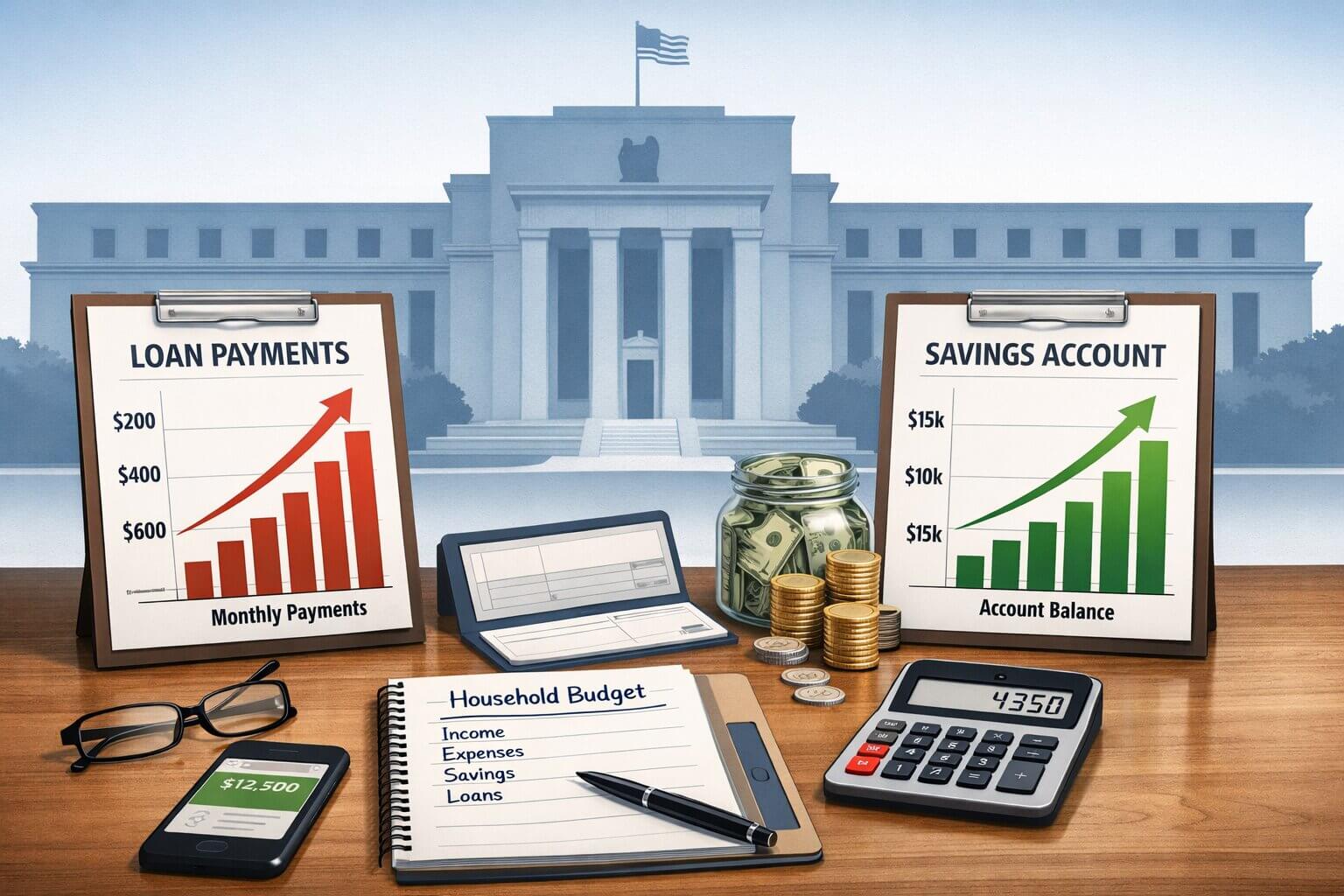
High interest rates change how money works in everyday life. They affect mortgage payments, credit card balances, car loans, and the return on savings. Many households now face a simple but important question: Should I focus on paying down debt, saving more cash, or waiting for rates to fall?
This guide explains how high interest rates influence borrowing and saving decisions. You will learn what drives loan costs, how savings returns improve when rates rise, and how to make practical financial choices in a high-rate environment.
---
Why Interest Rates Matter for Everyday Financial Decisions
Interest rates determine the cost of borrowing and the reward for saving. When rates rise, loans become more expensive and savings become more valuable.
The Federal Reserve raised interest rates sharply between 03/16/2022 and 07/26/2023 (ET) to control inflation. As of 04/13/2026 (ET), the federal funds rate remains in a range of 5.25%–5.50%, far higher than the near-zero rates common from 2010 through 2021.
This shift has changed financial planning. Borrowing requires more caution, and saving offers stronger returns. Households must now balance spending, debt, and savings more carefully than in the past.
---
How High Interest Rates Increase Borrowing Costs
Higher interest rates raise monthly payments on most types of debt. The effect is immediate and often long-lasting.
Mortgages: Higher Rates Reduce Buying Power
Mortgage rates directly affect how much home buyers can afford.
The average 30-year fixed mortgage rate hovered near 6.8% as of 04/10/2026 (ET). That level significantly increases monthly payments compared with earlier years.
Higher rates can lead to:
- Smaller home budgets
- Delayed home purchases
- Reduced refinancing opportunities
Many homeowners who secured low mortgage rates before 2022 are choosing to keep their existing loans rather than refinance.
---
Credit Cards: The Costliest Type of Debt
Credit cards usually carry variable interest rates. When interest rates rise, credit card costs increase quickly.
Average credit card interest rates reached roughly 20% as of 04/2026 (ET). At that level, carrying a balance can become expensive very quickly.
Paying down high-interest credit card debt often provides the most immediate financial benefit.
---
Auto Loans: Longer Terms and Higher Payments
Auto loan rates have also increased. Higher borrowing costs push monthly payments higher and often extend loan terms.
Longer loans may reduce monthly payments but increase the total interest paid over time. That tradeoff can affect long-term financial stability.
---
How High Interest Rates Improve Savings Returns
While borrowing becomes more expensive, saving money becomes more rewarding. Cash now earns meaningful interest again.
Savings Accounts and Money Market Funds
High-yield savings accounts and money market funds have offered returns near 4%–5% as of 03/2026 (ET).
These products are useful because they provide:
- Easy access to funds
- Low risk
- Steady interest income
They are commonly used for emergency savings and short-term financial goals.
---
Certificates of Deposit and Treasury Bills
Certificates of deposit (CDs) and Treasury bills typically offer higher yields than standard savings accounts. In exchange, funds must remain invested for a set period.
Three-month Treasury bill yields remained near 5% as of 04/11/2026 (ET).
These instruments are often used for:
- Preserving capital
- Managing short-term savings
- Earning predictable income
The main limitation is reduced flexibility. Early withdrawals may result in penalties or lost interest.
---
Choosing Between Liquidity and Higher Returns
One of the most important financial decisions today is choosing how long to keep money invested.
Short-term accounts provide flexibility. Longer-term deposits offer higher returns.
The right balance depends on how soon the money may be needed.
---
Practical Steps for Managing Money When Rates Are High
Adapting to higher interest rates requires simple but consistent financial habits.
Pay Down High-Interest Debt First
Reducing high-interest debt is often the most effective financial move.
For example, paying off a credit card balance with a 20% interest rate produces savings equivalent to a guaranteed 20% return. Few investments can match that level of certainty.
This approach improves cash flow and reduces financial risk.
---
Consider Fixed-Rate Loans for Stability
Fixed-rate loans protect borrowers from future rate increases. They provide predictable monthly payments and simplify budgeting.
This strategy is especially useful for long-term borrowing decisions such as mortgages or education loans.
---
Keep an Emergency Fund
Liquidity remains essential even when savings rates are attractive.
Unexpected expenses, job changes, or economic slowdowns can create financial stress. A cash reserve helps households manage these risks without relying on new debt.
Financial planners often recommend keeping three to six months of essential expenses in accessible savings.
---
Risks and Limitations of High Interest Rates
High interest rates create both opportunities and challenges. Understanding the risks helps households make better decisions.
Reduced Affordability
Higher borrowing costs reduce purchasing power. Large purchases such as homes and vehicles become harder to finance.
Over time, this can slow consumer spending and economic growth.
---
Uncertainty About Future Rate Changes
Interest rates may rise, fall, or remain stable depending on inflation and economic conditions.
Trying to predict exact rate movements can lead to costly mistakes. Flexible financial planning is usually more effective.
---
Stricter Lending Requirements
Banks often tighten lending standards when interest rates are high.
Borrowers may need:
- Higher credit scores
- Larger down payments
- Lower debt levels
These requirements can delay major financial decisions.
---
Focus on Flexibility and Financial Discipline
High interest rates are likely to remain an important factor in financial planning for the foreseeable future.
Borrowing costs are higher. Savings returns are stronger. Financial decisions require careful tradeoffs.
The most effective strategy is straightforward: reduce expensive debt, maintain adequate savings, and take advantage of higher interest income when available.
Households that stay flexible and disciplined will be better prepared for future changes in interest rates.
---
Frequently Asked Questions
How do high interest rates affect monthly loan payments?
Higher interest rates increase borrowing costs, which raises monthly payments for mortgages, credit cards, and auto loans.
Are high interest rates good for savings accounts?
Yes. Banks typically increase deposit rates when interest rates rise, allowing savers to earn more income on cash balances.
Should I pay off debt or save money first when rates are high?
High-interest debt should usually be paid off first because the guaranteed savings often exceed most investment returns.
When will interest rates go down again?
Interest rates may decline gradually as inflation stabilizes, but the timing depends on economic conditions and Federal Reserve policy decisions.
---
Sources and Further Reading
- Federal Funds Target Rate History — Federal Reserve — 03/20/2024
- Primary Mortgage Market Survey — Freddie Mac — 04/10/2026
- Consumer Price Index Summary — Bureau of Labor Statistics — 03/12/2026
- Household Debt and Credit Report — Federal Reserve Bank of New York — 02/2026
---