Business
How Interest Rates Affect Business Hiring Decisions
Understand how borrowing costs shape hiring and workforce planning
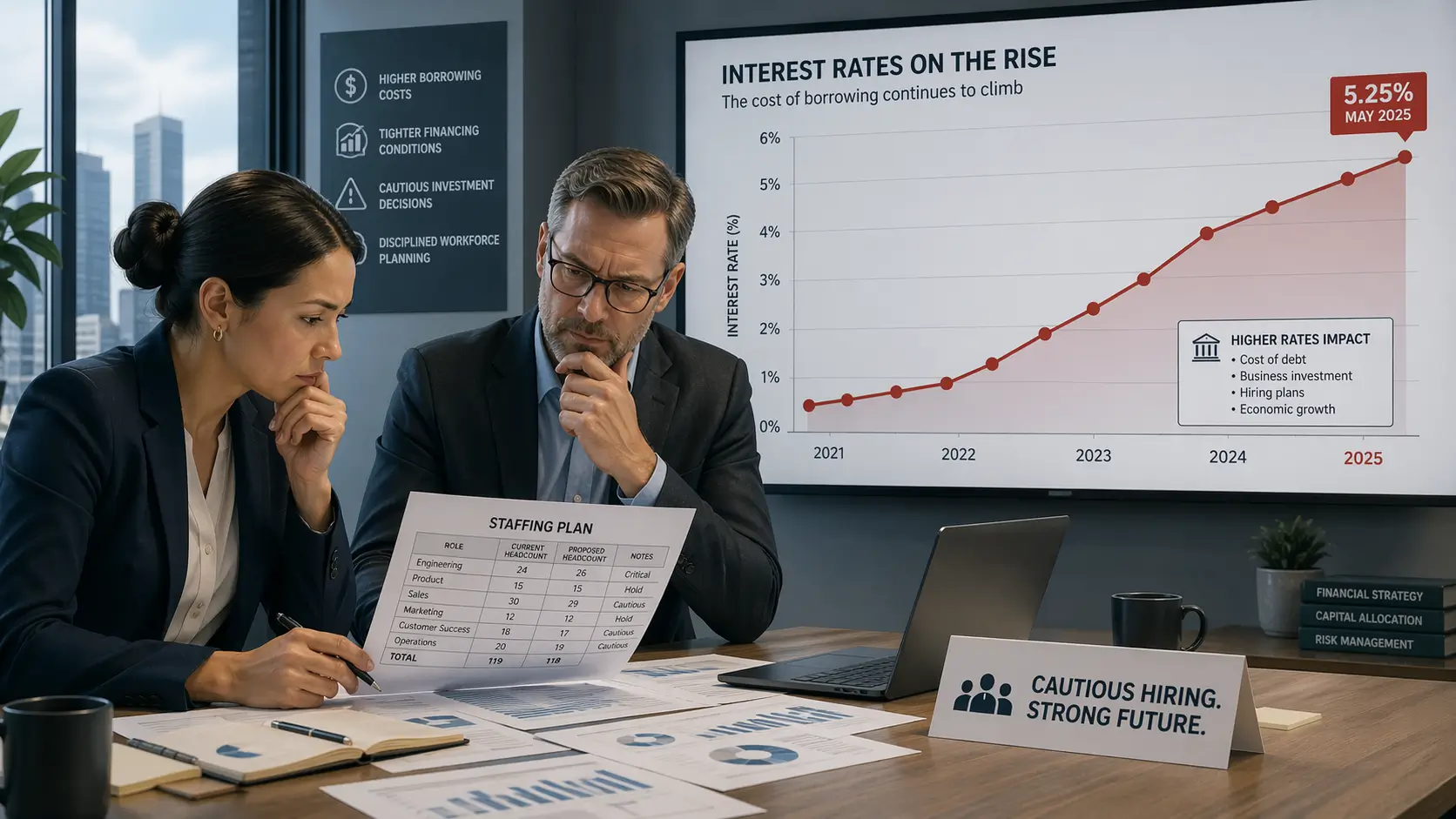
Many business owners, managers, and investors want to know why companies slow hiring when interest rates rise. The connection is not always obvious, but it is consistent across industries.
This guide explains how interest rates affect hiring decisions, why businesses adjust workforce plans when borrowing costs increase, and what those changes mean for growth, wages, and economic stability. Understanding this relationship helps leaders plan budgets and helps investors interpret labor market signals more accurately.
---
Why Interest Rates Influence Hiring in the First Place
Interest rates determine how expensive it is to borrow money. When borrowing becomes more costly, companies reassess spending decisions—including payroll.
Higher rates affect hiring because most business growth requires financing. Companies borrow to open new locations, buy equipment, expand operations, or launch new products. When interest costs rise, those projects become more expensive.
As a result, businesses often respond by slowing hiring.
Common adjustments include:
- Reducing recruitment plans
- Delaying expansion projects
- Preserving cash reserves
- Prioritizing essential roles
Payroll is one of the most flexible expenses in a company budget. Hiring can be paused quickly, while long-term contracts or infrastructure investments are harder to change.
For investors, this makes hiring trends an early indicator of financial pressure.
---
How Debt and Refinancing Costs Shape Workforce Planning
One of the strongest drivers of hiring decisions is debt.
Many companies borrow during periods of low interest rates. Over time, those loans mature and must be refinanced. If interest rates are higher at that moment, debt payments increase—even if revenue remains stable.
This shift directly affects hiring budgets.
When refinancing costs rise, companies often take practical steps to protect cash flow.
Typical responses include:
- Freezing nonessential hiring
- Limiting salary increases
- Postponing new initiatives
- Reducing temporary or contract staff
These decisions help stabilize finances without requiring major restructuring.
Industries most sensitive to refinancing costs include:
- Construction
- Commercial real estate
- Manufacturing
- Technology startups
- Small business services
These sectors rely heavily on loans and credit lines. As borrowing costs increase, hiring becomes more cautious.
---
Why Hiring Can Slow Without a Recession
A slower hiring pace does not automatically mean the economy is shrinking. In many cases, businesses are simply managing risk.
Companies often remain profitable while still reducing hiring to prepare for uncertain financial conditions.
Several structural factors explain why employment can stay strong even when interest rates are high.
Labor shortages still matter
Workforce growth in the United States has slowed due to demographic changes. Many employers struggle to find skilled workers.
Because replacing employees can be costly, companies may keep existing staff while slowing new hiring.
This approach is known as labor hoarding. It allows businesses to maintain productivity without committing to additional payroll costs.
For managers, this strategy reduces hiring risk. For investors, it signals caution rather than crisis.
---
Practical Steps Businesses Take in a High-Rate Environment
When borrowing costs rise, companies shift their focus from expansion to efficiency. Workforce planning becomes more disciplined and data-driven.
Businesses commonly take the following steps:
- Review cash flow projections
- Prioritize revenue-generating roles
- Delay nonessential hiring
- Increase productivity through automation
- Monitor debt repayment schedules
These actions help maintain financial stability during periods of restrictive monetary policy.
For decision-makers, the goal is not to stop hiring completely. The goal is to align hiring with financial capacity.
---
Risks of Sustained High Interest Rates
High interest rates can be manageable in the short term. Over longer periods, however, they can create persistent pressure on employment and business investment.
Key risks include:
- Slower wage growth
- Reduced business expansion
- Lower productivity gains
- Increased recession risk
The duration of high rates matters more than the level alone.
If borrowing costs remain elevated for several years, companies may move from cautious hiring to workforce reductions. That shift can reduce consumer spending and slow economic activity.
Understanding this timeline helps businesses and investors prepare for potential changes in labor market conditions.
---
How Investors and Managers Can Use Hiring Trends as a Signal
Hiring patterns provide valuable insight into business health.
When companies slow hiring across multiple industries, it often reflects tightening financial conditions. Monitoring employment trends can help identify changes in corporate strategy before they appear in financial statements.
Useful indicators to watch include:
- Job opening trends
- Wage growth rates
- Hiring freezes or layoffs
- Changes in overtime hours
- Business investment levels
These signals help investors anticipate economic shifts and help managers adjust workforce planning early.
See also: Layoffs Rise as Hiring Freezes Deepen
---
Conclusion: Hiring Decisions Reflect Financial Conditions
Interest rates shape hiring decisions because they influence the cost of growth.
When borrowing becomes more expensive, businesses focus on efficiency, protect cash flow, and limit workforce expansion. These actions are not always signs of economic weakness. Often, they reflect disciplined financial management.
The practical takeaway is simple:
Hiring trends are a direct reflection of financial conditions.
By monitoring interest rates alongside workforce decisions, investors and business leaders can better understand economic direction and prepare for future changes.
---
FAQ
How do rising interest rates affect hiring decisions?
Higher borrowing costs make expansion more expensive. Companies respond by slowing hiring and prioritizing essential roles.
Why do companies freeze hiring instead of laying off workers?
Employers often retain trained employees to avoid recruitment and training costs later. This approach reduces risk while maintaining productivity.
Which industries are most affected by high interest rates?
Construction, real estate, manufacturing, technology startups, and small business services are especially sensitive because they rely heavily on financing.
When do high interest rates start affecting employment?
The impact usually appears gradually. Hiring slows first, followed by wage moderation and, in some cases, workforce reductions if rates remain elevated.
---
Sources and Further Reading
- Employment Situation Summary — U.S. Bureau of Labor Statistics — 04/04/2026 — https://www.bls.gov/news.release/empsit.nr0.htm
- Monetary Policy Report — Federal Reserve Board — 03/07/2026 — https://www.federalreserve.gov/monetarypolicy.htm
---