Economy
One Jobs Report Could Delay Rate Cuts Again
Friday’s data may push easing further into 2026
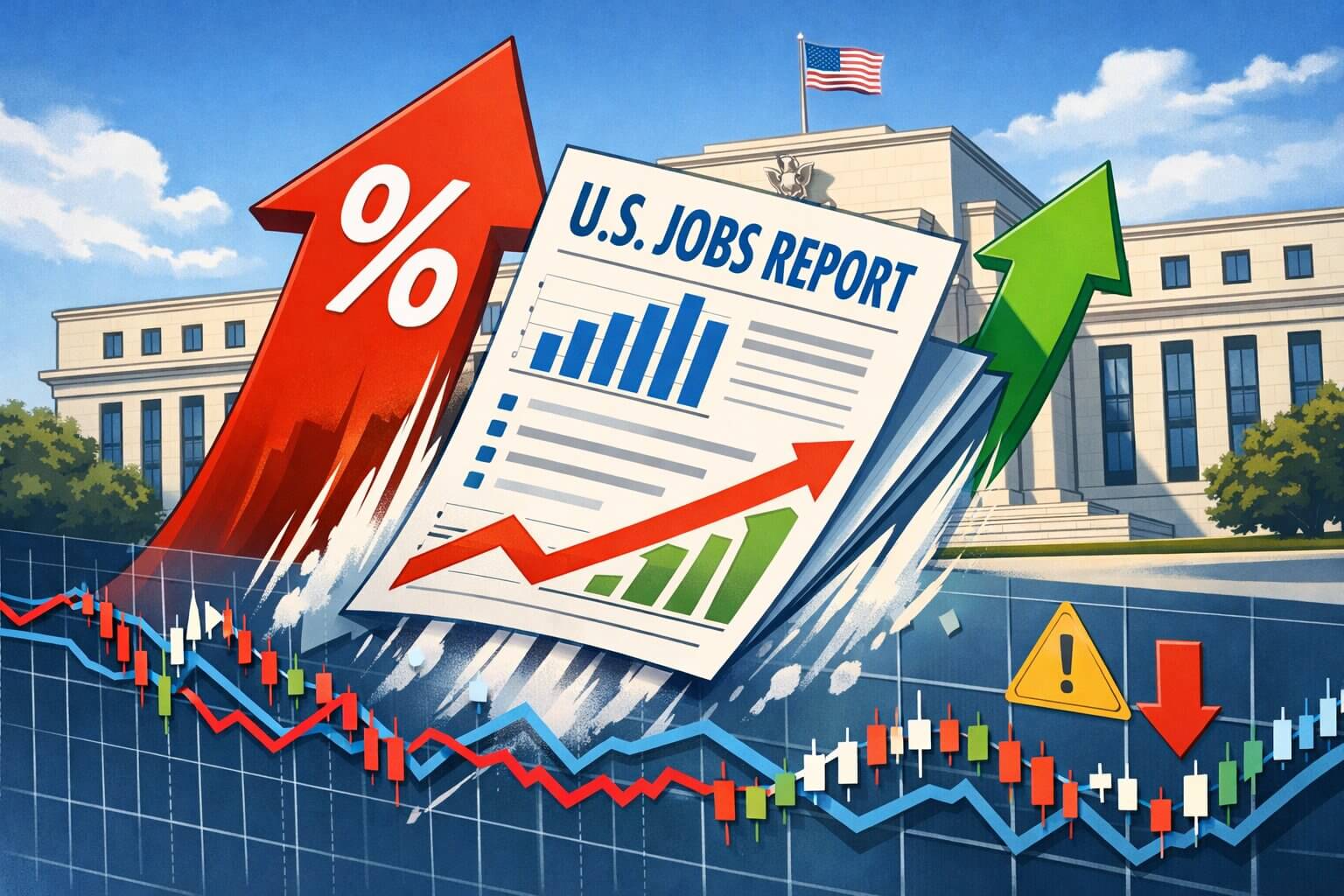
Rate-cut expectations could shift again after Friday’s payroll report.
Investors are entering the 04/03/2026 employment release with unusually low confidence in forecasts after repeated surprises changed the policy outlook. What once looked like a steady path to lower rates now depends heavily on a single data point. That makes this report less about jobs — and more about timing.
The labor market is cooling, but not collapsing. That distinction now drives monetary policy risk. The optimization framework guiding this refinement follows the Discover performance rules provided in the uploaded editorial guidance.
The Labor Market Is Slowing — But Still Holding
Recent data released 03/31/2026 showed job openings falling to 6.88 million, while hiring dropped to the lowest level since 2020. The unemployment rate edged up to roughly 4.4% in March 2026.
Layoffs remain limited. Hiring is weaker. Economists increasingly describe this pattern as “low-hire, low-fire.”
That stability complicates the Federal Reserve’s next move.
A labor market that weakens slowly does not force immediate rate cuts. Instead, it gives policymakers time to wait for clearer inflation progress. For investors, that means borrowing costs may stay higher longer than previously expected.
Inflation Is Raising the Stakes for This Report
The Federal Reserve signaled on 03/19/2026 that inflation risks tied to energy prices and geopolitical tensions remain a concern. Price pressures are still running above the central bank’s 2% target, limiting its ability to ease policy quickly.
This changes the reaction function.
Earlier in the cycle, strong job growth was reassuring. Now it can delay rate cuts. That reversal explains why upside surprises in payrolls carry more risk than downside ones.
Markets are especially sensitive because recent employment reports repeatedly beat expectations. Each surprise pushed Treasury yields higher and forced investors to postpone easing forecasts.
What Happens Next If Payrolls Surprise
If job growth comes in stronger than expected, Treasury yields will likely rise and rate cuts could shift deeper into late 2026. That scenario would pressure housing, small-cap stocks, and other rate-sensitive sectors.
If the report is weaker, markets will quickly revive easing expectations and equities could rebound.
The key risk is timing.
Investors are no longer debating whether rates will fall — they are debating when. Friday’s report may provide the clearest signal yet.
---
FAQ
Why is this jobs report more important than usual?
Because recent payroll surprises repeatedly changed rate-cut expectations, leaving markets uncertain about policy timing.
What does “low-hire, low-fire” mean?
It describes a labor market with slower hiring but limited layoffs, signaling stability rather than recession.
How could strong job growth affect markets?
Stronger employment could delay Federal Reserve rate cuts and push Treasury yields higher.
What should investors watch first in the report?
Headline payroll growth, wage gains, and revisions to prior months.
---
Sources and Further Reading
- Job Openings and Labor Turnover Summary — Bureau of Labor Statistics — 03/31/2026 — https://www.bls.gov
- Federal Reserve Policy Statement — Federal Reserve — 03/19/2026 — https://www.federalreserve.gov
- U.S. Labor Market and Rate Expectations Analysis — Reuters — 03/2026 — https://www.reuters.com
---