Business
Layoffs Rise as Hiring Freezes Deepen
Slower hiring raises risk for wages and rate cuts
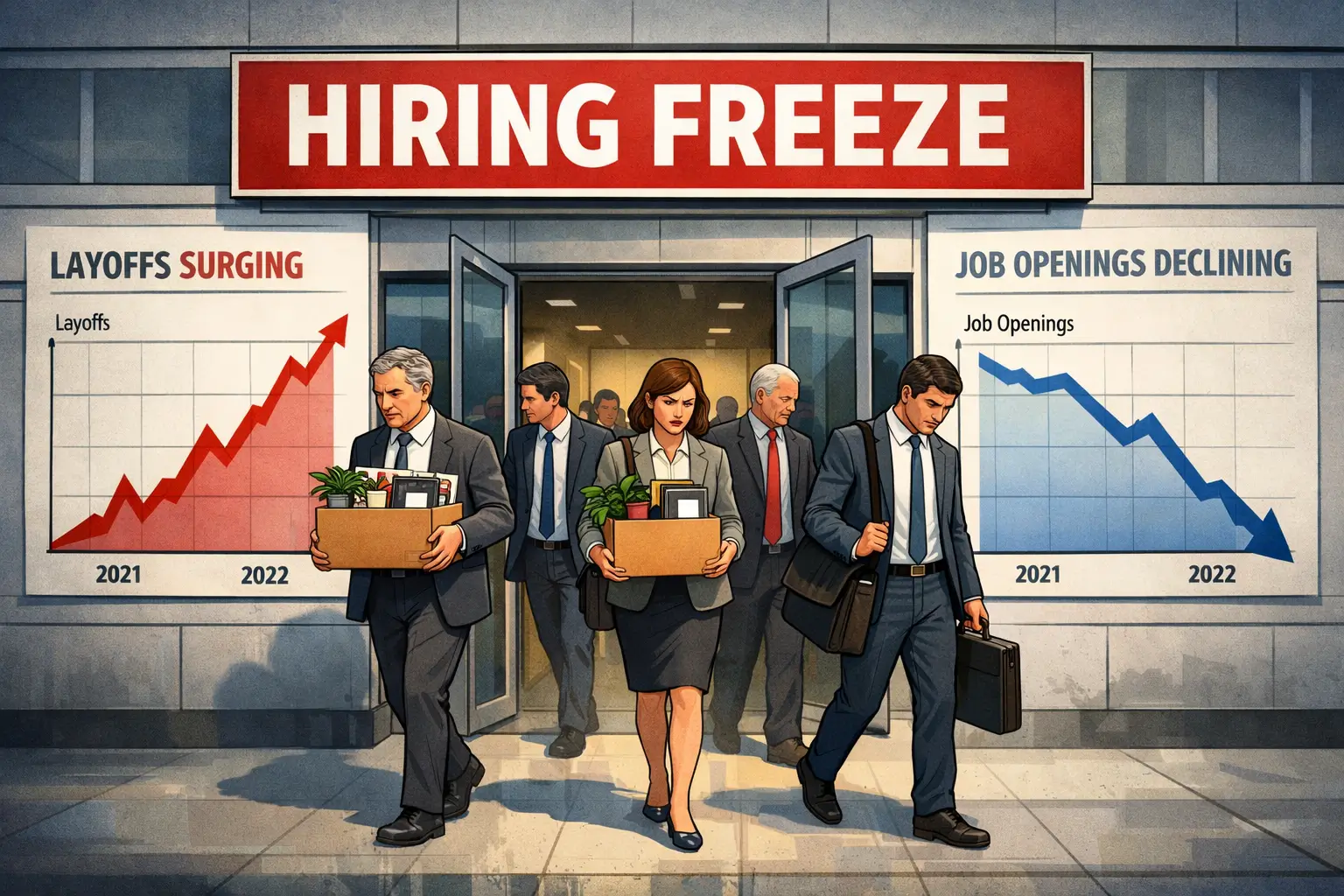
Layoffs are climbing while hiring stalls across major industries.
Companies are cutting staff and delaying recruitment even as unemployment holds near 4.3% as of 04/03/2026 (ET).
This shift marks a turning point in the labor market. Businesses are moving from expansion to efficiency. Instead of adding workers, they are protecting margins, conserving cash, and investing in automation. That change raises the risk of slower income growth and weaker consumer demand later this year.
Companies Are Cutting to Protect Profits and Fund Technology
Job cuts are concentrated in technology, logistics, and corporate support roles. These sectors hired aggressively after 2020 and are now adjusting to slower growth and higher operating costs.
Executives are using layoffs as a financial strategy. Reducing headcount helps offset wage pressure and rising energy costs while freeing capital for artificial intelligence and productivity tools. Companies can maintain earnings stability even if revenue growth slows.
Hiring patterns reinforce the shift. Many firms are replacing departing workers instead of expanding teams. Others are freezing recruitment entirely until demand becomes clearer. That dynamic makes the labor market feel tighter for job seekers even without a surge in unemployment.
What This Means for Markets and Federal Reserve Policy
A slower hiring cycle usually leads to slower wage growth. That matters because consumer spending depends heavily on steady income gains. If wage growth weakens, demand for goods, housing, and travel could soften by late 2026.
For the Federal Reserve, the labor trend complicates policy decisions. Cooling wage pressure supports the case for rate cuts. But persistent inflation risks tied to energy prices, tariffs, and geopolitical conflict may keep interest rates higher for longer.
Investors should closely monitor weekly jobless claims, corporate earnings guidance, and hiring plans. If layoffs continue rising while hiring remains weak, markets may begin pricing in slower economic growth and delayed monetary easing.
FAQ
### Why are layoffs increasing if unemployment is still low?
Companies can slow hiring and cut targeted roles before unemployment rises across the broader economy.
### What industries are most affected right now?
Technology, transportation, logistics, and white-collar support functions are seeing the largest workforce reductions in early 2026.
### Could slower hiring delay interest rate cuts?
Yes. If inflation risks remain elevated, the Federal Reserve may postpone rate cuts even as labor demand weakens.
### What is the key labor signal to watch next?
Weekly jobless claims and hiring rates provide the earliest warning of deeper labor-market weakness.
Sources and Further Reading
- Beige Book — Federal Reserve Board — 04/15/2026 — https://www.federalreserve.gov/monetarypolicy/files/BeigeBook_20260415.pdf
- March 2026 Challenger Job Cuts Report — Challenger, Gray & Christmas — 04/02/2026 — https://www.challengergray.com/
---