Markets
Oil Near $100 Again — Why Inflation Risks Are Rising
Persistent supply shocks may delay rate cuts again
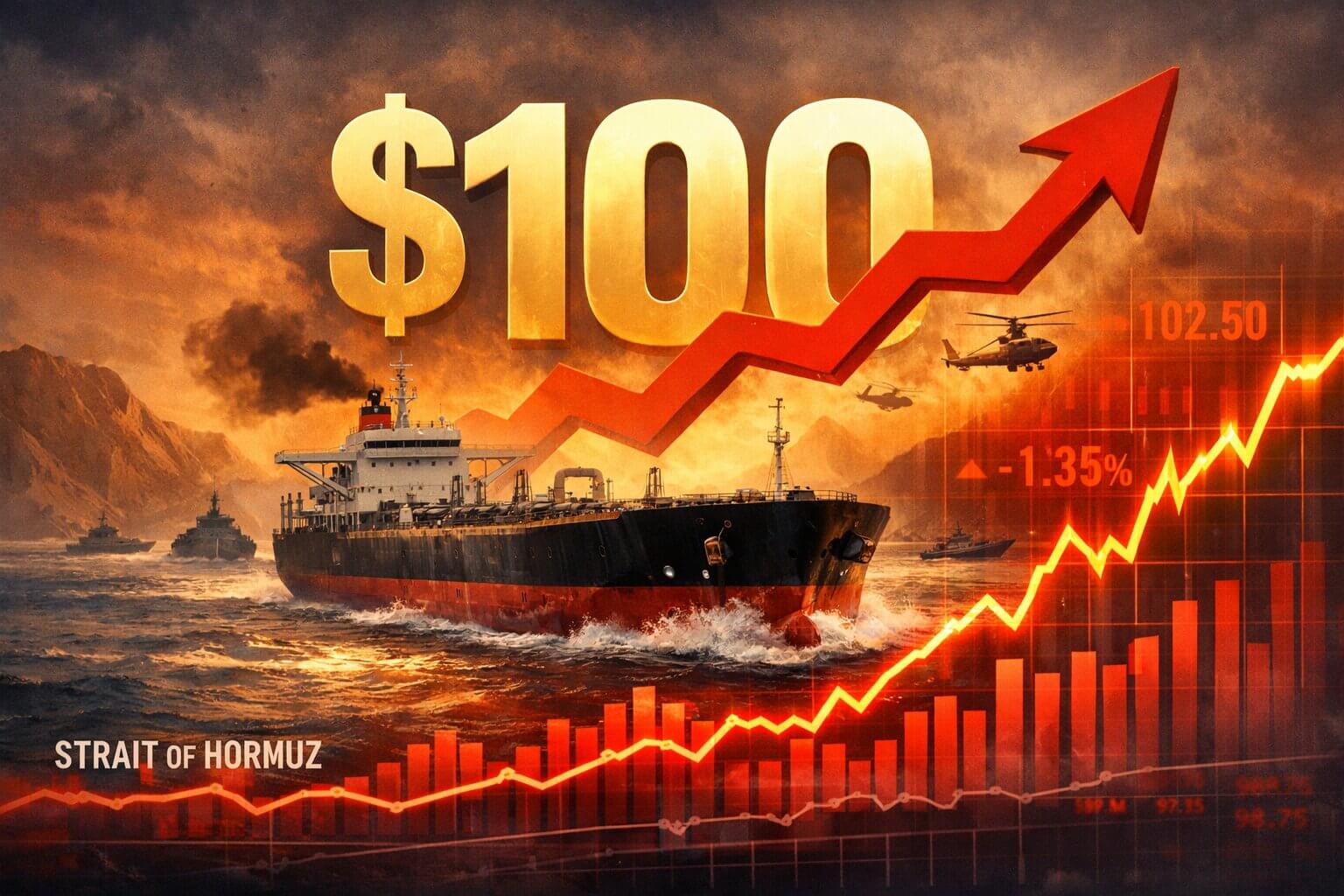
Markets are watching oil prices closely again as crude remains near the $100 level. That threshold has become a key signal for inflation expectations and interest rate policy in 2026.
Oil prices are staying near $100, and that keeps inflation risk alive.
Even temporary ceasefire headlines have failed to push prices meaningfully lower — a sign that supply stress, not speculation, is driving the market.
As of 04/07/2026, Brent crude traded near $109 per barrel after renewed instability around the Strait of Hormuz. The move followed a sharp surge on 04/02/2026, when shipping disruptions threatened one of the world’s most critical energy routes.
The message for investors is clear: the market is pricing a lasting geopolitical premium. That raises the odds of persistent inflation and delayed interest-rate cuts.
---
Supply Risk Is Real — and It Is Not Going Away Quickly
The latest price resilience reflects a physical supply problem, not a temporary headline reaction.
Roughly 20% of global oil supply moves through the Strait of Hormuz. When shipping slows or production shuts down, inventories tighten almost immediately. Estimates released on 04/07/2026 show disrupted supply rising toward roughly 9 million barrels per day in April — a level large enough to keep prices elevated even if tensions ease.
At the same time, futures prices have been volatile, but physical supply remains constrained. That divergence matters.
It signals structural risk. Traders are assuming supply disruptions could persist for months, not days.
What happens next depends less on diplomacy and more on logistics — how quickly production and shipping capacity can recover.
---
Why Markets Are Watching Inflation and Rate Cuts Again
Oil near $100 creates a direct policy problem.
Fuel costs feed quickly into consumer prices, and projections released in early April 2026 suggest gasoline could approach about $4.30 per gallon this month. That level increases the chance that inflation stays sticky through the summer.
For the Federal Reserve, the risk is timing.
Higher energy costs can delay rate cuts even if economic growth slows.
The second-order risk is volatility.
If oil remains elevated into mid-2026, markets could face:
- slower global growth
- tighter financial conditions
- more frequent equity swings
That is why oil’s stability near $100 matters now. It signals a new baseline of geopolitical risk — one that keeps pressure on inflation, interest rates, and market confidence.
If oil moves back above $100, inflation pressure could rise quickly again.
---
FAQ
Why are oil prices still near $100 despite ceasefire announcements?
Because supply disruptions — including production outages and shipping delays — continue to limit available oil.
What makes the Strait of Hormuz so important?
About one-fifth of global oil supply passes through it, making any disruption immediately impactful.
How could high oil prices affect Federal Reserve policy?
Persistent energy costs can keep inflation elevated and delay interest-rate cuts.
What is the biggest market risk right now?
That sustained supply disruptions keep oil prices high longer than expected, increasing inflation and volatility.
---