Markets
Why Oil Prices Are Suddenly Rising Again
Middle East tensions and supply fears push crude back above $100
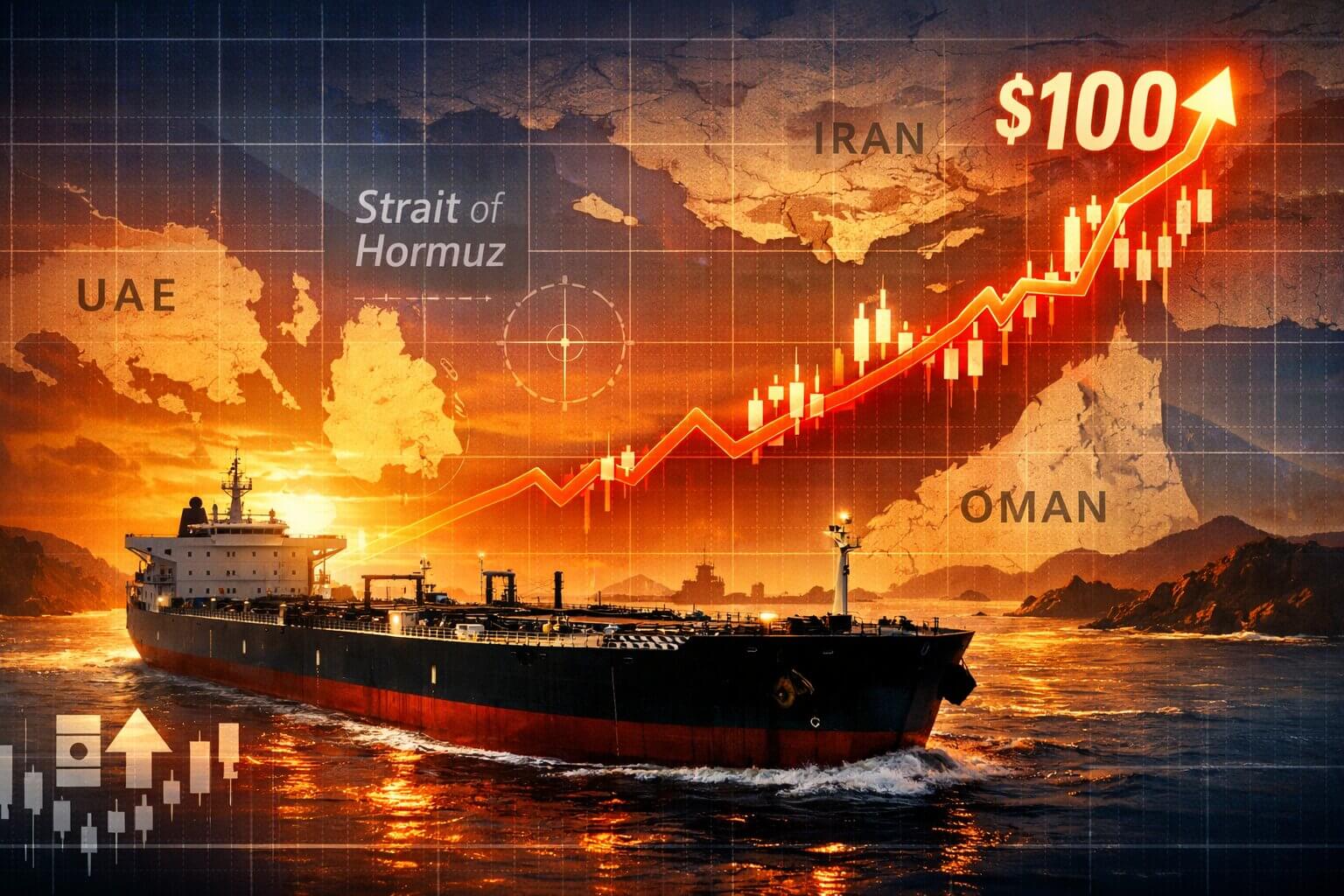
Oil markets are once again being driven by geopolitics.
In mid-March 2026, global crude prices surged past the psychologically important $100 per barrel threshold, marking the strongest rally in energy markets since late 2022. The catalyst: escalating tensions in the Middle East involving the United States, Israel, and Iran — and growing fears that the region’s critical energy infrastructure could be disrupted.
For investors, the implications stretch well beyond oil itself. Energy price shocks tend to ripple through inflation data, monetary policy expectations, and equity markets worldwide.
Geopolitics Returns to the Center of Energy Markets
At the heart of the current rally lies the Strait of Hormuz, one of the world’s most critical energy chokepoints.
Roughly 20% of global oil consumption passes through the narrow waterway, making it a strategic vulnerability whenever regional tensions escalate. In March 2026, military confrontations involving Israel and Iran — alongside increased U.S. naval activity in the region — raised fears that shipping routes could face disruption.
Even the perception of risk can move markets. Oil traders typically price in potential supply interruptions long before any actual shutdown occurs.
The result has been a rapid escalation in risk premiums embedded in crude prices.
Brent Crude Breaks the $100 Threshold
Those concerns translated quickly into market action.
By 03/14/2026, Brent crude futures climbed above 100 dollars per barrel, a level widely viewed as a key psychological marker for energy markets. Prices had traded closer to the $80–$90 range for much of early 2026 before geopolitical tensions intensified.
The rally reflects a classic supply-risk dynamic: when a large share of global oil flows through a single strategic corridor, even a small probability of disruption can drive sharp price movements.
Energy traders are now closely monitoring shipping activity and military developments in the Persian Gulf.
Inflation Risks Return to the Policy Debate
Higher oil prices rarely remain confined to energy markets.
Oil influences transportation costs, manufacturing inputs, and consumer fuel prices, which means sustained increases can feed into broader inflation measures. For central banks — particularly the U.S. Federal Reserve — this presents a potential complication.
Throughout early 2026, investors had expected a gradual easing of monetary policy as inflation cooled. But renewed energy price pressures could slow that process by lifting headline inflation.
For policymakers, the key question becomes whether higher oil prices prove temporary — or evolve into a sustained inflationary impulse.
Market Implications: Winners, Losers, and Investor Sentiment
Energy equities are typically the first beneficiaries of an oil rally.
Major integrated oil producers and exploration companies tend to see improved revenue expectations when crude prices rise. Meanwhile, sectors heavily exposed to fuel costs — including airlines, logistics firms, and transportation companies — often face margin pressure.
The broader stock market response is more complex. While higher energy prices can boost the energy sector, they also raise concerns about consumer spending and economic growth.
As a result, rising oil prices often create mixed signals across equity markets, amplifying volatility.
What Investors Should Watch Next
The trajectory of oil prices will largely depend on geopolitical developments in the coming weeks.
If tensions near the Strait of Hormuz escalate further — or if shipping disruptions occur — crude prices could continue climbing. Conversely, diplomatic de-escalation could remove the risk premium currently embedded in energy markets.
For investors, monitoring developments in the Persian Gulf may be just as important as tracking traditional economic indicators.
In today’s interconnected financial system, geopolitics can still move markets as dramatically as economic fundamentals.
---
FAQ
Why did oil prices rise above $100 in 2026?
Oil prices surged primarily due to escalating geopolitical tensions in the Middle East and fears that supply routes near the Strait of Hormuz could be disrupted.
Why is the Strait of Hormuz important for oil markets?
The strait is one of the world’s most critical oil transit routes, carrying roughly 20% of global oil consumption.
How do rising oil prices affect inflation?
Higher oil prices increase transportation and energy costs, which can feed into broader consumer price inflation.
Which sectors benefit from rising oil prices?
Energy producers typically benefit, while fuel-intensive industries such as airlines and logistics companies often face higher costs.
---
Sources and Further Reading
- Oil Climbs Above $100 on Middle East Supply Risks — Bloomberg — 03/13/2026 — https://www.bloomberg.com
- Global Oil Markets React to Rising Middle East Tensions — Reuters — 03/14/2026 — https://www.reuters.com
- Oil Surges as Investors Fear Strait of Hormuz Disruption — CNBC — 03/15/2026 — https://www.cnbc.com
- World Oil Transit Chokepoints — U.S. Energy Information Administration — 2024 — https://www.eia.gov
- Oil Market Report — International Energy Agency — 02/2026 — https://www.iea.org
- Energy Price Shocks and Inflation Transmission — Federal Reserve Bank Research — 2023 — https://www.federalreserve.gov
---