Business
Why Popeyes Bankruptcies Are Trending After a Major Franchisee’s Chapter 11 Filing
The collapse of Sailormen Inc. highlights mounting financial stress across the U.S. fast-food franchise model.
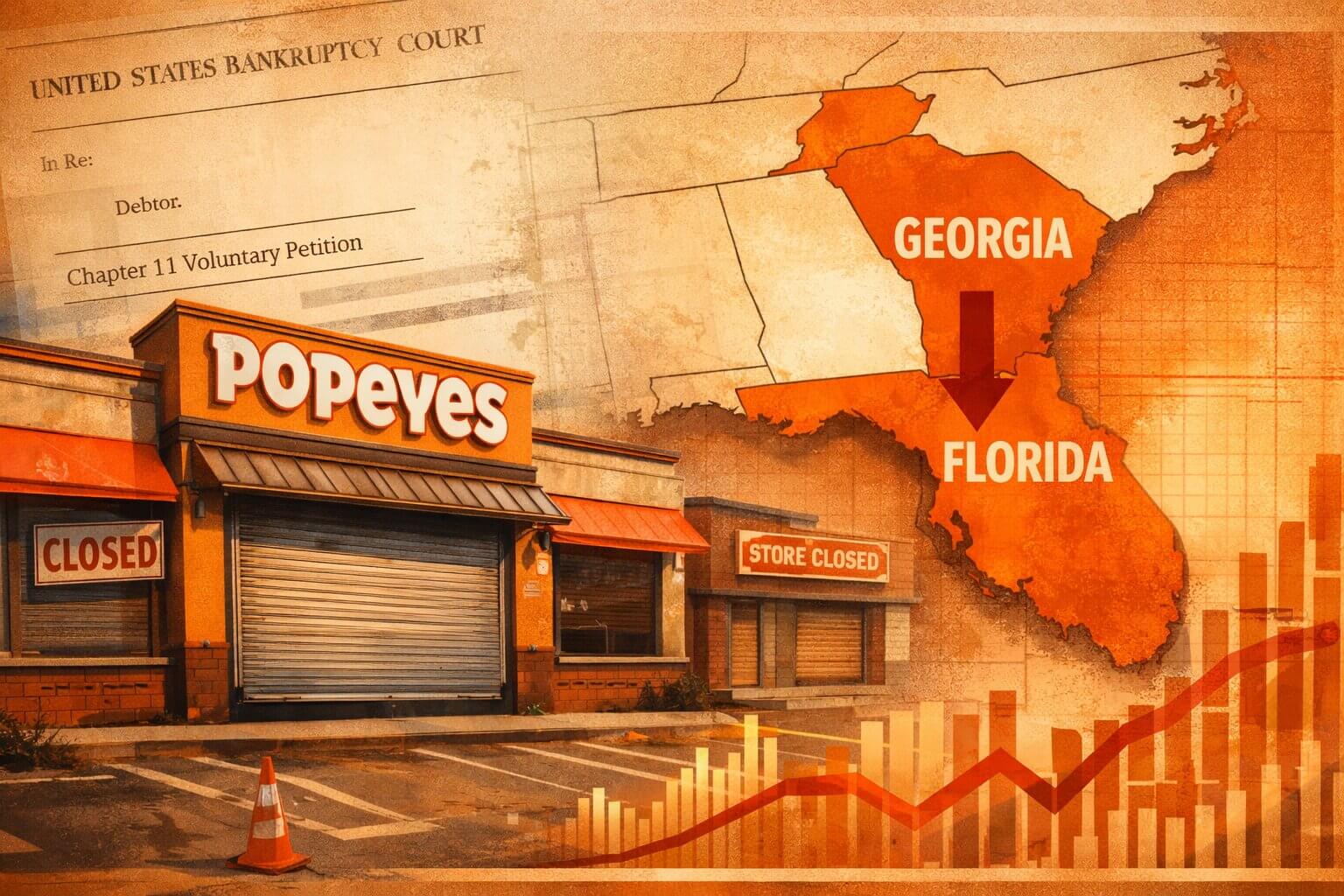
In recent weeks, the phrase “Popeyes bankruptcies” has surged across search engines and financial headlines. The reason traces back to January 15, 2026, when Sailormen Inc.—one of the largest Popeyes franchise operators in the United States—filed for Chapter 11 bankruptcy protection.
The Miami-based company operates more than 130 Popeyes restaurants across Florida and Georgia and entered restructuring with roughly $130 million in debt. As of March 10, 2026, court filings indicated that about 20 locations had already closed during the restructuring process.
Yet the story is more nuanced than headlines suggest. The bankruptcy involves a franchisee—not the Popeyes brand itself. Still, the situation offers a revealing look into mounting financial pressures facing the U.S. fast-food franchise ecosystem.
So what exactly happened—and what does it mean for investors and the restaurant industry?
---
Why “Popeyes Bankruptcies” Is Trending
Sailormen Inc. filed for Chapter 11 protection in the U.S. Bankruptcy Court for the Southern District of Florida on 01/15/2026, citing a combination of operational and financial pressures.
The company, which has been a Popeyes franchisee since the late 1980s, had built one of the chain’s largest regional portfolios. Before the bankruptcy filing, Sailormen operated more than 130 restaurants and employed roughly 3,300 workers.
Since the restructuring began, the operator has closed about 20 locations across Florida and Georgia while seeking to renegotiate leases and restructure debt.
Chapter 11 allows companies to reorganize financially while continuing to operate. In Sailormen’s case, the majority of its restaurants are expected to remain open while the restructuring unfolds.
Importantly, the bankruptcy does not reflect the financial health of the Popeyes brand itself, which continues to expand globally under its parent company.
---
The Franchise Model Behind Popeyes
Franchise vs. Corporate Ownership
Popeyes Louisiana Kitchen is owned by Restaurant Brands International, the global restaurant holding company that acquired the chain in 2017.
However, like most quick-service restaurant brands, Popeyes relies heavily on a franchise model. The vast majority of locations are owned and operated by independent franchisees rather than the corporate parent.
This structure allows rapid expansion with relatively low capital investment from the brand owner. But it also means that individual operators carry significant financial risk—especially those running large multi-unit portfolios like Sailormen.
As of late 2025, Popeyes operated more than 5,400 restaurants globally, including roughly 3,200 locations in the United States.
---
What Drove the Bankruptcy
Inflation and Rising Operating Costs
The most immediate pressure facing Sailormen—and many franchise operators—has been inflation.
Food prices, cooking oil, poultry costs, packaging, and utilities have all risen significantly since 2021. Labor costs have also climbed as operators compete for workers in a tight labor market.
For franchisees operating dozens or hundreds of locations, these rising costs can quickly compress already thin restaurant margins.
---
Higher Borrowing Costs and Debt Burden
Sailormen entered Chapter 11 with roughly $130 million in debt, much of it tied to lending agreements used to finance restaurant operations and expansion.
Higher interest rates since 2022 have significantly increased debt servicing costs for heavily leveraged operators. In a business where operating margins are often in the single digits, rising borrowing costs can push struggling franchisees into insolvency.
Court filings show the company ended 2025 with roughly 233.5 million dollars in sales but nearly $19 million in operating losses, highlighting the pressure on profitability.
---
Labor Shortages and Post-Pandemic Traffic Shifts
Like many restaurant operators, Sailormen cited labor shortages and declining customer traffic compared with earlier pandemic recovery years.
Although quick-service restaurants initially benefited from drive-through demand during the pandemic, industry traffic has since normalized. Consumers facing higher prices and economic uncertainty have become more selective about discretionary spending.
That shift has weighed on certain restaurant formats, particularly in saturated markets.
---
Failed Restaurant Sale and Legal Disputes
Sailormen’s financial situation worsened after a planned deal to sell 16 restaurants in Georgia fell through during 2023–2024.
The collapse of the transaction left the company responsible for lease payments and operating costs tied to those locations.
At the same time, its primary lender sought legal action related to loan obligations, further tightening liquidity and accelerating the need for restructuring.
---
The “Chicken Wars” and Competitive Pressure
The bankruptcy also arrives during an intensely competitive period in the quick-service chicken market.
Since Popeyes’ viral chicken sandwich launch in 2019, major chains have poured billions into the category. The so-called “chicken wars” now includes aggressive expansion by brands such as Wingstop, Raising Cane’s, KFC, and Chick-fil-A.
Newer chains focused exclusively on chicken tenders or wings have captured younger consumers and expanded rapidly, often pressuring legacy brands to keep prices competitive while investing heavily in marketing.
Meanwhile, some industry data shows Popeyes same-store sales declining in several recent quarters, underscoring the competitive environment franchisees must navigate.
---
What the Bankruptcy Signals for the Franchise Economy
Financial Fragility of Multi-Unit Operators
The Sailormen restructuring illustrates a broader vulnerability within the franchise system.
Large franchise groups frequently rely on debt to scale operations. While the model can generate strong returns during periods of growth, it becomes risky when margins compress.
In recent years, multiple restaurant operators across different brands have filed for Chapter 11 as pandemic-era debt, inflation, and rising interest rates converge.
---
Consolidation and Restructuring Ahead
For investors and industry observers, the likely outcome is greater consolidation among franchise operators.
Stronger franchise groups or private equity-backed operators may acquire distressed restaurant portfolios at discounted valuations. Meanwhile, franchisors may tighten operational requirements or seek financially stronger partners.
This dynamic could reshape the ownership structure of many quick-service restaurant brands over the next decade.
---
Implications for Investors
For investors analyzing restaurant companies, the key takeaway is clear: franchisee bankruptcies do not necessarily indicate brand weakness.
In fact, franchisors often remain financially insulated because they collect royalty fees and franchise payments regardless of individual operator profitability.
However, widespread financial stress among franchisees can still create operational disruptions, including store closures, slower expansion, and brand perception risks.
For the broader quick-service sector, the Sailormen case highlights a structural tension in franchising: the model scales rapidly during boom periods but can expose operators to significant leverage risk during downturns.
In the evolving landscape of the fast-food industry—where competition, inflation, and consumer behavior continue to shift—the next chapter of the “chicken wars” may increasingly be fought not just on menus, but on balance sheets.
---
FAQ
### Did Popeyes file for bankruptcy?
No. The bankruptcy involves Sailormen Inc., a franchisee, not the Popeyes brand itself.
### When did Sailormen Inc. file for Chapter 11?
The company filed for Chapter 11 bankruptcy protection on January 15, 2026.
### How many Popeyes locations are affected?
Sailormen operated more than 130 restaurants across Florida and Georgia before the filing. About 20 locations had closed by March 2026.
### Why are fast-food franchisees filing bankruptcy?
Key factors include inflation, rising labor costs, higher interest rates, declining traffic, and heavy debt loads accumulated during and after the pandemic.
---
- Popeyes Franchisee With Over 130 Locations Files Bankruptcy — Nation’s Restaurant News — 01/16/2026 — https://www.nrn.com/quick-service/130-plus-unit-popeyes-franchisee-files-for-bankruptcy
- Another Fast-Food Franchisee Files for Chapter 11 Bankruptcy — Fast Company — 01/16/2026 — https://www.fastcompany.com/91476442/another-fast-food-franchisee-files-for-chapter-11-bankruptcy-will-any-of-its-restaurants-close
- Major Popeyes Franchisee With Over 130 Locations Files Bankruptcy — Fox Business — 01/19/2026 — https://www.foxbusiness.com/lifestyle/major-popeyes-franchisee-over-130-locations-files-bankruptcy
- More Popeyes Locations Close as Major Franchisee’s Bankruptcy Shutters Restaurants — Inc. — 03/12/2026 — https://www.inc.com/ava-levinson/more-popeyes-locations-close-as-major-franchisees-bankruptcy-shutters-restaurants/91316035
- Popeyes Franchisee With Over 130 Locations Files Bankruptcy, Shuttering Restaurants — People — 03/13/2026 — https://people.com/more-popeyes-restaurants-close-after-major-franchisee-bankruptcy-11926033
- Sailormen Inc. Chapter 11 Case Overview — ElevenFlo — 02/2026 — https://elevenflo.com/blog/sailormen-bankruptcy