Markets
Powell’s Dovish Pivot: Why Markets Are Repricing Rate Cuts
The Fed Chair’s recent speech revived hopes of easing — here’s how markets are reacting across rates, equities, FX and global liquidity.
Powell’s Dovish Pivot: Why Markets Are Repricing Rate Cuts
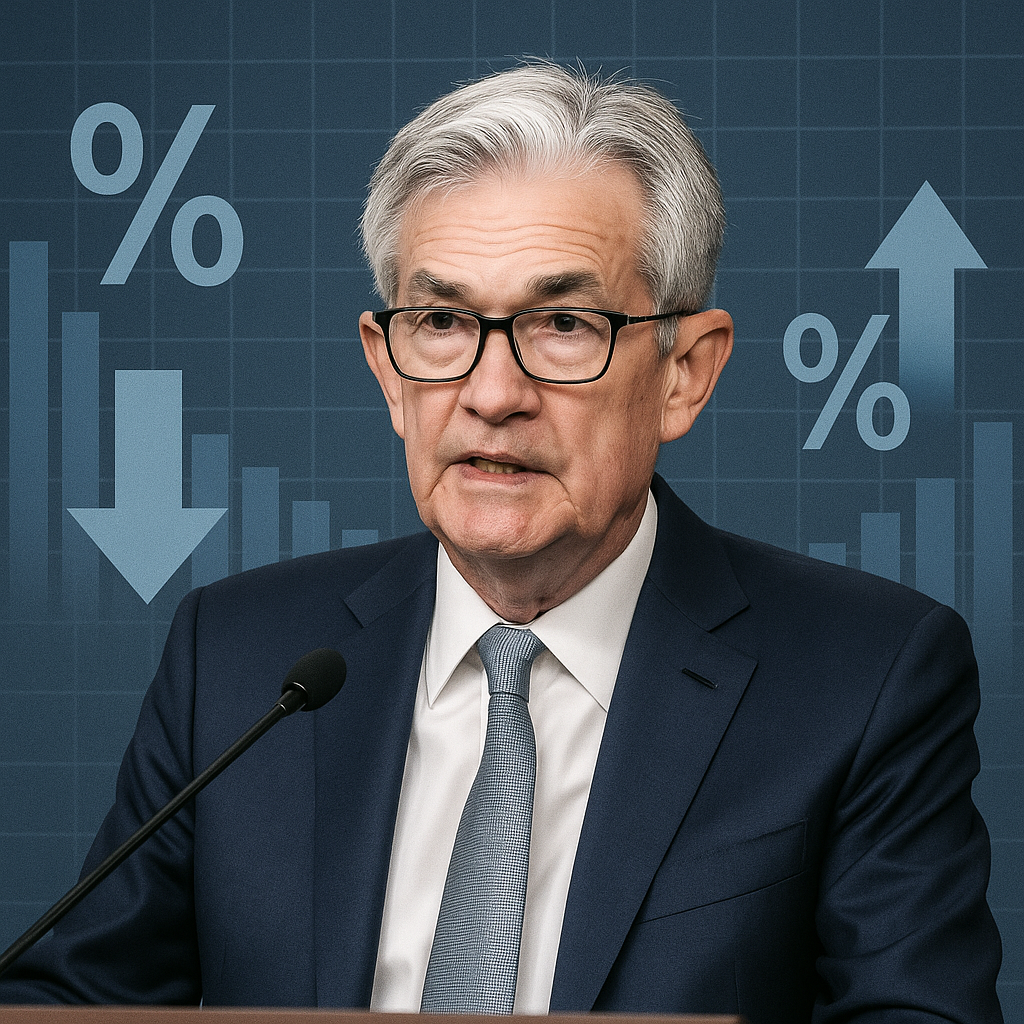
In a speech delivered on October 14, 2025, Federal Reserve Chair Jerome Powell struck a noticeably more dovish tone, signaling that the door remains open for additional rate cuts before year-end. Markets took his remarks as confirmation that the Fed is preparing to ease policy — and quickly began repricing across interest rates, equities, currencies, and liquidity expectations. Below, we unpack the key takeaways, market reactions, and what investors should watch next.
produto:The Art of X: Build a Business That Makes You $100/Day
Key Signals from Powell’s Speech
Powell emphasized a data-dependent, meeting-by-meeting approach, steering away from any commitment to a preset policy path. While acknowledging that inflation remains above the Fed’s 2% target, he noted that recent data suggest economic growth is stabilizing — though it has yet to translate into stronger hiring. Powell highlighted that the labor market continues to experience low levels of both hiring and layoffs, reflecting a cautious phase of normalization.
Perhaps most notably, Powell hinted that quantitative tightening (QT) — the ongoing reduction of the Fed’s balance sheet — could soon draw to a close. His remarks about potential risks to market functioning if asset sales were accelerated suggested a preference for restraint.
Taken together, the speech represented a modest but credible shift — not an overtly dovish turn, but a clear transition from “higher for longer” toward “patience and optionality.”
Market Reactions: Rates, Yield Curve, and Futures
The reaction across interest rate markets was swift:
- Fed funds futures quickly priced in a 25-basis-point cut at the upcoming October 28–29 FOMC meeting, with a high implied probability.
- Treasury yields fell sharply, especially at the short and intermediate maturities, declining roughly 20–40 basis points during the intermeeting period.
- The yield curve steepened as short-term yields dropped more than long-term rates, easing the deep inversion that had prevailed.
- Credit spreads remained largely stable, but implied volatility and swap spreads widened modestly following Powell’s comments.
Collectively, markets began re-discounting a faster path to easing — narrowing the margin for downside surprises and embedding expectations of lower rates through year-end.
Equity Markets and Investor Sentiment
Equities rallied on Powell’s dovish tone:
- On the day of the speech, major U.S. indices rose broadly, reflecting renewed risk appetite.
- The rally was most pronounced among growth and technology stocks, which are more sensitive to lower discount rates.
- Valuation multiples expanded slightly as reduced rate expectations offset lingering earnings risks.
Investor sentiment has clearly shifted toward a “lower for longer” narrative. Yet, this optimism remains contingent on data: any upside inflation or employment surprises could quickly challenge the easing outlook.
The U.S. Dollar, FX, and Global Liquidity
The implications of Powell’s shift extended well beyond U.S. markets:
- The U.S. dollar weakened against major currencies as rate differentials moved against it.
- Carry trades into emerging markets regained appeal, potentially reigniting cross-border capital flows into higher-yielding assets.
- Expectations of Fed easing could loosen global liquidity conditions, making dollar funding more accessible and improving risk sentiment globally.
In essence, Powell’s remarks recalibrated global rate expectations and lifted the liquidity backdrop — a boon for risk assets worldwide.
Risks and Caveats Ahead
Despite the upbeat tone in markets, several risks remain on the horizon:
- Inflation persistence: Core inflation (notably PCE core) remains elevated; any upside surprise could force the Fed to slow or reverse its easing trajectory.
- Data gaps: With some government data delayed due to the U.S. government shutdown, the Fed has been relying more heavily on private-sector indicators — adding uncertainty to its assessment.
- Policy divergence within the Fed: Not all officials share Powell’s dovish stance. Some continue to stress the importance of maintaining credibility on inflation.
- Market overreaction: If markets overprice cuts, any hawkish surprise in future communications could trigger abrupt reversals.
What to Watch Next
- October 24, 2025: CPI release (including core inflation)
- October 29, 2025: FOMC meeting — potential 25-basis-point cut
- Upcoming Nonfarm Payrolls and unemployment data
- Fed statements and 2026 dot-plot revisions
- Global funding and credit market conditions
Given the current setup, markets appear positioned for two rate cuts in 2025 — one in October and another in December. But the path forward will hinge on data, and volatility will likely remain elevated as expectations shift with each new release.
produto:The Art of X: Build a Business That Makes You $100/Day
Frequently Asked Questions
Why did Powell’s speech trigger a dovish repricing?
Because he underscored a meeting-by-meeting approach, highlighted labor market weakness, and hinted at winding down quantitative tightening — all signals consistent with potential rate cuts.
How much easing do markets expect in 2025?
Futures markets are pricing in a 25-basis-point cut in October and another in December, with probabilities near 80–90%.
How do equities and the dollar typically respond to such pivots?
Lower rates reduce discount rates — boosting equities — while lower U.S. real yields weaken the dollar, spurring foreign capital inflows.
What risks could derail the dovish outlook?
Sticky inflation, unexpectedly strong economic data, or renewed hawkish rhetoric could prompt the Fed to pause or even reverse course.
---
Sources and Further Reading
- Federal Reserve transcripts and public remarks by Chair Jerome Powell, October 2025
- CME FedWatch Tool data on Fed Funds futures probabilities
- U.S. Treasury yield curve and FOMC minutes, September–October 2025
- Bureau of Labor Statistics (BLS) and Bureau of Economic Analysis (BEA) data releases
- Bloomberg and Reuters market reaction summaries
---