Economy
The Rise of BRICS+: Is a New Global Economic Order Emerging?
Expansion, payment reforms, and U.S. trade tensions are turning the BRICS bloc into a more visible force in global finance—though the dollar’s dominance remains intact.
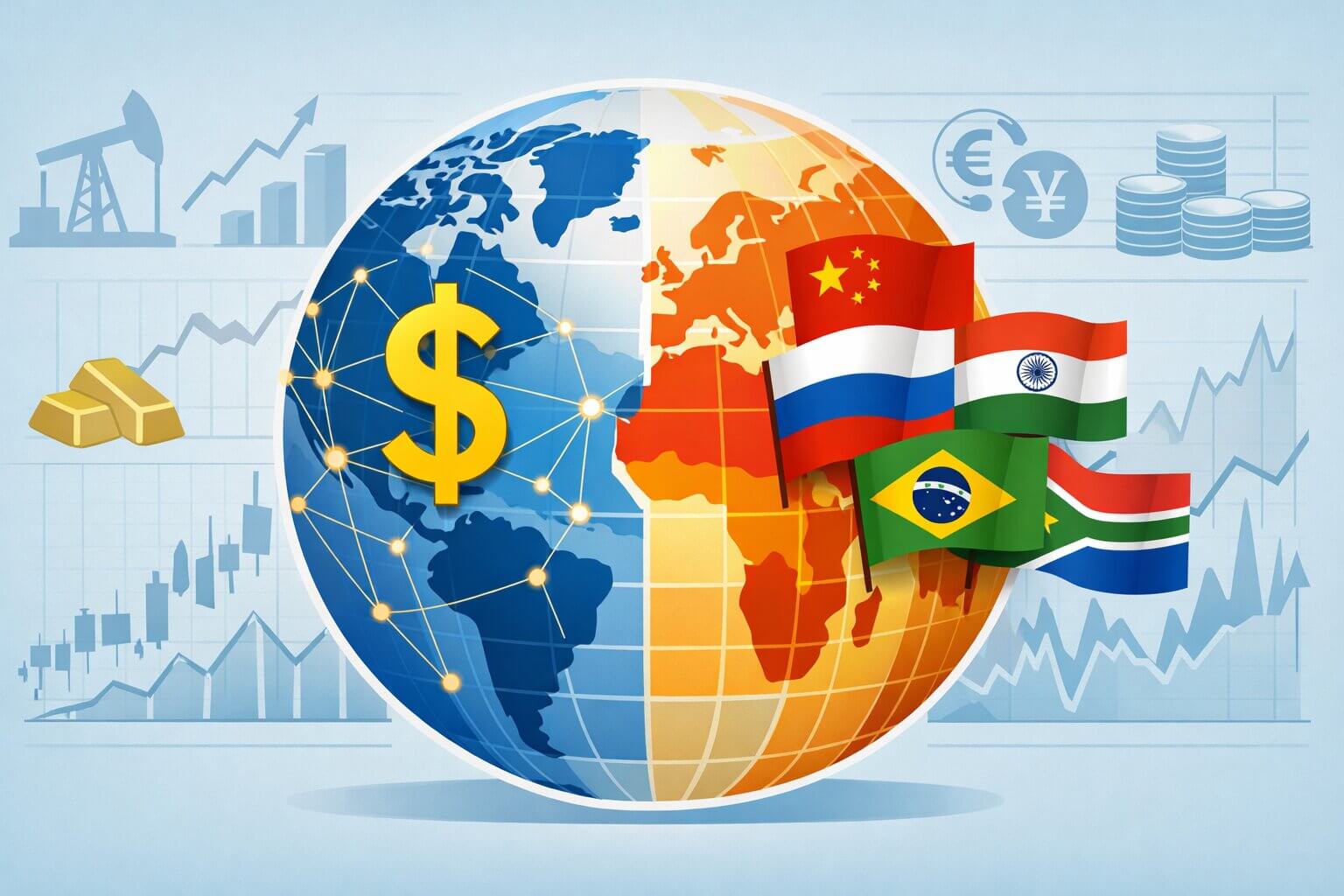
For much of the past decade, the BRICS grouping—Brazil, Russia, India, China, and South Africa—occupied a somewhat ambiguous place in global politics. It was often described as a loose coalition of emerging powers rather than a coherent economic bloc.
That perception has begun to shift.
A wave of expansion culminating in Indonesia’s formal admission on 01/06/2025 has revived debate about whether “BRICS+” could become a meaningful counterweight to Western-led institutions. At the same time, the bloc’s July 6–7, 2025 summit in Rio de Janeiro placed new emphasis on reforming global financial governance and building alternative payment systems.
Yet the core question remains unresolved: Is BRICS evolving into a parallel economic order—or simply a forum for emerging economies seeking greater leverage inside the existing system?
Why BRICS Is Back in the Global Conversation
The resurgence of interest in BRICS stems largely from its recent expansion.
The original bloc—Brazil, Russia, India, China, and South Africa—has broadened significantly since 2024. New members including Egypt, Ethiopia, Iran, the United Arab Emirates, and Indonesia have transformed the group into a coalition representing a larger share of the world’s population, commodity production, and emerging-market output.
Indonesia’s accession was particularly symbolic. As the largest economy in Southeast Asia and home to more than 280 million people, the country became the tenth member of BRICS, marking the organization’s first expansion into the region.
For advocates of a more “multipolar” economic system, the expansion strengthens the narrative that the Global South wants greater influence in global institutions.
Expansion and the Emergence of “BRICS+”
New Members and Partner Countries
The expansion is also accompanied by a new framework known informally as BRICS+.
Beyond formal members, the bloc has introduced partner-country arrangements, allowing other emerging economies to participate in selected initiatives without full membership. The approach reflects a strategic attempt to broaden geopolitical reach without overextending the group’s institutional capacity.
In practical terms, BRICS+ aims to create a network of economic cooperation spanning trade, infrastructure financing, and technology.
Strategic Motivation Behind Expansion
The expansion is not only about membership numbers.
BRICS leaders increasingly frame the bloc as a platform for representing developing economies in global governance. That includes pushing for reforms to institutions built in the aftermath of World War II, particularly the International Monetary Fund.
Currency Debate: From a BRICS Currency to Local Settlement
Few topics have generated more speculation than the idea of a BRICS currency.
For several years, political rhetoric—especially from Brazil and Russia—suggested the bloc might create a shared unit for international trade. But under Brazil’s BRICS presidency in 2025, the conversation shifted toward more practical steps.
Rather than replacing the dollar outright, the focus has moved to local-currency settlement in bilateral trade.
Cross-Border Payment Initiatives
One area attracting increasing attention is the concept of BRICS Pay, a cross-border payments infrastructure intended to facilitate transactions between member states using their own currencies.
The goal is modest but significant: reduce reliance on the U.S. dollar in trade invoicing and payment settlement, particularly for commodities and regional supply chains.
Even so, such initiatives face major technical and financial hurdles. Cross-border payment systems depend on deep capital markets, stable currencies, and global trust—areas where most BRICS members still trail the United States.
IMF Reform and Institutional Influence
Another pillar of the BRICS agenda is reforming international financial institutions.
In meetings ahead of the July 2025 BRICS summit, finance ministers from the bloc issued a unified call for changes to the IMF quota system. Their proposal argues that voting power should better reflect the economic weight of emerging markets, particularly when measured by purchasing power parity.
The ministers also questioned the longstanding convention that a European official leads the IMF, arguing that leadership should reflect broader geographic representation.
While similar proposals have circulated for years, the bloc’s coordinated stance marks one of the most organized efforts yet to reshape the governance of the global financial architecture.
Why the U.S. Is Paying Attention
For U.S. policymakers and investors, the renewed prominence of BRICS is no longer an abstract geopolitical debate.
In July 2025, President Donald Trump threatened to impose an additional 10% tariff on countries aligning with what he described as “anti-American” BRICS policies, highlighting Washington’s growing sensitivity to the bloc’s ambitions.
The threat underscored the economic stakes. Many BRICS members remain heavily dependent on exports to the United States, making any escalation in trade tensions a potential flashpoint.
At the same time, the dispute has reinforced the bloc’s argument that the global trading system is increasingly shaped by geopolitical competition.
Can BRICS+ Rival the Dollar-Based System?
Despite the rhetoric surrounding de-dollarization, the reality is far more complex.
The U.S. dollar remains the dominant currency in global finance, accounting for the majority of international reserves, cross-border lending, and trade settlement.
Deep U.S. capital markets, legal stability, and the size of the American economy create structural advantages that are difficult for any coalition to replicate.
Moreover, BRICS itself remains a heterogeneous group.
Its members span multiple political systems, economic models, and geopolitical rivalries. China and India compete strategically in Asia, while Brazil and South Africa maintain close financial ties with Western markets.
These internal differences complicate efforts to build a unified financial architecture.
What Investors Should Watch Next
For global investors, the significance of BRICS lies less in imminent disruption and more in gradual structural change.
Several developments deserve close attention:
- The evolution of local-currency trade settlement mechanisms
- Progress toward IMF quota reform
- Expansion of the New Development Bank’s lending operations
- The geopolitical impact of U.S. trade policy toward BRICS-aligned countries
Taken together, these initiatives suggest that BRICS+ is unlikely to replace the existing economic order in the near term.
But it may increasingly shape the rules of engagement within it.
In that sense, the bloc’s rise is less about overturning the dollar-based system—and more about negotiating a larger seat at the table.
---
FAQ
What is BRICS+?
BRICS+ refers to the expanded cooperation framework surrounding the BRICS countries, including new member states and partner countries participating in economic and financial initiatives.
Did Indonesia join BRICS?
Yes. Indonesia officially became a full member of BRICS on 01/06/2025, marking the bloc’s expansion into Southeast Asia.
Is BRICS creating its own currency?
While proposals have circulated, the current focus is on increasing trade settled in local currencies and developing cross-border payment infrastructure rather than launching a unified currency.
Could BRICS replace the U.S. dollar?
In the near term, that is unlikely. The dollar’s dominance is supported by deep financial markets, institutional stability, and global demand for dollar-denominated assets.
---
Sources and Further Reading
- Indonesia joins BRICS bloc as full member — Reuters — 01/06/2025 — https://www.reuters.com/world/indonesia-join-brics-bloc-full-member-brazil-says-2025-01-06/
- BRICS finance ministers make unified proposal for IMF reforms — Reuters — 07/06/2025 — https://www.reuters.com/world/china/brics-finance-ministers-make-unified-proposal-imf-reforms-2025-07-06/
- Trump says BRICS nations to get 10% tariff — Reuters — 07/08/2025 — https://www.reuters.com/business/autos-transportation/trump-says-brics-nations-get-10-tariff-pretty-soon-2025-07-08/
- Indonesia to join BRICS New Development Bank — Reuters — 03/25/2025 — https://www.reuters.com/world/indonesia-join-brics-new-development-bank-president-says-2025-03-25/
- Brazil announces Indonesia as full member of BRICS — Government of Brazil — 01/09/2025 — https://www.gov.br/planalto/en/latest-news/2025/01/brazil-announces-indonesia-as-full-member-of-brics
- BRICS summit information — BRICS Presidency — 07/06/2025 — https://brics.br
---