Economy
What Rising Interest Rates Mean for Investors in 2026
How the Fed’s higher-for-longer stance is reshaping portfolios across stocks, bonds, and real estate
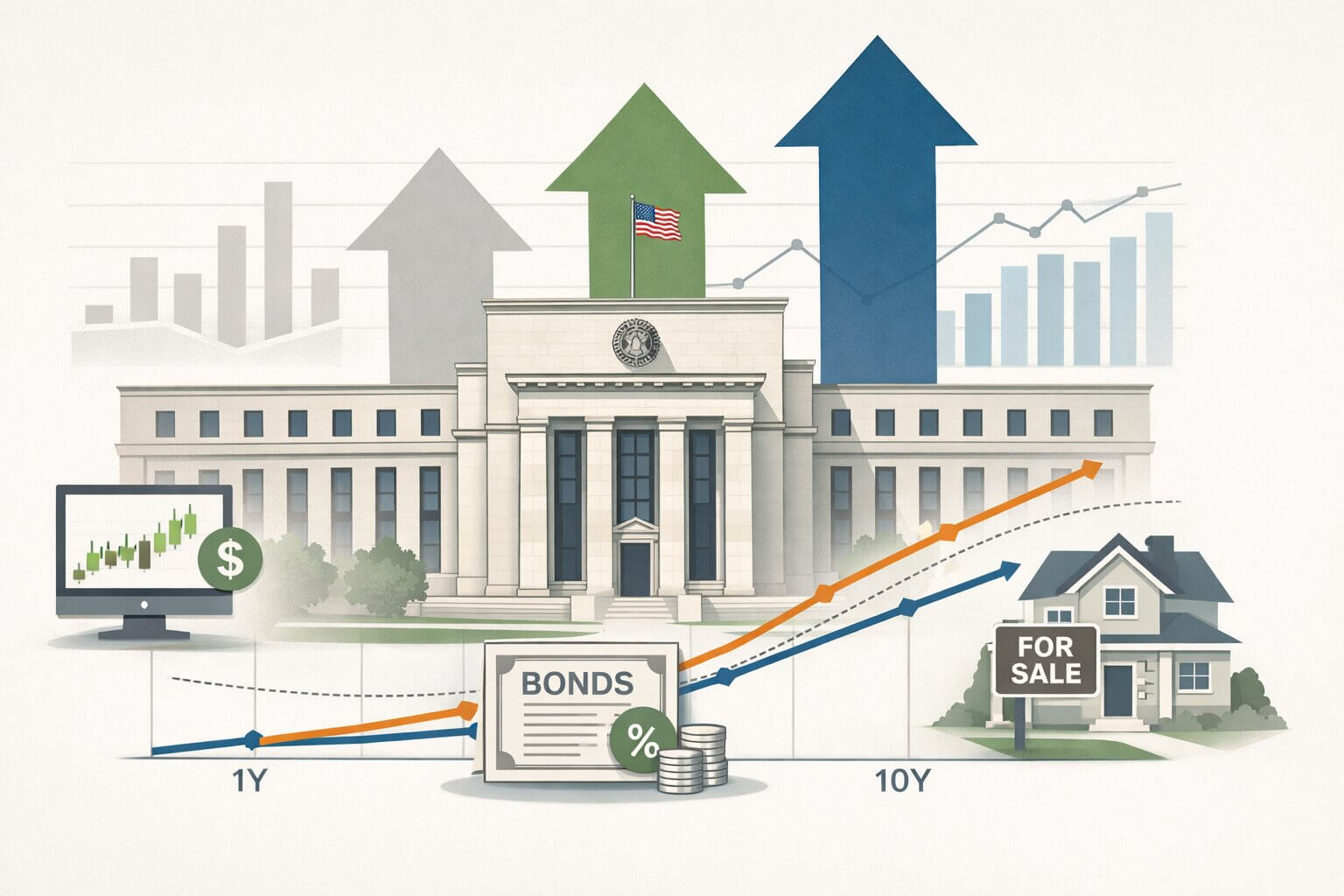
The era of easy money is over—and investors are still adjusting. As of early 2026, elevated U.S. interest rates are no longer a shock but a defining feature of the market landscape. The question now isn’t when rates will fall, but how long they will stay high—and what that means for capital allocation.
After aggressive tightening through 2022–2024, the Federal Reserve has held its benchmark rate above 5% into 2026, maintaining pressure on inflation that peaked in mid-2022 and has since cooled but remains above target. That persistence is reshaping how investors think about risk, return, and liquidity.
Equities: Valuations Under Pressure
Higher rates change the math of equity investing. When the risk-free rate rises, future earnings become less valuable in today’s dollars.
This dynamic has weighed particularly on growth stocks, where valuations depend heavily on long-term projections. In contrast, sectors with strong current cash flows—like energy and financials—have shown relative resilience.
The result is a more selective equity market. Investors are increasingly prioritizing profitability, balance sheet strength, and dividend yield over pure growth narratives.
Bonds: Income Is Back
For years, bonds offered limited appeal. That has changed.
By late 2025, the 10-year U.S. Treasury yield hovered around 4.5% (as of 12/15/2025, ET), providing a meaningful income alternative to equities. Short-term Treasurys have offered even higher yields, reflecting the Fed’s elevated policy rate.
This shift has revived fixed income as a core portfolio component. Investors are now able to earn attractive returns with lower volatility, prompting a rebalancing away from riskier assets.
At the same time, duration risk remains a key consideration. If rates stay higher for longer, longer-dated bonds could still face price pressure.
Real Estate: Higher Costs, Slower Growth
Real estate has felt the impact directly.
Mortgage rates, which climbed above 6.5% during 2025, have cooled housing demand and slowed price appreciation. Commercial real estate faces additional challenges, including refinancing risks and shifting demand for office space.
For investors, this environment favors caution. Income-generating properties remain attractive, but leverage has become more expensive—and more risky.
Cash: No Longer “Dead Money”
Perhaps the most striking shift is the return of cash as a viable asset class.
Money market funds and short-term instruments have delivered yields above 4% into 2026, offering liquidity with competitive returns. This has changed investor behavior, encouraging a more defensive posture and reducing the urgency to chase higher-risk opportunities.
What Investors Should Watch Next
The key variable remains inflation—and the Fed’s response.
If inflation continues its gradual decline toward the 2% target, rate cuts could emerge later in 2026. But sticky components, particularly in services, suggest the Fed may maintain its restrictive stance longer than markets initially expected.
For investors, the message is clear: adaptability matters more than ever. Portfolio strategies built for a zero-rate world may no longer hold.
A higher-rate regime isn’t just a temporary phase—it may be the new baseline.
FAQ
Why are higher interest rates bad for stocks?
Higher rates reduce the present value of future earnings and make safer assets like bonds more attractive, pressuring equity valuations.
Are bonds a good investment again in 2026?
Yes. With yields around 4–5% as of late 2025, bonds have regained relevance as a source of income and diversification.
Should investors hold more cash now?
Many are. With cash yields above 4%, holding liquidity is no longer a drag on returns.
Sources and Further Reading
- Federal Reserve FOMC Statements — Federal Reserve — 12/13/2025 — https://www.federalreserve.gov/
- U.S. Treasury Yield Data — U.S. Department of the Treasury — 12/15/2025 — https://home.treasury.gov/
- Consumer Price Index Summary — Bureau of Labor Statistics — 01/15/2026 — https://www.bls.gov/
- Mortgage Market Survey — Freddie Mac — 11/30/2025 — https://www.freddiemac.com/
---