Markets
Rising Treasury Yields Could Delay Rate Cuts in 2026
Higher borrowing costs signal policy easing may arrive later than markets expected.
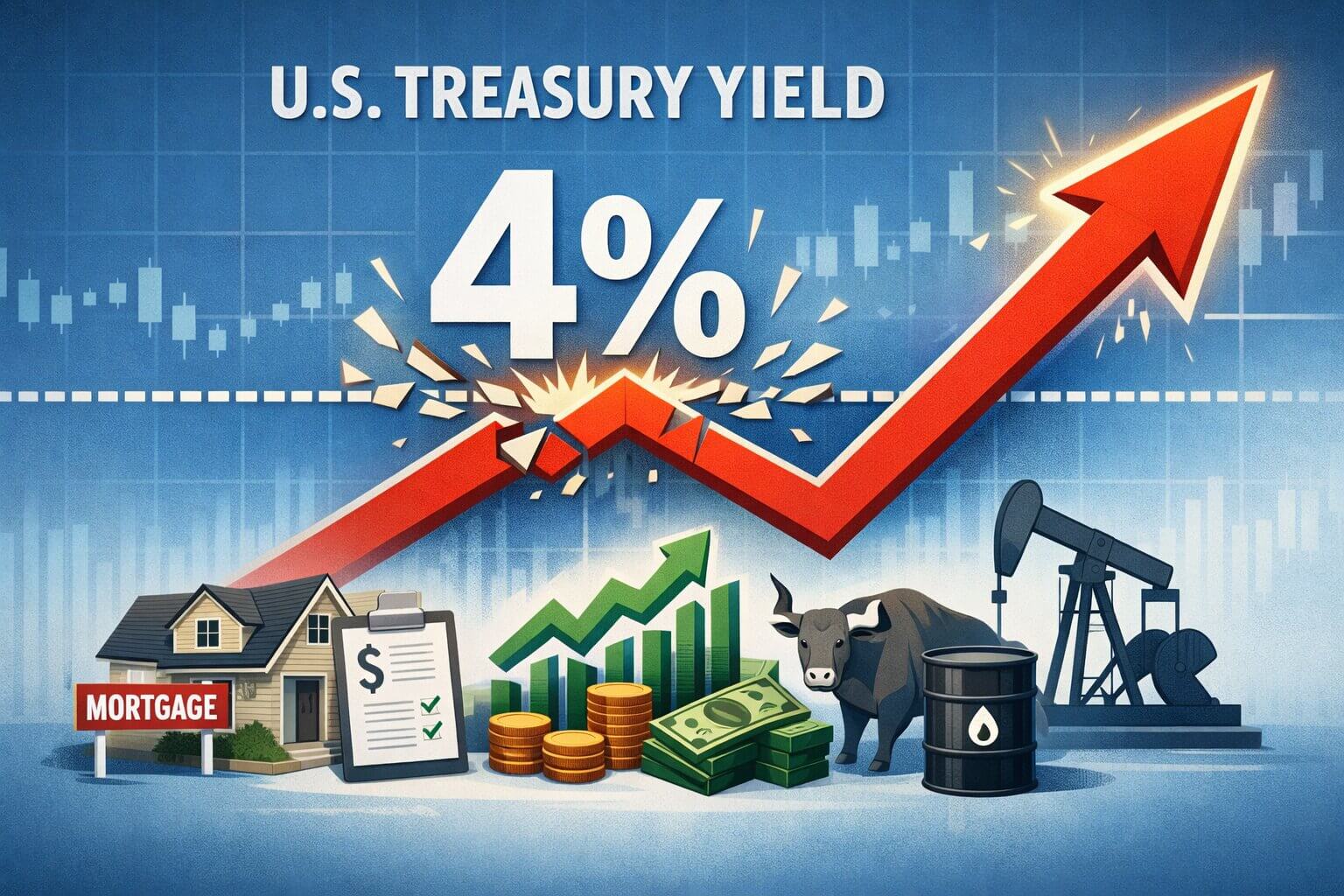
Markets face tighter financial conditions as Treasury yields stay elevated in 2026.
Stronger-than-expected labor data released on 04/04/2026 and renewed inflation risks after the 02/28/2026 Middle East conflict pushed oil prices above $100 per barrel forced investors to reassess expectations for Federal Reserve rate cuts. The 10-year Treasury yield remains in the mid-4% range as of early April, signaling that interest rates may stay higher for longer than markets anticipated.
As of April 2026, Treasury yields remain near recent highs.
Three Forces Driving Yields Higher
Economic resilience remains the first driver.
The March jobs report showed solid hiring and a low unemployment rate. Strong growth reduces pressure on the Federal Reserve to cut rates quickly. Investors adjusted expectations almost immediately.
Energy-driven inflation risk is the second force.
Oil prices surged above $100 per barrel after the late-February conflict in the Middle East. Higher energy costs can keep inflation elevated. Bond investors responded by demanding higher yields to compensate for that risk.
Policy repricing is the third factor.
At the start of 2026, markets widely expected several rate cuts. By early April, that confidence has weakened. The bond market now signals a prolonged “higher-for-longer” rate environment.
What Rising Yields Mean for Markets
The effects are spreading across the economy.
Mortgage rates are rising again, making home purchases more expensive. Corporate borrowing costs are increasing, which can slow investment and hiring. Higher yields are also weighing on stock valuations, particularly in growth sectors that rely on low financing costs.
Investors are watching Treasury yields closely in the second quarter.
If yields continue climbing, financial conditions could tighten further. Delayed rate cuts would increase pressure on housing, credit markets, and equities — raising the risk of broader market volatility in the months ahead.
---
FAQ
Why are Treasury yields rising in April 2026?
Stronger labor data released on 04/04/2026 and higher oil prices following the 02/28/2026 conflict increased inflation concerns and reduced expectations for Federal Reserve rate cuts.
Why do higher Treasury yields affect mortgages and loans?
Treasury yields serve as a benchmark for borrowing costs. When yields rise, mortgage rates and corporate loan rates typically increase as well.
Why do rising yields pressure stock markets?
Higher interest rates reduce the present value of future earnings, which tends to lower stock valuations — especially for growth-focused companies.
What should investors watch next?
The key signal is whether the 10-year Treasury yield continues rising. Sustained increases could delay rate cuts and tighten financial conditions further in 2026.
---
Sources and Further Reading
- Employment Situation Summary — Bureau of Labor Statistics — 04/04/2026 — https://www.bls.gov
- Daily Treasury Yield Curve Rates — U.S. Department of the Treasury — 04/08/2026 — https://home.treasury.gov
---