Economy
Yields Just Hit a Pressure Point for Stocks
Rising Treasury yields are tightening credit and delaying rate-cut hopes
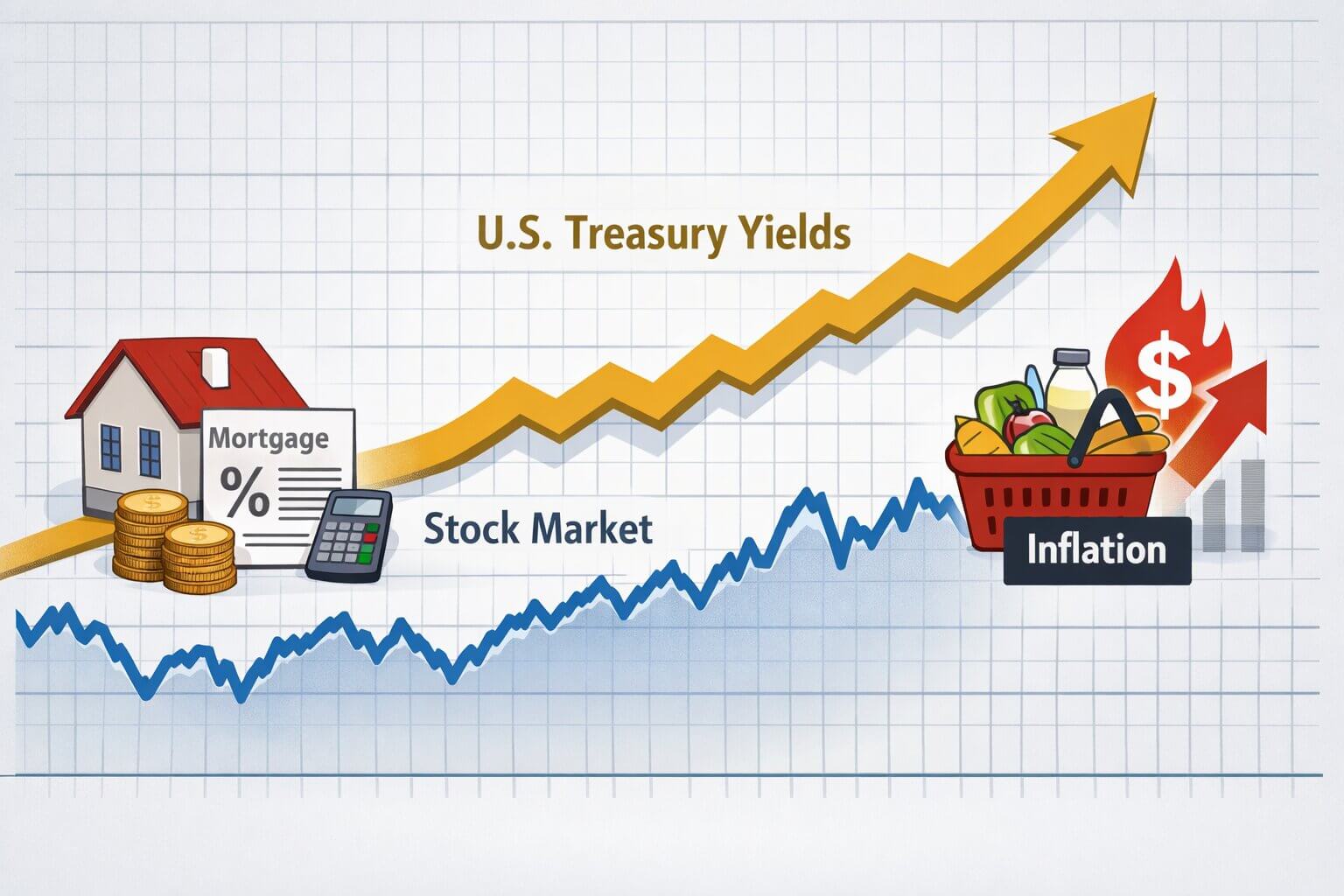
Higher Treasury yields are raising borrowing costs again — and markets are reacting quickly.
The risk is simple: if long-term yields stay near recent highs, stocks face valuation pressure and the economy could slow faster than expected. Investors are now watching whether rates are rising because growth is strong — or because inflation and federal borrowing remain stubbornly high.
The Federal Reserve held policy steady on 03/18/2026, signaling uncertainty about inflation progress. The next key test arrives with the 04/10/2026 CPI report, which could shift expectations for rate cuts.
---
Why Rising Yields Are Hitting Markets Now
Treasury yields set the price of money across the economy. When they rise, mortgages, corporate loans, and credit cards follow.
That shift is already visible. Mortgage rates remain elevated because long-term yields have stayed high, slowing housing demand and construction activity. Businesses are also paying more to finance expansion, which can delay hiring and investment.
Stocks feel the impact immediately. Higher yields reduce the value of future earnings, making equities — especially growth stocks — more vulnerable to pullbacks.
What matters now is speed. When yields move quickly, markets rarely adjust smoothly.
---
What Is Driving Yields Higher in 2026
Several forces are pushing rates up at the same time.
Economic growth remains resilient, keeping demand strong. Inflation has cooled but not fully stabilized, forcing investors to reconsider how long interest rates may stay high. Meanwhile, federal borrowing needs continue to expand, increasing Treasury supply.
That combination is unusual.
It means yields can rise even without a strong economy — simply because investors demand more compensation to hold long-term debt. Economists call this the term premium, and many believe it is increasing again in 2026.
If that trend continues, borrowing costs could stay elevated longer than markets expected just months ago.
---
What Happens Next if Yields Stay High
The next move in yields will shape the economic outlook.
If inflation slows meaningfully after the 04/10/2026 CPI release, yields could stabilize and support stock valuations. But if inflation proves sticky — or government borrowing continues to surge — rates may remain high well into 2026.
That would tighten financial conditions across the economy.
Housing would likely weaken first. Business investment could slow next. Consumer spending would eventually follow.
Investors should watch one signal above all: whether long-term yields fall after inflation improves. If they do not, markets may be entering a new era of structurally higher interest rates.
---
FAQ
Why do rising Treasury yields hurt stocks?
Higher yields increase the discount rate used to value earnings, which reduces stock prices — especially for growth companies.
Do higher yields always mean the economy is strong?
No. Yields can rise because of inflation risks or heavy government borrowing, not just strong growth.
Why does housing react quickly to higher yields?
Mortgage rates move closely with long-term Treasury yields, making housing one of the most rate-sensitive sectors.
What is the key indicator investors should watch now?
Inflation data — particularly the CPI release on 04/10/2026 — will likely determine whether yields stabilize or continue rising.
---
Sources and Further Reading
- Federal Open Market Committee Statement — Federal Reserve — 03/18/2026
- Consumer Price Index Release Schedule — Bureau of Labor Statistics — 2026
- Quarterly Refunding Statement — U.S. Department of the Treasury — 02/05/2026
---