Markets
Stock Futures Are Swinging Again — Here’s What’s Driving the Sudden Moves
Rising mortgage rates, Big Tech spending pressure, and volatility signals are reshaping market sentiment heading into Q2 2026
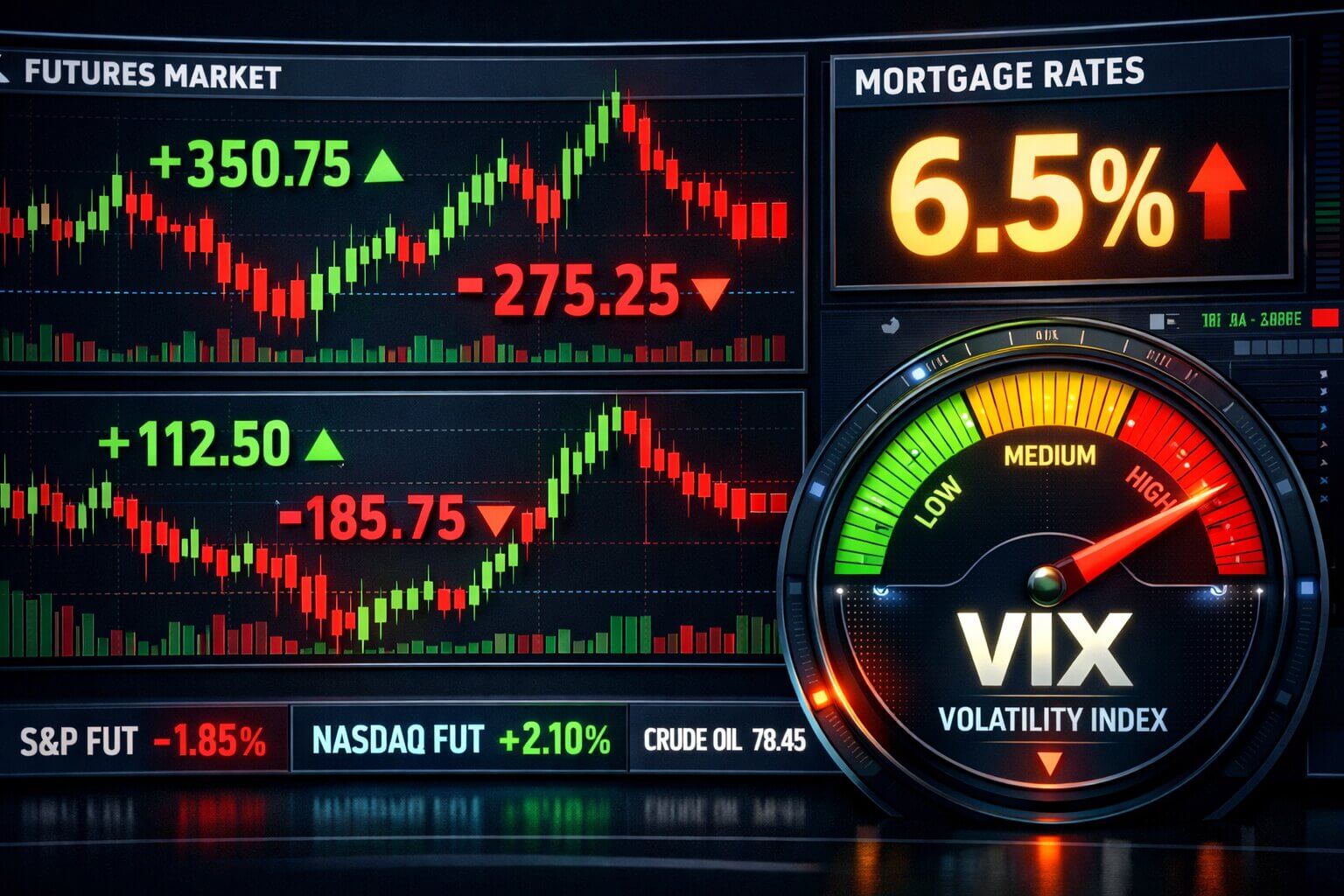
Stock market futures don’t usually move this abruptly without a reason. But in late March 2026, the shifts have been sharp enough to catch even seasoned investors off guard. Overnight swings in Dow futures are no longer just noise — they are signals that something deeper is changing beneath the surface of the market.
As of 03/26/2026, volatility has picked up alongside rising Treasury yields and renewed pressure on technology stocks. The Nasdaq has slipped into correction territory, while options activity suggests institutions are hedging more aggressively than they were just weeks ago. The pattern is familiar: when uncertainty about interest rates resurfaces, futures react first.
What makes this moment different is the convergence of forces hitting the market at the same time.
---
Mortgage Rates and Big Tech Are Tightening the Market at Once
One of the biggest drivers right now isn’t equities — it’s housing.
As of 03/26/2026, the average 30-year fixed mortgage rate has climbed to roughly 6.49%, nearing recent cycle highs. That level may not sound dramatic on its own, but it quietly tightens financial conditions across the economy. Higher borrowing costs slow home purchases, reduce refinancing, and squeeze household budgets.
In markets, that translates into softer consumer demand expectations — and ultimately, lower confidence in corporate earnings growth.
At the same time, major technology companies are adding their own layer of uncertainty. Investors are reacting to updates from firms such as Meta Platforms and Alphabet about rising artificial intelligence spending and shifting advertising outlooks. The long-term opportunity is clear, but the near-term cost is rising.
That combination — tighter money and heavier spending — makes growth stocks especially sensitive to interest rate swings.
---
Futures and the VIX Are Flashing an Early Warning for Investors
The real message is coming from positioning, not headlines.
Volatility indicators, including the VIX, have been edging higher in recent sessions, signaling increased demand for protection against downside risk. Meanwhile, the 10-year Treasury yield reached approximately 4.4% on 03/26/2026, reinforcing the idea that borrowing costs may stay elevated longer than markets previously expected.
This matters because futures markets often lead broader market direction. When institutional investors adjust risk exposure, they do it quickly — and futures capture those moves first.
The deeper insight is simple: markets are recalibrating expectations about the timing of Federal Reserve rate cuts.
If inflation remains stubborn or rates stay high, volatility could persist into the second quarter. But if borrowing costs stabilize, sentiment could shift just as quickly in the opposite direction.
For now, futures are acting like a pressure gauge.
They’re not predicting a crisis — they’re signaling a market that is becoming more cautious.
---
FAQ
Why are stock futures moving so much right now?
Because investors are reassessing interest rate expectations, inflation risks, and corporate spending trends — especially in the technology sector.
What does a rising VIX mean for the market?
It typically indicates increased hedging activity and uncertainty. It signals caution, not necessarily a market crash.
Why do mortgage rates affect stock markets?
Higher mortgage rates tighten financial conditions, slow housing demand, and reduce consumer spending — all of which influence corporate earnings expectations.
Are futures a reliable signal for market direction?
They are often an early indicator of risk sentiment because institutional investors adjust positions through futures before broader markets react.
---
Sources and Further Reading
- U.S. Stock Futures Slip as Treasury Yields Rise — Reuters — 03/26/2026 — https://www.reuters.com
- Mortgage Rates Climb Toward Cycle Highs — Freddie Mac — 03/26/2026 — https://www.freddiemac.com
- Nasdaq Enters Correction Territory — Barron's — 03/26/2026 — https://www.barrons.com
- CBOE Volatility Index Market Data — Cboe Global Markets — 03/26/2026 — https://www.cboe.com
- Treasury Yield Curve Rates — U.S. Department of the Treasury — 03/26/2026 — https://home.treasury.gov
---