Markets
Stocks Rally, but Volatility Signals Rising Risk
Investors are hedging as markets face new pressure
Oil, Rates, and Earnings Are Driving the Swings
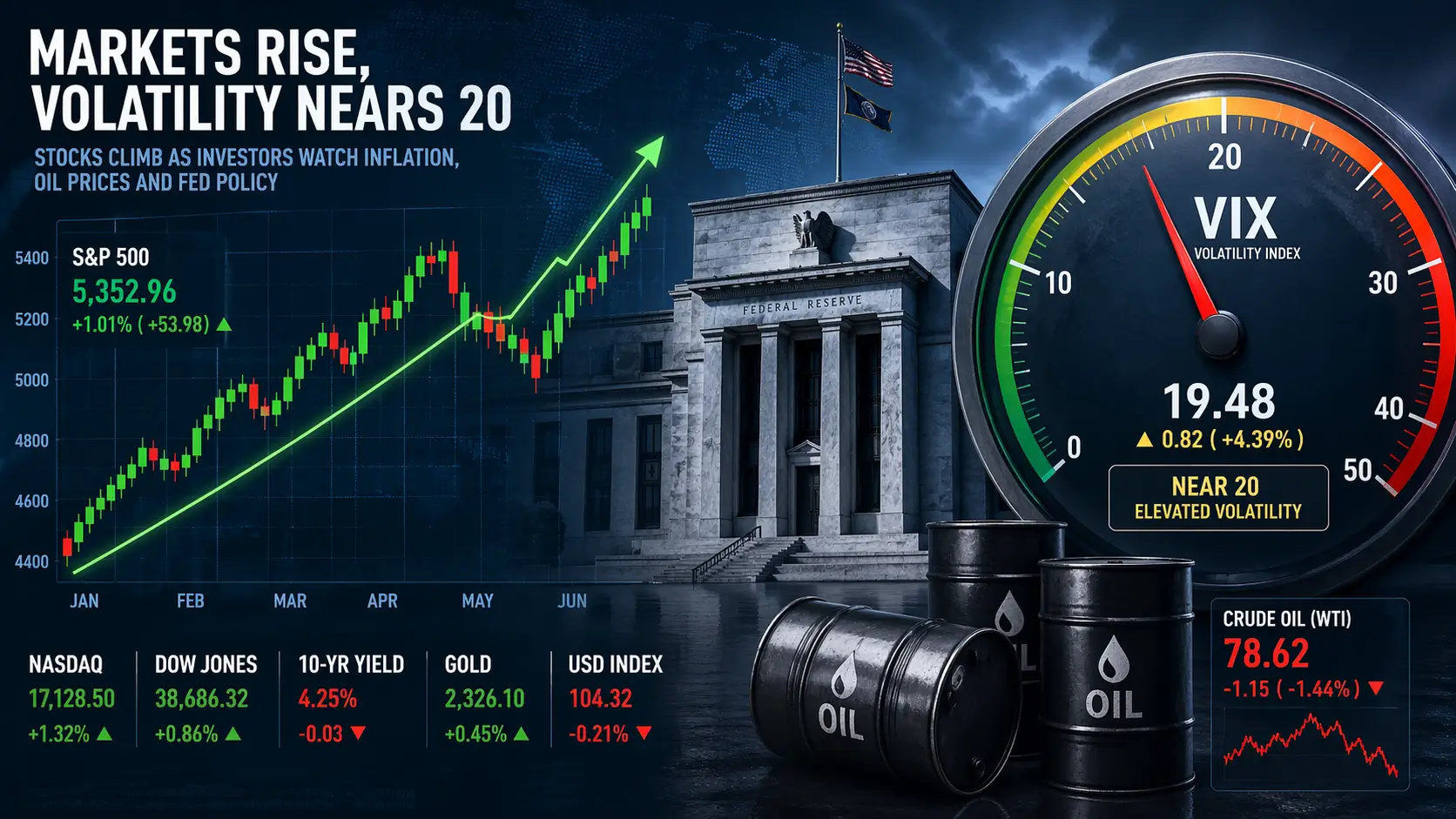
Volatility is rising while stocks stay near record highs. That shift signals markets are preparing for sudden risk.
The S&P 500 remains close to peak levels as of 04/24/2026, yet hedging activity is accelerating. Options trading volumes are climbing, and investors are buying protection even as equities advance. That behavior typically appears when confidence remains strong but uncertainty is growing.
The risk is not a downturn today. The risk is that markets have become more sensitive to negative surprises.
Three forces are driving the latest swings.
First, oil prices have surged again due to renewed geopolitical tension in major shipping routes. Higher energy costs threaten progress on inflation. If inflation stays elevated, the Federal Reserve may delay rate cuts that investors expected later in 2026.
Second, interest-rate expectations are shifting. Treasury yields have moved higher in April, forcing investors to reassess valuations built on lower borrowing costs. When stocks trade at high multiples, even small changes in rate timing can move markets quickly.
Third, earnings risk is concentrated. A small group of large technology companies continues to drive index performance. That concentration increases volatility because a single weak forecast can pressure the broader market.
Hedging Activity Is Becoming the Key Signal
The clearest signal right now is rising demand for protection.
Derivatives trading volumes increased sharply in April, and the VIX volatility index has hovered near the 18–20 range — a level that reflects caution rather than panic. Investors are not leaving equities. They are preparing for instability while staying invested.
That shift is changing portfolio behavior.
Diversification is gaining importance again. Defensive sectors, energy exposure, and companies with strong balance sheets are attracting attention. Highly valued growth stocks remain market leaders, but they are also the most vulnerable to interest-rate surprises.
The next catalyst is likely to come from one of three triggers: oil prices moving toward the $100-per-barrel level, a Federal Reserve signal that rate cuts will be delayed, or a major earnings disappointment from a large technology company.
If any of those events occur, volatility could rise quickly and pressure markets despite the ongoing rally.
FAQ
### Why is volatility rising if stocks are still near highs?
Because investors expect uncertainty around oil prices, interest rates, and concentrated earnings risk.
### Is rising volatility a sign of a market crash?
No. It usually signals caution and increased hedging before major economic or policy decisions.
### What level of volatility should investors watch?
A sustained move above 20 on the VIX typically signals rising stress and faster market swings.
### What is the biggest near-term risk for equities?
Delayed rate cuts caused by persistent inflation, especially if energy prices remain high.
---