Economy
The U.S. Labor Market Just Became the Market’s Biggest Risk
A sudden shift in hiring is forcing investors to rethink interest rates, growth, and recession odds in 2026
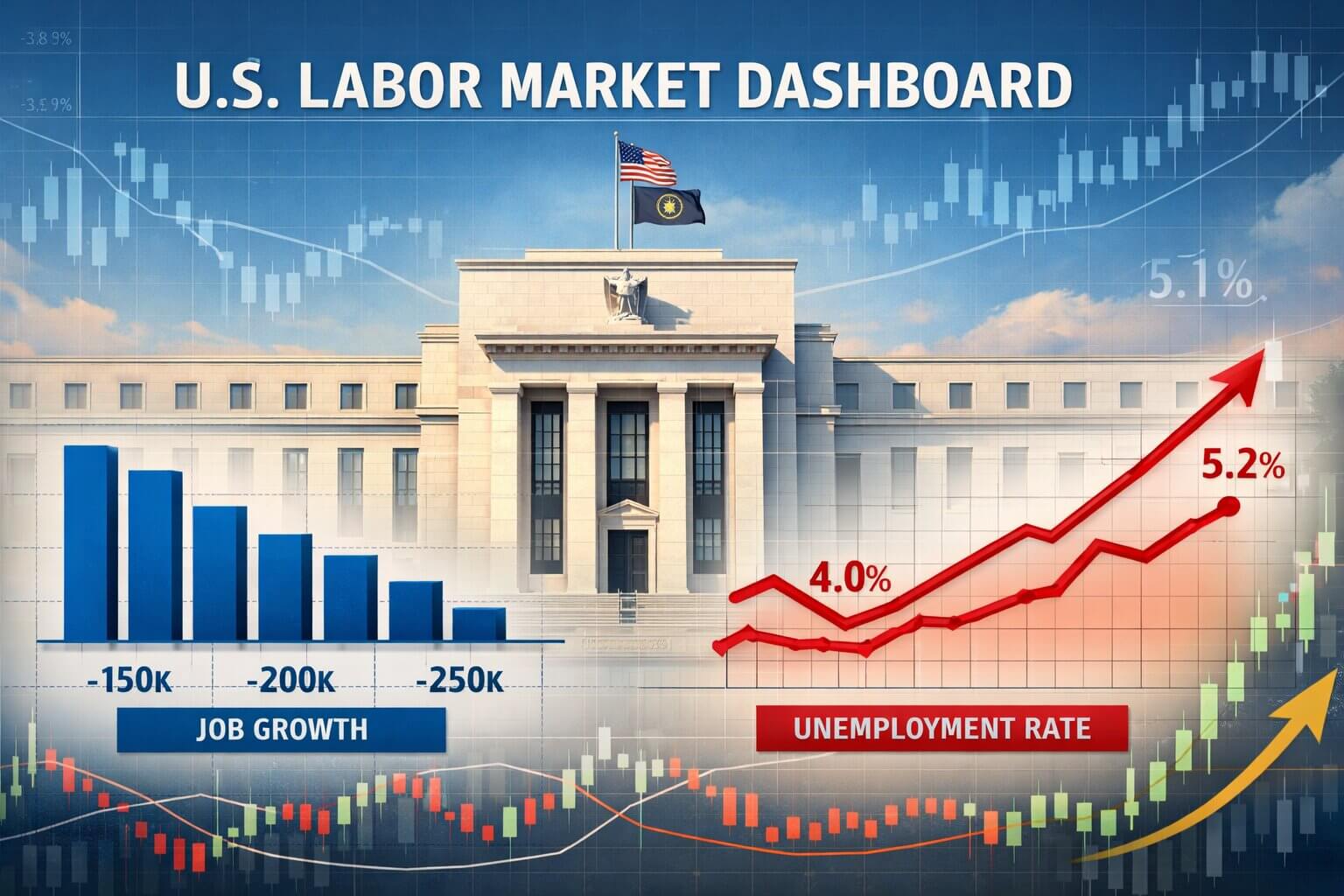
The U.S. labor market was supposed to be the economy’s safety net. Instead, it may now be the biggest source of uncertainty.
On 03/06/2026, the latest employment report delivered a shock: the economy lost 92,000 jobs in February, and the unemployment rate climbed to 4.4%, its highest level since 2021. After years of labor shortages and steady hiring, the shift felt abrupt — and markets reacted immediately.
Why? Because the labor market is no longer just another economic indicator. It’s the variable that could determine whether interest rates fall, growth slows, or recession risk rises in 2026.
And right now, the signals are getting harder to ignore.
---
The Fed Is Watching Jobs More Closely Than Inflation
For most of the past two years, inflation dominated market headlines. Today, employment data has taken its place.
When the Federal Reserve held interest rates steady on 03/19/2026, policymakers pointed directly to uncertainty in the labor market. The message was subtle but clear: the next move on rates will depend less on prices alone and more on whether jobs keep weakening.
That creates a new kind of volatility.
If unemployment rises faster, the Fed could cut rates sooner — potentially boosting stocks and bonds. But if wage growth stays firm or layoffs remain limited, policymakers may delay easing, keeping borrowing costs higher for longer.
In other words, the labor market now sits at the center of the policy debate — and the market’s risk calculus.
---
The Most Dangerous Scenario Is the One That Looks Stable
Here’s the paradox: the labor market still appears relatively calm.
Layoffs remain modest. Businesses are cautious but not panicking. On the surface, conditions look manageable.
Beneath that stability, however, momentum is fading. Job openings have dropped to multi-year lows, hiring has slowed across industries, and companies are increasingly hesitant to expand payrolls. Economists describe this phase as a “low-hire, low-fire” environment — a fragile balance that can hold for a while, then break quickly.
Historically, once layoffs begin to rise, unemployment tends to accelerate rather than drift higher.
That’s why investors are paying closer attention now than at any point since the pandemic recovery.
The labor market has become the final pillar supporting the U.S. economy after inflation cooled and growth stabilized. If that pillar weakens meaningfully in 2026, the consequences would ripple through consumer spending, corporate earnings, and monetary policy all at once.
For markets, the question is no longer whether the labor market is slowing.
It’s whether it’s about to tip.
---
FAQ
Why is the labor market driving markets in 2026?
Because employment conditions directly influence Federal Reserve rate decisions, consumer spending, and business investment at the same time.
What does a “low-hire, low-fire” labor market mean?
It describes an environment where companies slow hiring but avoid layoffs, creating temporary stability that can shift quickly if economic conditions worsen.
Could weak jobs data lead to interest rate cuts?
Yes. A sustained rise in unemployment would likely increase pressure on the Federal Reserve to lower interest rates to support economic activity.
Is the U.S. economy entering a recession?
Not yet. But continued labor market deterioration would significantly increase the probability of a broader slowdown.
---
Sources and Further Reading
- Employment Situation Summary — U.S. Bureau of Labor Statistics — 03/06/2026 — https://www.bls.gov/news.release/empsit.nr0.htm
- Job Openings and Labor Turnover Survey — U.S. Bureau of Labor Statistics — 03/12/2026 — https://www.bls.gov/jlt
- Federal Reserve Policy Statement — Federal Reserve Board — 03/19/2026 — https://www.federalreserve.gov
- U.S. Labor Market Shows Signs of Cooling — Reuters — 03/06/2026 — https://www.reuters.com
- Labor Market Risks Complicate Fed Outlook — Wall Street Journal — 03/20/2026 — https://www.wsj.com
---