Markets
Why Rising Treasury Yields Are Sending a New Signal to Markets
From inflation signals to equity valuations, the bond market remains Wall Street’s most critical compass
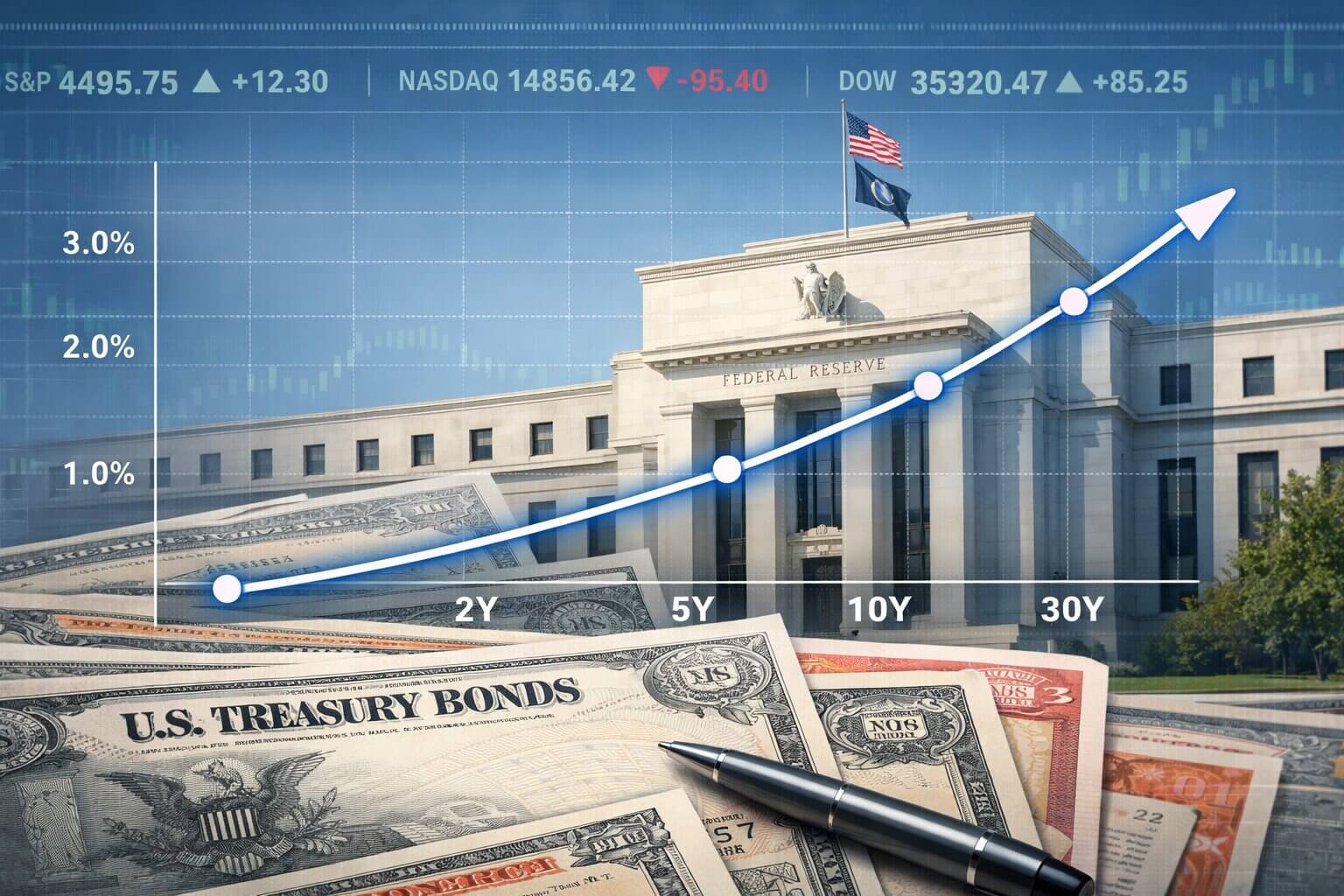
The Bond Market as the Economy’s Signal System
Rising Treasury yields are rarely just a technical move. They often signal shifting expectations about inflation, growth, and interest rates — and investors are starting to take notice again.
As of 03/17/2026 (ET), the 10-year Treasury yield has hovered near recent cyclical highs, reflecting persistent uncertainty around inflation and monetary policy. Investors focus on this benchmark because it anchors borrowing costs across the economy—from mortgages to corporate debt.
Why does the 10-year matter so much? It sits at the intersection of growth expectations, inflation outlook, and global capital flows. When it moves, nearly every asset class reacts.
Yields as a Window Into Inflation Expectations
Treasury yields are not just about interest rates—they embed expectations about future inflation.
Nominal yields combine real returns and expected inflation. By comparing them with Treasury Inflation-Protected Securities (TIPS), investors derive breakeven inflation rates. As of early March 2026, 10-year breakeven inflation has remained elevated relative to pre-pandemic norms, signaling that markets still anticipate price pressures to persist.
Recent CPI data released on 02/12/2026 (ET) showed inflation moderating but not yet fully converging to the Federal Reserve’s 2% target. This gap helps explain why yields have remained firm despite periods of equity market volatility.
Federal Reserve Policy and Rate Expectations
Treasury yields also reflect expectations for Federal Reserve policy—often more dynamically than official guidance.
Following the Federal Open Market Committee decision on 01/29/2026 (ET), the federal funds rate remained in a restrictive range, reinforcing the central bank’s commitment to controlling inflation. However, the bond market has been actively repricing the timing and pace of potential rate cuts.
The yield curve remains a key diagnostic tool. While inversion pressures have eased compared to 2023–2024 extremes, the spread between short- and long-term yields still signals caution about long-term growth.
In essence, the bond market is constantly asking: when will policy pivot—and how aggressively?
How Yields Influence Equity Markets
If bonds are the signal, equities are the reaction.
Higher Treasury yields increase the discount rate used in equity valuation models, reducing the present value of future earnings. This dynamic has been particularly relevant for growth-oriented sectors such as technology, where cash flows are expected further in the future.
Conversely, financial institutions often benefit from higher yields, which can expand net interest margins. This divergence explains why sector rotation frequently follows movements in the bond market.
As of March 2026, equity valuations remain sensitive to even modest yield shifts. A move of 25 basis points in the 10-year yield can meaningfully alter risk appetite, especially in an environment where valuations are already stretched relative to historical averages.
What Investors Should Watch Next
Looking ahead, three catalysts stand out.
First, upcoming inflation releases will determine whether disinflation continues or stalls. Second, future Federal Reserve meetings will clarify the trajectory of policy easing. Third, global demand for U.S. Treasurys—particularly from foreign investors—will influence yield stability.
The key question is not whether yields matter—it is how quickly they will adjust to new data.
For investors, the message is clear: the bond market remains the backbone of financial pricing. Ignoring it is not an option.
FAQ
Why are Treasury yields so important for investors?
They influence borrowing costs, asset valuations, and expectations for economic growth and inflation.
What does a rising 10-year yield signal?
Typically, it reflects higher inflation expectations, stronger growth, or tighter monetary policy.
How do yields affect stock prices?
Higher yields increase discount rates, which can lower equity valuations—especially for growth stocks.
What is the yield curve and why does it matter?
It shows the relationship between short- and long-term rates and can signal recession risks or economic expansion.
Sources and Further Reading
- U.S. Treasury Yield Curve Rates — U.S. Department of the Treasury — 03/17/2026 — https://home.treasury.gov
- Consumer Price Index Summary — U.S. Bureau of Labor Statistics — 02/12/2026 — https://www.bls.gov
- FOMC Statement — Federal Reserve — 01/29/2026 — https://www.federalreserve.gov
- TIPS and Breakeven Inflation Data — Federal Reserve Bank of St. Louis — 03/2026 — https://fred.stlouisfed.org
- U.S. Equity Market Valuation Trends — S&P Global — 03/2026 — https://www.spglobal.com
- Bond Market Signals and Equity Impact — Reuters — 03/10/2026 — https://www.reuters.com
---