Economy
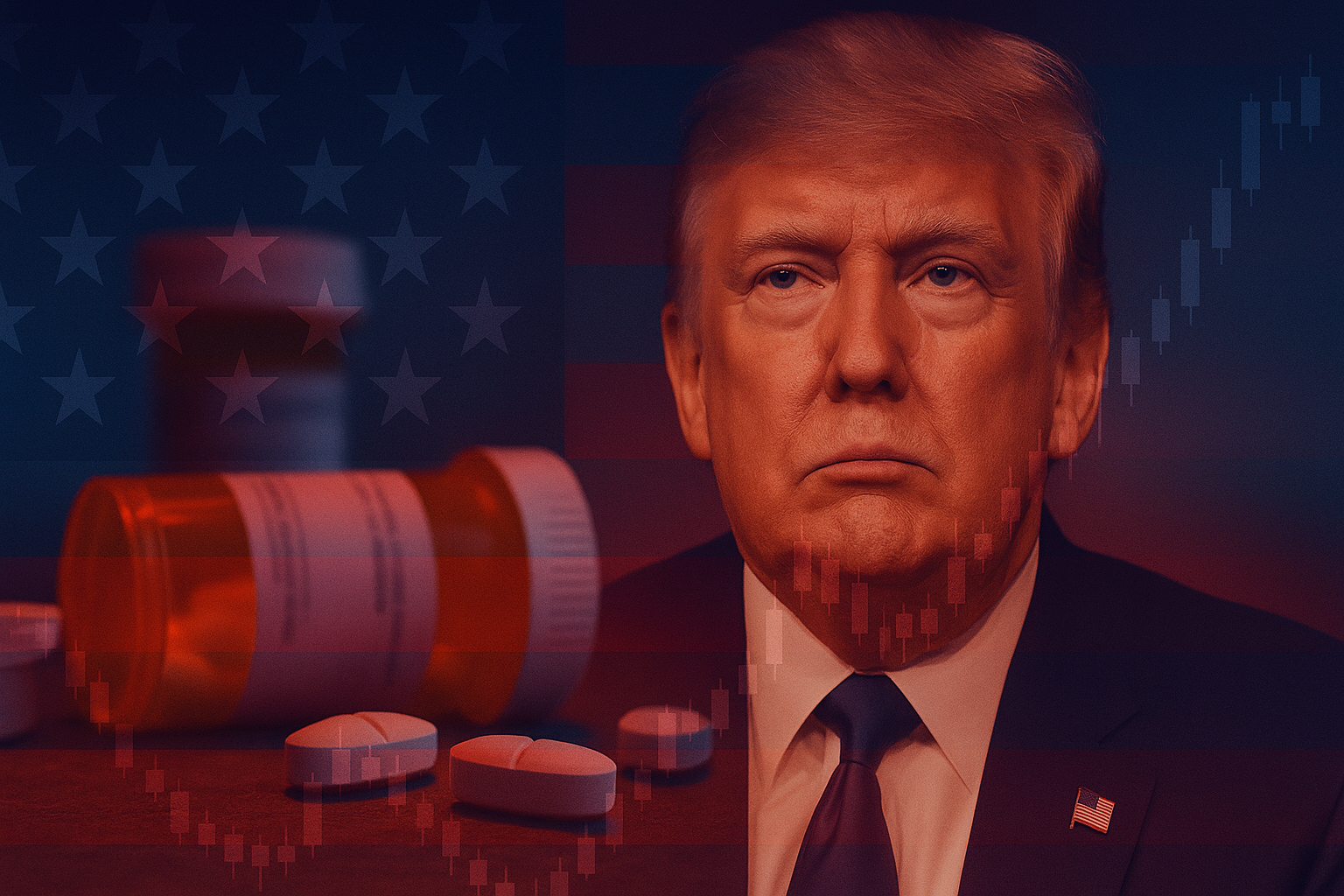
TrumpRx: Will Trump’s Drug‑Pricing Push Reshape Medicaid and Pharma Stocks?
How MFN pricing, proposed tariffs and direct sales could ripple across U.S. drug policy and markets
---
TrumpRx: A New Frontier in U.S. Drug Pricing
In a major policy move on September 30, 2025, the Trump administration unveiled the first agreement under its new drug-pricing initiative, TrumpRx. The centerpiece: Pfizer agreed to provide its medications to Medicaid at most-favored-nation (MFN) pricing, effectively aligning U.S. costs with the lowest prices offered in peer nations.
At the same time, the administration announced plans to launch a direct-to-consumer website—TrumpRx.gov—in early 2026, enabling patients to purchase discounted prescription drugs directly from manufacturers.
This dual strategy—MFN pricing combined with tariff leverage—marks a more aggressive federal role in pharmaceutical markets. But how effective or sustainable could it be? Below, we explore its mechanics, implications for Medicaid, potential risks, and the stock market’s initial reactions.
---
produto:The Art of X: Build a Business That Makes You $100/Day
1. Mechanics: How TrumpRx Aims to Cut Drug Prices
- ### MFN Pricing: Tying U.S. Costs to Global Lows
The May 2025 executive order “Delivering Most-Favored-Nation Prescription Drug Pricing to American Patients” directs federal agencies to press manufacturers to align U.S. drug prices with their lowest prices in comparable developed countries.
Under the Pfizer deal, prices charged to Medicaid will match Pfizer’s lowest global rates. For new drugs entering the U.S. market, Pfizer also agreed to apply MFN pricing upon launch.
- ### Direct-to-Consumer Access via TrumpRx.gov
To bypass intermediaries such as insurers and pharmacy benefit managers, TrumpRx.gov—expected to launch in early 2026—will allow patients to order covered drugs directly from manufacturers at standardized prices. This could enhance price transparency, though it raises logistical, regulatory, and coverage challenges.
- ### Tariff Leverage and Manufacturing Incentives
President Trump also proposed a 100% tariff on imported branded or patented pharmaceuticals effective October 1, 2025, unless manufacturers commit to U.S.-based production or investment.
Pfizer reportedly received a three-year exemption in exchange for a $70 billion U.S. manufacturing pledge. Other firms, including Roche and Novartis, have since emphasized their domestic operations to avoid tariff exposure.
- ### Scope and Limitations
Not all segments are affected equally. Generic drugs—about 90% of prescriptions by volume—are largely exempt from tariff provisions.
Current agreements focus on Medicaid-covered drugs and new product launches, not the broader commercial market. Extending MFN rules to Medicare or private insurers would face significant legal and industry resistance.
---
2. Medicaid and Federal Health Spending: Potential Gains and Pitfalls
- ### Projected Medicaid Savings
By pushing U.S. prices toward global lows, the TrumpRx-Pfizer agreement could substantially cut Medicaid’s pharmaceutical costs. Officials claim the deal will generate “massive” program savings.
The true impact, however, depends on compliance, exemptions, and how savings are distributed among the government, intermediaries, and patients.
- ### Industry Responses and Risks
Pharma companies could respond by limiting participation, delaying drug launches, or reducing rebates. Some may challenge the policy in court, citing overreach or threats to patent incentives.
If participation falters, the administration may impose penalties or tariffs—potentially disrupting supply chains and triggering litigation.
- ### Interaction with the Inflation Reduction Act
Under the Inflation Reduction Act of 2022, Medicare will begin negotiating certain drug prices in 2026. Trump’s MFN model overlaps with that timeline but uses different mechanisms. The two could conflict if manufacturers resist multiple, overlapping pricing constraints.
---
3. Pharma Stocks and Industry Structure: Winners and Losers
- ### Market Reaction: Early Surge
After the Trump-Pfizer announcement, Pfizer shares rose more than 6% on September 30, 2025. Other pharmaceutical stocks also rallied, as investors anticipated similar deals.
Markets viewed tariff exemptions and guaranteed government sales as offsets to reduced pricing margins.
- ### Tariff Exposure
Companies relying heavily on foreign manufacturing face the greatest risk under 100% tariff scenarios. Firms already expanding U.S. operations, such as Roche and Novartis, have stressed their domestic commitments.
Smaller drugmakers without U.S. capacity may be forced into mergers or partnerships.
- ### Margin Pressure vs. Innovation Incentive
Downward price pressure could squeeze margins, particularly for niche or incremental drugs. If revenue shrinks, R&D investment might decline.
Conversely, tariff exemptions tied to U.S. investment could spur reshoring of pharmaceutical manufacturing—potentially reshaping the industry’s geography and cost structure.
---
produto:The Art of X: Build a Business That Makes You $100/Day
4. Risks, Uncertainties, and Outlook
- ### Legal and Political Challenges
The program may encounter constitutional and statutory challenges related to executive authority and patent protections. Congress could intervene, or pharmaceutical firms could litigate to block enforcement.
- ### Distributional and Access Effects
Patients with commercial insurance may see little benefit, as MFN pricing currently bypasses insurer-negotiated networks. However, uninsured and low-income Americans could benefit through TrumpRx’s direct-sales model—if its logistics and coverage systems function effectively.
- ### Scenarios for 2026
- Best case: Multiple manufacturers join, tariffs spur investment, Medicaid and Medicare save billions, and the industry adapts through efficiency.
- Baseline: Limited participation; legal disputes delay rollout; modest pricing gains.
- Worst case: Legal injunctions, pharma withdrawal, supply disruptions, and an innovation slowdown.
Key milestones to watch: new MFN signatories by year-end 2025, the TrumpRx.gov rollout in early 2026, and judicial rulings on tariff authority.
---
5. What to Watch Next
- Further MFN deals with firms like Eli Lilly, Merck, or Johnson & Johnson.
- Court decisions on MFN legality and tariff powers.
- Real-world impact on patient pricing and Medicaid spending.
- Potential M&A or partnerships to manage compliance costs.
- Fiscal implications in FY 2026–2027.
At AlphaPulse, we’ll continue tracking whether TrumpRx becomes a lasting structural reform—or merely a bold policy experiment.
---
FAQ
Q: What is TrumpRx, and how does it aim to lower drug prices?
A: TrumpRx combines most-favored-nation (MFN) pricing—tying U.S. drug costs to the lowest global benchmarks—with a direct-to-consumer purchasing portal and tariff pressure to incentivize domestic production.
Q: Will this policy reduce costs for privately insured patients?
A: Initially, the impact will likely be limited. Current agreements focus on Medicaid and new drug launches. Extending MFN pricing to private markets would require additional regulatory or legislative action.
Q: How might this affect pharmaceutical stocks?
A: Stocks rallied in the short term (Pfizer up ~6%) as investors weighed tariff exemptions and guaranteed sales against future margin compression.
Q: What are the biggest risks?
A: Potential litigation, noncompliance by manufacturers, supply disruptions, slower innovation, and the logistical challenges of implementing a federal direct-sales platform.
---
Sources and Further Reading
- White House: Fact Sheet: President Donald J. Trump Announces First Deal to Bring Most-Favored-Nation Pricing to American Patients (Sept. 30, 2025).
- Reuters: TrumpRx Website to Launch Early 2026, Senior Administration Official Says (Sept. 30, 2025).
- Congress.gov: Delivering Most-Favored-Nation Prescription Drug Pricing to American Patients (Executive Order, May 2025).
- Time Magazine: Trump’s Tariffs Target Pharmaceuticals, Trucks, and Furniture (Sept. 2025).
- Wall Street Journal: White House to Announce TrumpRx Drug-Buying Website and Deal with Pfizer (Sept. 2025).
- Reuters: Roche Highlights U.S. Plans After Trump Pharma Tariff Announcement (Sept. 26, 2025).
- Investopedia: Get Ready for TrumpRx: Trump’s Deal with Pfizer and Drug Prices (Oct. 2025).
- Wikipedia: Inflation Reduction Act of 2022.
---