Economy
The New Escalation of the U.S.–China Trade War and the Stakes Ahead of the APEC Summit
Trump’s 100% tariff threat, China’s rare-earth export controls, and what’s at stake before the APEC face-off
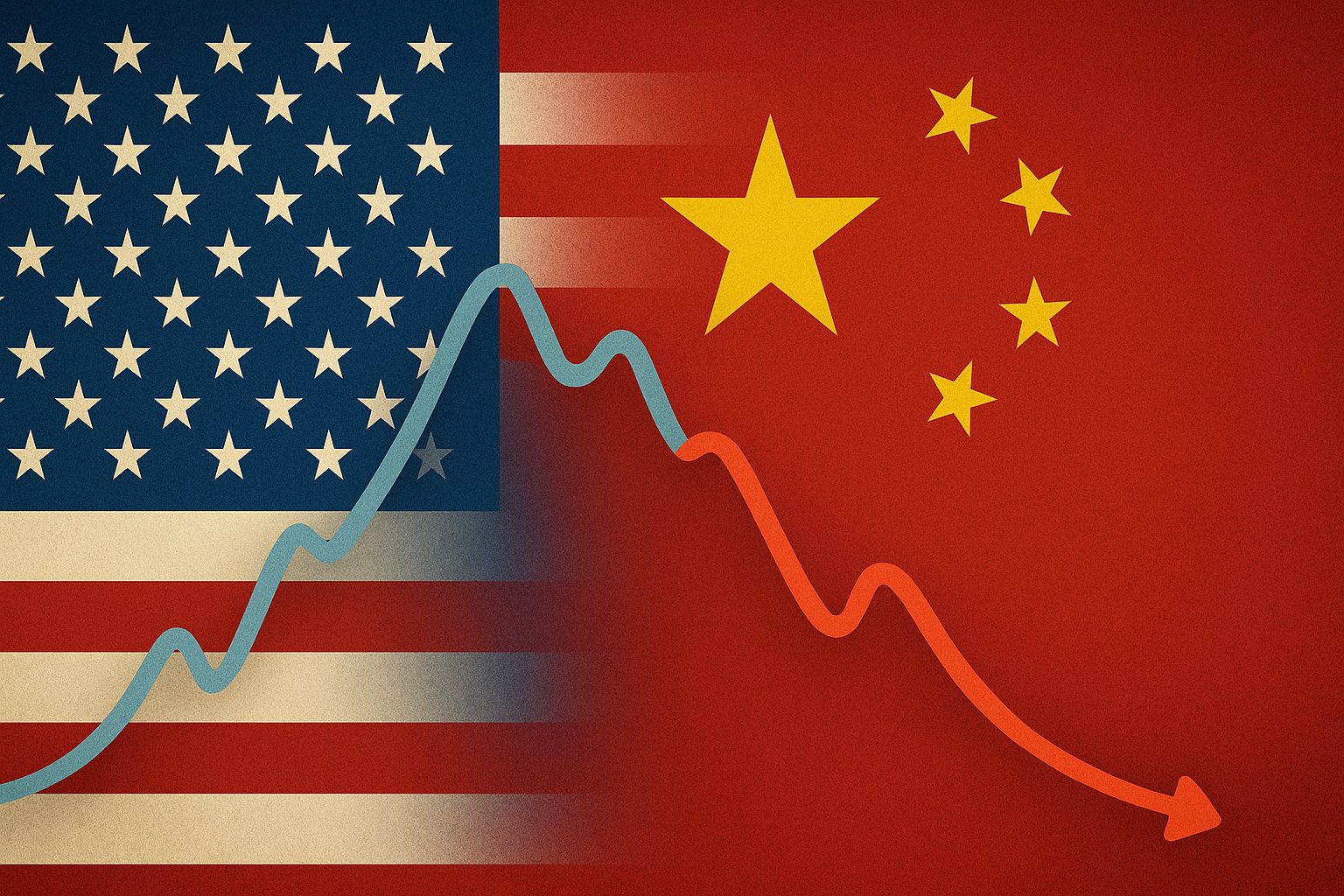
In October 2025, the U.S.–China trade conflict reignited with fresh intensity. President Donald Trump announced plans to impose 100% tariffs on Chinese imports starting November 1, while Beijing countered by expanding its export controls on rare-earth elements—a move that strikes at the core of global high-tech supply chains.
With the upcoming APEC summit potentially serving as a stage for a Trump–Xi meeting, the dispute has entered a critical diplomatic phase. Will it de-escalate—or deepen into a broader confrontation? This article examines the key developments, sectoral impacts, market reactions, and what to watch as we approach the APEC gathering.
produto:The Art of X: Build a Business That Makes You $100/Day
1. Renewed Tariff Pressure from Washington
1.1 Trump’s 100% Tariff Threat
On October 10, 2025, President Trump declared that, beginning November 1, the United States would impose a 100% tariff on all Chinese imports in retaliation for Beijing’s tighter restrictions on rare-earth exports. He also announced new U.S. export controls targeting critical software used by Chinese firms.
The move marks one of the sharpest escalations in trade policy since the original 2018–2019 trade war, especially since Trump specified that the measure would come “on top of any tariff currently in place.”
1.2 Diplomatic Pushback and Signaling
The administration’s rhetoric, however, has not been entirely uniform. On October 13, Treasury Secretary Scott Bessent sought to temper market expectations, stating that “the 100% tariff does not have to happen” and emphasizing that communication channels with Beijing remain open. He also confirmed that Trump and Xi were still expected to meet during the upcoming APEC summit in South Korea.
Markets initially sold off on the announcement, but later rebounded as Trump’s tone softened—suggesting that the tariff threat may serve as a negotiating tactic as much as an economic weapon.
---
2. China’s Countermove: Expanding Rare-Earth Export Controls
2.1 What Changed—and Why It Matters
On October 9–10, China unveiled an expanded export control regime, adding five new rare-earth elements—holmium, erbium, thulium, europium, and ytterbium—to its restricted list, which already covered seven others. That brings 12 of the 17 rare-earth metals under export control.
The new measures also tighten rules on exporting equipment and technologies used in mining, refining, and magnet manufacturing. Foreign firms must now secure export licenses from Beijing even for products containing trace amounts of Chinese-sourced rare-earth materials.
2.2 Beijing’s Framing and Strategic Posture
China has justified the move on grounds of national security and dual-use technology concerns, arguing that the U.S. provoked escalation through its tariff threats. Analysts note that Beijing is leveraging its dominance in rare-earth processing and magnet production—industries where China holds overwhelming global market share.
In essence, China is signaling that this conflict extends beyond trade—it’s about control over technological chokepoints and supply chain leverage.
---
3. Geopolitics on Display: From IMF Meetings to APEC
3.1 The IMF and World Bank Meetings
The annual IMF and World Bank meetings in Washington, D.C., originally focused on global growth and monetary coordination, were quickly overshadowed by Trump’s tariff announcement. The renewed trade tensions dominated discussions, with finance ministers and central bankers watching closely as markets reacted to the potential escalation.
Even with Bessent’s reassurances, the combination of tariffs and export controls has cast a long shadow over multilateral diplomacy.
3.2 APEC as the Diplomatic Stage
The APEC summit in South Korea, scheduled for late October, looms as a pivotal moment. Trump and Xi have tentatively agreed to meet—but Trump has hinted that the meeting could be canceled if Beijing fails to offer concessions.
APEC could therefore become both a stage for posturing and an opening for compromise—a forum where strategic theater may give way, however briefly, to negotiation.
3.3 Timing, Leverage, and Restraint
Some observers believe Beijing is deliberately avoiding immediate retaliation to prevent uncontrolled escalation. Others note that both sides could choose to phase in or temporarily delay measures, such as granting one-year export licenses or selectively enforcing tariffs.
Ultimately, the choreography surrounding APEC will determine whether tensions cool—or intensify further.
---
4. Sectoral and Market Impacts: Where the Pressure Falls
4.1 Rare-Earths and Midstream Vulnerabilities
Rare-earth elements are essential to EV motors, permanent magnets, sensors, defense systems, and advanced electronics. The newly restricted elements may not always feed directly into semiconductor production, but they play critical roles in midstream industries such as magnet fabrication, alloying, and component manufacturing.
Recent research indicates that systemic trade risk is often greatest in intermediate and midstream products, suggesting that disruption could disproportionately impact manufacturers dependent on complex, multi-tiered supply chains.
4.2 Defense, Technology, and Strategic Industries
High-tech and defense systems—ranging from radar to drones to precision weaponry—rely heavily on rare-earth alloys and magnets. Restricting access to these materials gives Beijing potential leverage in the ongoing defense-tech competition. As a result, companies in these sectors may accelerate efforts to localize or diversify their supply chains, even at higher cost.
4.3 Market and Financial Fallout
- Following Trump’s announcement, U.S. stock markets initially slumped, especially in tech and high-beta equities.
- Shares of Chinese rare-earth producers surged, with one industry index rising more than 4%.
- China’s overall exports exceeded expectations in September, but the renewed trade conflict has clouded the outlook.
- The dollar and risk assets fluctuated as traders assessed which measures would actually be implemented.
- Bitcoin, viewed by some as a speculative risk asset, also declined amid broader market uncertainty.
Investors are likely to hedge positions, rotate toward defensive sectors, and seek exposure to supply-chain diversification plays.
---
5. Scenarios and Signals to Watch Ahead of APEC
Scenario A: Diplomatic De-escalation
- Trump delays or limits the 100% tariff implementation.
- China relaxes or expands export licensing.
- APEC yields a cooperative or “managed compromise” tone.
- Markets stabilize, and expectations for renewed negotiations rise.
This scenario requires both sides to accept partial concessions while preserving face.
Scenario B: Calibrated Escalation
- Partial tariffs on selected goods.
- Targeted Chinese countermeasures in semiconductors or magnets.
- APEC ends with sharp rhetoric but continued backchannel dialogue.
- Market volatility persists.
This “controlled burn” outcome would sustain leverage without triggering full-scale economic fallout.
Scenario C: Full Confrontation
- The U.S. fully enforces 100% tariffs.
- China imposes sweeping export bans or tech restrictions.
- APEC collapses as a diplomatic flashpoint.
- Supply chains seize, inflation spikes, and global markets absorb heavy shocks.
While unlikely, this scenario remains a credible risk given the tools both sides have in reserve.
Key Indicators to Monitor
- Public statements by Trump, Xi, and senior economic officials.
- Chinese licensing activity and export data.
- Prices for rare-earth magnets, alloys, and specialty metals.
- Movements in defense, semiconductor, and industrial equities.
- Reactions from third-party economies such as Japan, South Korea, India, and the EU.
These signals will shape the real-time trajectory of the dispute.
---
6. Strategic Takeaways for Stakeholders
- Map exposures. Identify portfolio and supply-chain dependencies on Chinese rare-earth sources and midstream components.
- Build hedges. Consider derivatives, commodity exposure, or geopolitical hedge strategies to cushion volatility.
- Prioritize flexibility. Maintain liquidity and readiness to adjust positions quickly.
- Track diplomacy as closely as data. Political developments may shift risk regimes faster than quarterly indicators.
- Look beyond raw materials. The real vulnerabilities often lie in midstream networks—processing, alloys, and manufacturing—not extraction alone.
produto:The Art of X: Build a Business That Makes You $100/Day
Conclusion
The U.S.–China trade dispute has entered a volatile new phase, with threats of 100% tariffs and rare-earth export controls redefining the battlefield of economic statecraft. The APEC summit may prove decisive—whether as a moment of brinkmanship, negotiation, or fragile détente.
For investors, technology firms, defense contractors, and policymakers, the coming weeks demand vigilance and agility. The direction of this confrontation will shape not only markets but the architecture of global supply chains for years to come.
---
Sources and Further Reading
- Reuters: “U.S. to impose additional 100% tariff on Chinese imports”
- Reuters: “Trump ratchets up U.S.–China trade war, promising new tariffs”
- Reuters: “Trump’s reignited trade war with China clouds IMF, World Bank meetings”
- Al Jazeera: “China tightens export controls on rare-earth metals”
- Reuters: “How China’s new rare-earth export controls work”
- Reuters: “China tightens rare-earth export controls, targets defense, semiconductor users”
- Reuters: “Beijing blames U.S. for raising trade tensions, defends rare-earth curbs”
- Reuters: “Trump on track to meet Xi in South Korea, Bessent says”
- Reuters: “China’s exports top forecast but fresh U.S. trade spat raises risks”
- Reuters: “Wall Street slumps as Trump hits China with more tariffs”
- Reuters: “Stocks, dollar tumble; Trump says he will raise China tariffs to 100%”
- arXiv: “Systemic Trade Risk Suppresses Comparative Advantage in Rare-Earth-Dependent Industries”
- Reuters Commentary: “The U.S. rare-earth chokepoint is a big little problem”
---