Economy
Recession Signals Flash Ahead of March Fed Meeting
Weaker GDP, falling sentiment, and macro headwinds reignite debate over a U.S. downturn in 2026
A Sudden Shift in the Data Narrative
A cluster of weaker-than-expected economic signals in mid-March 2026 has reignited a question that markets had largely set aside: Is the U.S. economy drifting toward recession?
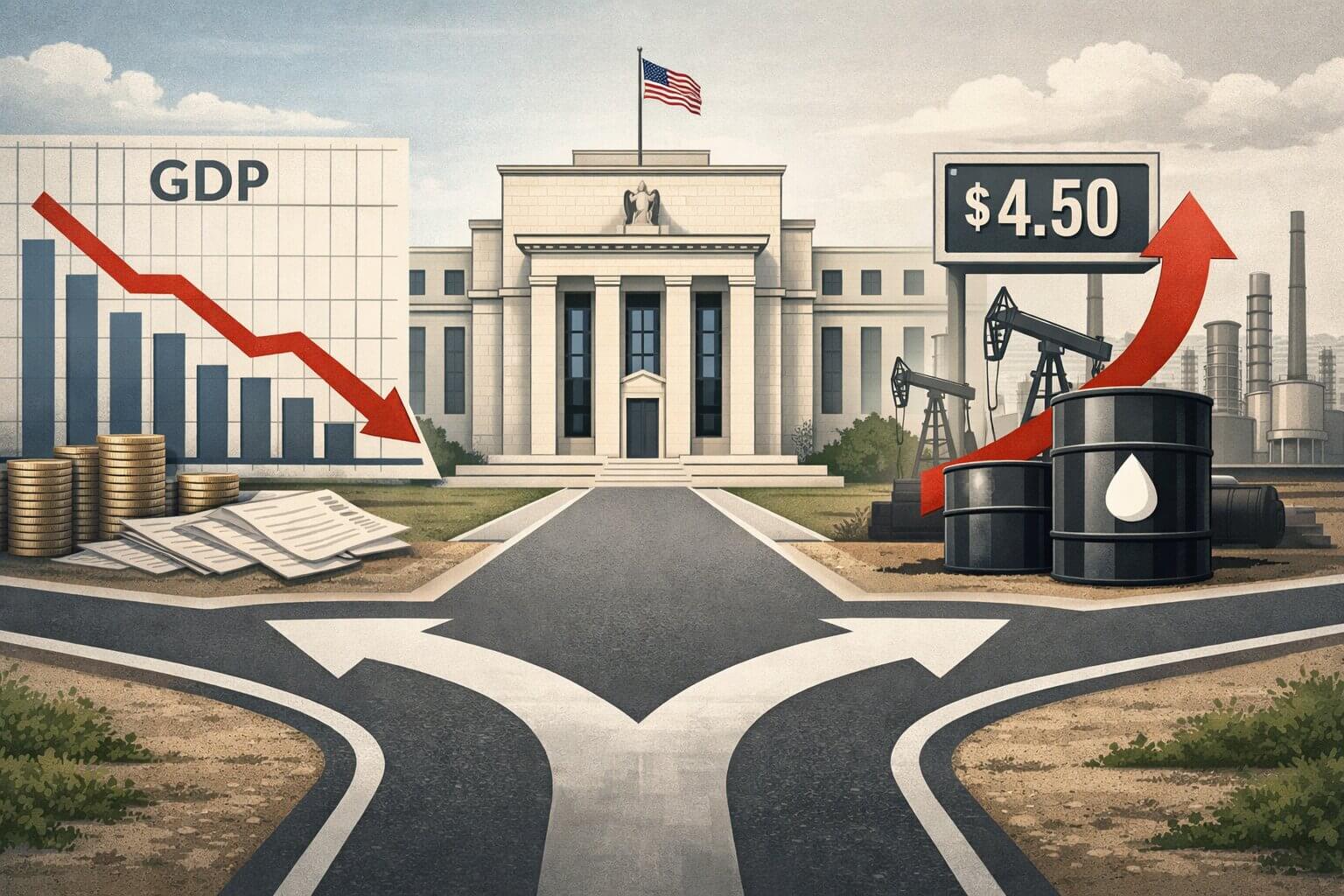
The immediate catalyst came on 03/13/2026, when the Bureau of Economic Analysis revised fourth-quarter 2025 real GDP growth down sharply to 0.7%, from a prior estimate of 1.4%. While still positive, the downgrade suggests the economy entered 2026 with far less momentum than previously assumed.
At the same time, consumer confidence is deteriorating. Preliminary data released on 03/14/2026 showed the University of Michigan’s consumer sentiment index falling to 55.5, one of the weakest readings in recent years. The drop reflects growing concern among households about inflation, income prospects, and broader economic uncertainty.
The timing is particularly notable: both data points arrived just days before the Federal Reserve’s March policy meeting, raising the stakes for policymakers already navigating a complex macro environment.
Labor Market — Still Strong or Quietly Softening?
For much of the past year, the labor market has served as the economy’s primary pillar of resilience. But even here, cracks are beginning to appear.
Recent data through February 2026 show job growth continuing, but at a slower pace compared to late 2025. Hiring remains positive, yet momentum has cooled, and leading indicators such as job openings and voluntary quits suggest declining worker confidence.
The unemployment rate has remained relatively stable, but the broader trend points to gradual softening rather than outright deterioration. This distinction is critical: recessions typically require a clear and sustained breakdown in employment, which has not yet materialized.
Still, the trajectory matters more than the level. A cooling labor market, combined with weakening consumer sentiment, raises the risk of a feedback loop where cautious households begin to pull back spending.
Inflation Pressures Reemerge
Complicating the outlook is a renewed rise in inflationary pressures, driven in part by higher energy prices linked to escalating tensions in the Middle East.
Oil price volatility has pushed gasoline and transportation costs higher in early March 2026, threatening to reverse some of the disinflationary progress seen in late 2025. This dynamic introduces the possibility of a stagflationary environment—slowing growth alongside persistent inflation.
Recent inflation data suggest that while core measures had been moderating, the path toward the Federal Reserve’s 2% target remains uneven. Energy-driven price increases could delay further progress, especially if geopolitical risks persist.
Markets React — Rates, Equities, and Housing
Financial markets have responded quickly to the shifting macro narrative.
Treasury yields have declined in early March 2026, reflecting increased demand for safe-haven assets and expectations that the Federal Reserve may need to pivot toward a more accommodative stance later this year.
Equity markets, meanwhile, have become more volatile. Defensive sectors such as utilities and healthcare have outperformed, while cyclical stocks—particularly in industrials and consumer discretionary—have faced renewed pressure.
In housing, mortgage rates remain elevated relative to pre-2022 levels, continuing to weigh on affordability. Softer economic data may eventually bring rates down, but for now, the combination of high borrowing costs and cautious consumers is dampening activity.
Fed Policy at a Crossroads
The Federal Reserve entered 2026 with a cautious stance. At its 01/28/2026 meeting, policymakers signaled a willingness to hold rates steady while assessing incoming data, emphasizing that inflation risks had not fully subsided.
The latest data complicate that stance. On one hand, weaker growth and falling sentiment argue for a more dovish approach. On the other, renewed inflation pressures—particularly from energy—limit the Fed’s ability to ease policy prematurely.
This tension places the central bank in a difficult position. Cutting rates too soon risks reigniting inflation, while maintaining restrictive policy could exacerbate a slowdown.
Recession or Stagflation Scare?
So, do these signals amount to a recession?
Not yet.
While the GDP downgrade and sentiment decline are concerning, they do not, on their own, meet the criteria for a recession. The labor market remains intact, and overall economic activity continues to expand, albeit at a slower pace.
Instead, the current environment may be better characterized as a “growth scare” or early-stage slowdown, with elements of stagflation risk emerging due to rising energy costs.
Historically, recessions are marked by broad-based declines across employment, income, industrial production, and spending. The present data suggest deceleration, not contraction.
However, the margin for error is narrowing. If labor conditions weaken further or inflation shocks intensify, the probability of a downturn could rise meaningfully in the second half of 2026.
What to Watch Next
The coming weeks will be critical in shaping the economic narrative.
Key indicators to monitor include:
- March and April labor market reports
- Updated inflation readings, particularly core PCE
- Consumer spending trends in Q1 2026
- Federal Reserve guidance following the March meeting
Markets will also focus on whether the recent softness proves temporary or signals a more persistent shift in economic momentum.
For now, the U.S. economy appears to be transitioning from resilience to fragility. Whether that transition culminates in recession will depend on how these competing forces—slowing growth and stubborn inflation—resolve in the months ahead.
---
FAQ
Is the U.S. currently in a recession as of March 2026?
No. As of 03/17/2026, the economy is still expanding, though at a slower pace. Key indicators do not yet confirm a recession.
Why did recession fears resurface?
A combination of weaker GDP data (03/13/2026), falling consumer sentiment (03/14/2026), and rising energy prices triggered renewed concerns.
How is the Federal Reserve likely to respond?
The Fed faces a dilemma. Slowing growth supports rate cuts, but inflation risks may delay policy easing.
What sectors are most vulnerable if a recession occurs?
Cyclical sectors such as consumer discretionary, industrials, and housing are typically more sensitive to economic downturns.
---
Sources and Further Reading
- GDP (Second Estimate), Q4 2025 — Bureau of Economic Analysis — 03/13/2026 — https://www.bea.gov/news/2026/gdp-second-estimate-4th-quarter-and-year-2025
- Consumer Sentiment (Preliminary March 2026) — University of Michigan — 03/14/2026 — https://data.sca.isr.umich.edu
- Employment Situation Summary (February 2026) — Bureau of Labor Statistics — 03/06/2026 — https://www.bls.gov
- Job Openings and Labor Turnover Survey (Latest Release) — Bureau of Labor Statistics — 03/2026 — https://www.bls.gov/jlt
- Federal Reserve FOMC Statement — Federal Reserve — 01/28/2026 — https://www.federalreserve.gov
- Oil Market Developments — Reuters — 03/2026 — https://www.reuters.com
- U.S. Market Reaction Coverage — Bloomberg — 03/2026 — https://www.bloomberg.com
---