Markets
Is the U.S. Stock Market Entering a New Bull Cycle?
Technical signals, global liquidity, and investor sentiment offer mixed answers as early-2026 optimism collides with a March risk-off shock.
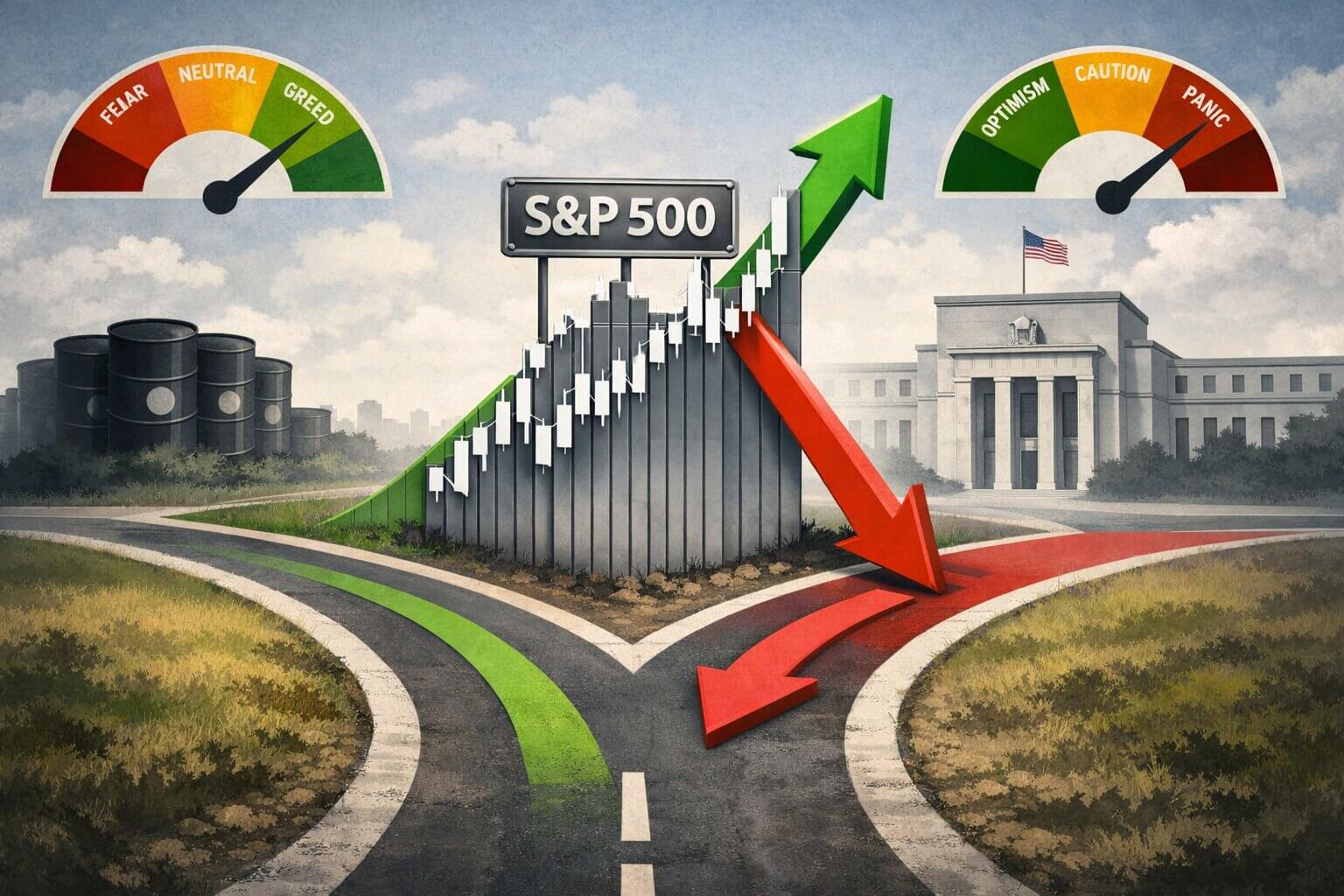
The question resurfacing across Wall Street in March 2026 is deceptively simple: are U.S. equities entering a new bull cycle, or merely rebounding within a volatile macro environment?
At the start of the year, the answer seemed almost obvious. Equity benchmarks were pushing toward record levels, strategists were forecasting double-digit annual returns, and investor positioning had become aggressively optimistic.
Yet by mid-March, the narrative had shifted. A surge in oil prices tied to escalating Middle East tensions, stubborn inflation concerns, and weakening short-term price action triggered a sudden risk-off tone across global markets.
The resulting tension between bullish positioning and deteriorating near-term signals has made the bull-cycle thesis more contested rather than confirmed.
To evaluate whether a durable uptrend is truly emerging, three frameworks matter most: technical price action, global liquidity conditions, and investor sentiment.
---
---
Why the bull-cycle question is back on the table in March 2026
The early weeks of 2026 were defined by optimism. In January, the S&P 500 pushed near record territory as investors priced in resilient economic growth, strong corporate earnings, and the potential for eventual Federal Reserve rate cuts.
By February, many Wall Street forecasts anticipated the benchmark index could rise roughly 10% over the year, supported by earnings expansion and AI-driven capital spending.
Momentum began to fade in early March.
On March 3, 2026, U.S. stocks dropped sharply amid concerns that escalating Middle East tensions could push oil prices higher and reignite inflation pressures. Volatility climbed as investors reassessed the outlook for interest-rate cuts.
By March 13, 2026, the S&P 500 had fallen to 6,632.19, with the Dow Jones Industrial Average at 46,558.47 and the Nasdaq Composite at 22,105.36. All major indexes had posted weekly declines, and year-to-date performance had turned negative across the board.
The catalyst was largely geopolitical. Oil prices surged toward $100 per barrel as fears of supply disruption intensified, raising concerns that energy-driven inflation could complicate monetary policy.
The result was a sudden shift from optimism to uncertainty—precisely the environment in which debates about the durability of market rallies tend to intensify.
---
Technical signals — is price action confirming a durable uptrend?
Trend and moving averages
From a technical perspective, the bull-cycle debate begins with the trajectory of major indices.
The S&P 500 rallied strongly in January and early February, briefly approaching the psychologically important 7,000 level, which analysts widely viewed as a key resistance zone.
However, the subsequent pullback raised questions about the strength of that advance. Several market technicians noted that the benchmark index had begun drifting toward critical moving averages, eroding the momentum that had defined the earlier rally.
Year-to-date performance also shifted meaningfully.
By mid-March:
- The Nasdaq Composite had fallen roughly 4.9% year-to-date.
- The S&P 500, Dow Jones, and Russell 2000 were also in negative territory for 2026.
A sustained bull cycle typically requires consistent higher highs and higher lows across multiple months. The recent sequence—record optimism followed by three consecutive weeks of declines—suggests the market may instead be navigating a fragile consolidation phase.
Market breadth and leadership
Another key diagnostic is market breadth, or how widely gains are distributed across stocks.
Bull markets tend to broaden over time, with leadership spreading beyond a handful of large-cap companies into smaller firms and cyclical sectors.
In early 2026, there were tentative signs of such rotation. Small-cap stocks initially outperformed the S&P 500 during the first weeks of the year, often interpreted as a sign that investors were becoming more confident about economic growth.
However, the March sell-off quickly undermined that narrative. Losses were broad-based, and volatility rose sharply as investors reduced exposure to risk assets.
The technology sector—which had been a primary driver of gains tied to artificial-intelligence investment—also began showing signs of fatigue, reinforcing concerns that the rally may have been concentrated rather than structurally broad.
Sector confirmation
Sector leadership provides another test of bull-market durability.
Historically, financials and cyclicals tend to strengthen during the early phases of sustained expansions because they benefit from rising economic activity and credit demand.
In March, that confirmation was missing. Financial stocks posted sharp weekly declines, reflecting concerns about both economic growth and interest-rate uncertainty.
Meanwhile, defensive sectors such as utilities gained relative strength, suggesting investors were shifting toward safer assets rather than positioning for a robust economic expansion.
---
---
Global liquidity — a tailwind or a false signal?
Central-bank and financial-conditions backdrop
Beyond price action, liquidity conditions play a decisive role in sustaining equity bull markets.
In early 2026, financial conditions remained relatively supportive. Expectations that inflation would moderate had fueled hopes that the Federal Reserve could begin cutting rates later in the year.
That expectation contributed to a broad rally across risk assets during January and February.
However, the oil shock in March complicated that outlook. Rising energy prices threatened to keep inflation elevated, potentially delaying the easing cycle investors had been anticipating.
Higher yields and a stronger U.S. dollar—both typical features of tightening financial conditions—began to reappear in global markets.
Cross-border flows and capital allocation
Fund flows offer another window into liquidity trends.
In mid-February 2026, U.S. equity funds recorded their largest weekly inflow in roughly five weeks as investors regained confidence following a cooling inflation report.
Those inflows reflected a belief that the technology-led rally could extend into a broader market advance.
Yet such flows can shift quickly. When volatility rises and macro risks intensify—as occurred in early March—investors often reduce equity allocations and increase cash or bond exposure.
If inflows slow or reverse in coming weeks, the liquidity tailwind that supported the early-year rally could weaken.
Oil, rates, and liquidity stress
The most immediate risk to the liquidity narrative is the energy market.
Oil prices approaching $100 per barrel in mid-March 2026 revived concerns about supply disruptions and inflation persistence.
That dynamic has historically placed central banks in a difficult position: tightening policy to contain inflation even as economic momentum slows.
For equities, the implication is clear. A sustained oil shock can tighten financial conditions globally, undermining the liquidity environment that bull markets depend on.
---
Investor sentiment — optimism, complacency, or capitulation?
Institutional sentiment
If price action and liquidity provide the structural backdrop, investor psychology reveals how market participants are positioned.
In January 2026, Bank of America’s widely watched Global Fund Manager Survey delivered one of the most striking signals of the cycle.
Cash allocations among institutional investors fell to 3.2%, the lowest level in years, while the survey’s sentiment indicator surged into “hyper-bullish” territory. The data suggested that professional investors were overwhelmingly optimistic about economic growth and equity returns.
By February 2026, that optimism remained elevated, though cash levels edged up slightly to 3.4%, hinting at the first signs of caution.
From a contrarian perspective, such extreme positioning can sometimes mark late stages of rallies rather than the beginning of new bull markets.
Retail sentiment
Retail investors have also displayed fluctuating confidence.
Surveys tracking individual investor sentiment have shown alternating waves of bullishness and caution in recent months, reflecting the broader uncertainty surrounding inflation and interest rates.
Periods of elevated optimism followed by rapid sentiment reversals often occur near market inflection points.
Real money behavior
Perhaps the most important signal comes from actual capital allocation.
Strong equity inflows during February indicated that investors were still willing to buy dips and increase exposure to stocks.
Whether that behavior continues after the March volatility will be a key indicator of market resilience. Sustained inflows would suggest investors view the pullback as temporary. Persistent outflows, by contrast, would indicate a deeper shift toward risk aversion.
---
What would confirm a new bull cycle from here?
For investors trying to distinguish between a cyclical rebound and a durable bull market, several conditions would provide stronger confirmation.
Bullish confirmation signals:
- Broader market participation, with more stocks advancing alongside major indices
- Financials and cyclical sectors joining the rally
- Stabilization in oil prices and easing inflation expectations
- Renewed inflows into global equity funds
- Major indices reclaiming and sustaining key technical levels
Bearish warning signals:
- Continued defensive leadership in sectors like utilities and consumer staples
- Persistent equity-fund outflows
- Rising bond yields and tighter financial conditions
- Further technical breakdowns below key moving averages
The most reliable bull markets historically emerge only when all three pillars—price action, liquidity, and sentiment—align in the same direction.
---
Bottom line for investors
As of March 15, 2026, the U.S. equity market appears less like a confirmed bull cycle and more like an inflection point.
The early-year rally was fueled by optimism about growth, earnings, and potential monetary easing. But the March volatility—driven by geopolitical tensions, rising oil prices, and inflation concerns—has complicated that narrative.
In other words, the bull case has not disappeared, but it has not yet been validated either.
For investors, the most disciplined approach may be to focus less on headlines and more on confirmation across three dimensions: price, liquidity, and sentiment.
Until those signals move decisively in the same direction, the question of whether a new bull cycle has truly begun will remain unresolved.
---
---
FAQ
Are U.S. stocks currently in a bull market?
Not definitively. While equities rallied early in 2026, recent declines and weakening technical signals suggest the market may be in a volatile consolidation rather than a confirmed bull cycle.
Why did markets pull back in March 2026?
The primary drivers were rising oil prices, geopolitical tensions in the Middle East, and renewed concerns about persistent inflation that could delay Federal Reserve rate cuts.
What indicators confirm a new bull market?
A sustained bull market typically requires strong price trends, broad participation across sectors, supportive liquidity conditions, and improving investor sentiment.
Why does market breadth matter?
Broad participation—where many stocks rise together—signals a healthier market. Narrow rallies driven by a few large companies are generally less durable.
---
Sources and Further Reading
- Global investors hit “hyper-bull” as hedging collapses — Reuters — 01/20/2026 — https://www.reuters.com/markets/wealth/global-investors-hit-hyper-bull-hedging-collapses-says-bofa-survey-2026-01-20/
- Global investors stay “uber-bullish” but warn companies are overinvesting — Reuters — 02/17/2026 — https://www.reuters.com/business/global-investors-stay-uber-bullish-warn-companies-are-overinvesting-2026-02-17/
- S&P 500 poised to gain 10% by year-end, Reuters strategist poll — Reuters — 02/24/2026 — https://www.reuters.com/business/sp-500-poised-gain-10-by-year-end-trade-ai-disruption-concerns-persist-2026-02-24/
- U.S. equity funds see largest weekly inflow in five weeks — Reuters — 02/20/2026 — https://www.reuters.com/business/us-equity-funds-see-largest-weekly-inflow-five-weeks-2026-02-20/
- Wall Street closes lower as oil surge fuels inflation fears — Reuters — 03/13/2026 — https://www.reuters.com/business/wall-st-futures-subdued-middle-east-unrest-fuels-inflation-worries-data-awaited-2026-03-13/
- How major U.S. stock indexes fared Friday — Associated Press — 03/13/2026 — https://apnews.com/article/fbaf44c8ea236a7e966bfcddef305ac3
---