Markets
Why Interest Rates Still Matter for Investors in 2026
Persistent inflation, geopolitical tensions, and uncertain Fed policy keep interest rates at the center of global financial markets
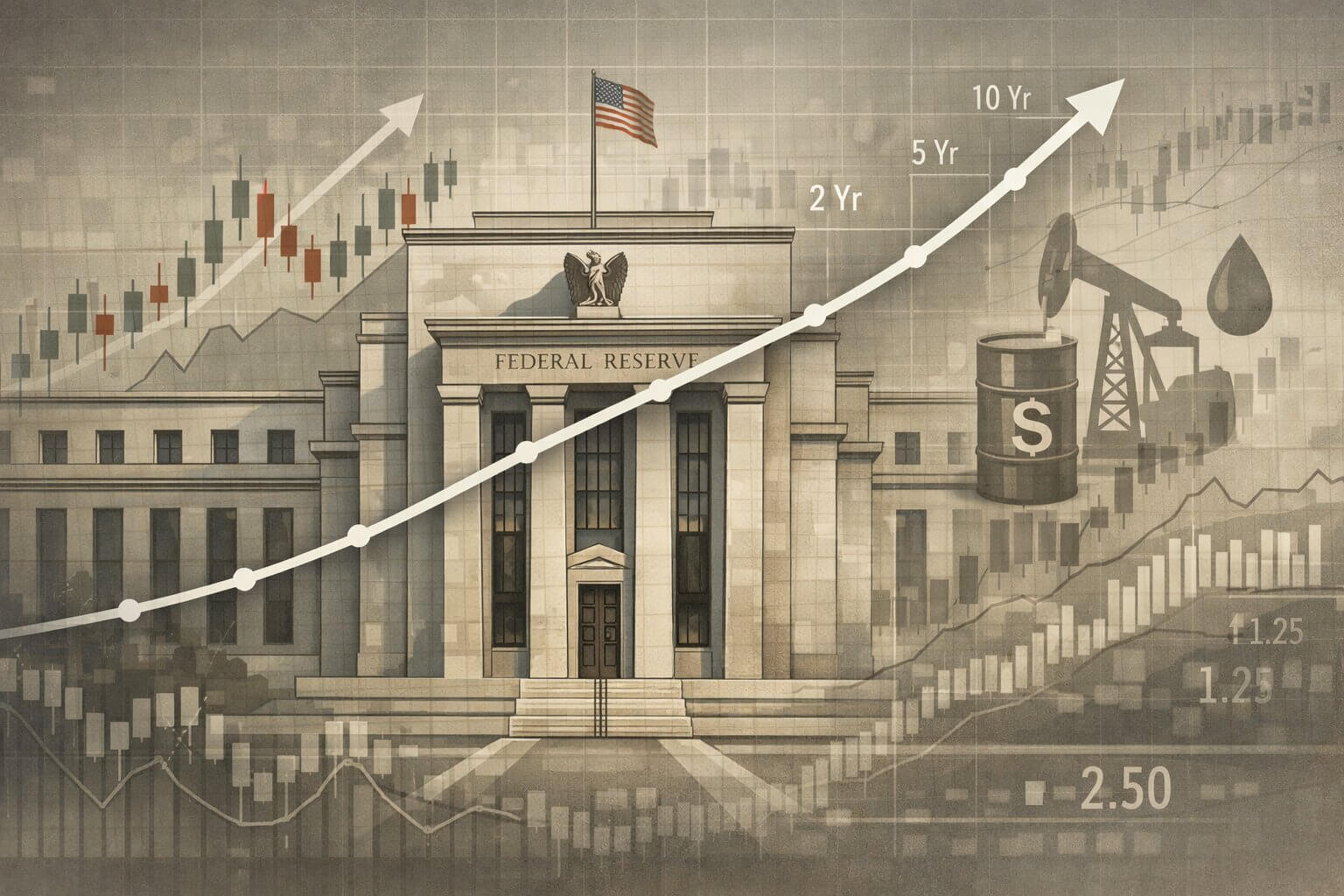
Even after several years of aggressive tightening, interest rates remain the gravitational force of global financial markets.
Investors entered 2026 expecting a steady shift toward lower borrowing costs as inflation cooled and economic growth slowed. Yet the reality has proven more complicated. Persistent price pressures, rising energy costs tied to geopolitical tensions, and uncertainty around Federal Reserve policy have kept interest rates elevated—and market volatility alive.
For investors navigating today’s environment, the lesson is clear: interest rates still shape nearly every corner of the financial system, from stock valuations to housing affordability.
Understanding how rates influence asset prices is therefore essential for portfolio decisions in the year ahead.
---
produto:The Art of X: Build a Business That Makes You $100/Day
---
A Market That Still Revolves Around Rates
In early 2026, the Federal Reserve’s benchmark federal funds rate remains in the range of 5.25%–5.50%, a level first reached in 2023 during the central bank’s historic inflation-fighting campaign.
Although markets had anticipated a faster shift toward rate cuts, policymakers have repeatedly signaled caution. Inflation has slowed from its pandemic-era peaks but has not returned fully to the Fed’s long-term target.
Meanwhile, long-term borrowing costs remain elevated. U.S. Treasury yields—including the benchmark 10-year note—have fluctuated around levels that continue to influence global asset pricing.
For investors, the implication is straightforward: until inflation convincingly falls and monetary policy loosens, interest rates will remain a dominant driver of financial markets.
---
Inflation Hasn’t Fully Disappeared
The central reason interest rates remain so influential is that inflation itself has not fully retreated.
Consumer price data released in early 2026 showed that inflation is moderating compared with the surge seen in 2022. However, several components—particularly housing and services—continue to show persistent price pressures.
Energy markets have also introduced new uncertainty. Rising oil prices linked to geopolitical tensions have pushed energy costs higher, raising the risk that inflation could stabilize above the Federal Reserve’s target.
For policymakers, this creates a difficult balancing act.
Cut rates too quickly, and inflation could reaccelerate. Maintain tight policy for too long, and economic growth could slow sharply.
Markets have responded by constantly recalibrating expectations for when—and how quickly—the Federal Reserve may begin lowering rates.
---
The Federal Reserve’s Uncertain Path
Monetary policy expectations remain one of the most powerful forces shaping investor sentiment in 2026.
At its January 29, 2026 meeting, the Federal Open Market Committee signaled that progress on inflation was continuing but emphasized that policymakers needed more evidence before beginning a sustained easing cycle.
Financial markets now expect rate cuts to occur gradually rather than rapidly.
That uncertainty creates volatility. Every inflation report, employment release, or energy price shock can shift expectations about future Fed decisions—and with them, the valuation of financial assets.
In short, interest rate expectations themselves have become a key market catalyst.
---
Why Bond Yields Drive Asset Valuations
Interest rates matter not only because of central bank policy but because they influence the discount rate used across financial markets.
Equities and the Cost of Capital
Stock valuations are closely tied to interest rates through the concept of discounted cash flows.
When interest rates rise, future corporate earnings are discounted more heavily, which tends to lower equity valuations. High-growth companies—whose profits are expected further in the future—are particularly sensitive to this effect.
That dynamic explains why equity markets have often reacted sharply to movements in Treasury yields over the past several years.
Even modest changes in long-term rates can alter investor expectations about fair valuations across sectors.
---
Bonds Reassert Their Role
After more than a decade of ultra-low rates following the global financial crisis, bonds have regained relevance in portfolio construction.
Higher yields mean that fixed-income securities once again offer meaningful income to investors. As a result, institutional portfolios have increasingly reconsidered the role of bonds as both a diversification tool and a source of stable returns.
This shift has reinforced the importance of interest rates in shaping asset allocation decisions.
When yields rise, bonds become more competitive relative to equities. When yields fall, riskier assets often regain appeal.
---
Housing and Mortgage Rates
Few sectors demonstrate the impact of interest rates more clearly than housing.
Mortgage rates climbed sharply during the Federal Reserve’s tightening cycle and have remained elevated compared with the ultra-low levels seen during the pandemic era.
Higher borrowing costs have reduced housing affordability for many Americans, slowing home sales and reshaping housing market dynamics.
For investors, real estate markets therefore remain closely tied to the direction of interest rates.
---
Portfolio Strategy in a Rate-Sensitive World
For investors managing diversified portfolios, the persistence of higher rates has several implications.
First, asset allocation decisions are increasingly influenced by the relative attractiveness of bonds versus equities.
Second, sectors that depend heavily on borrowing—such as real estate, utilities, and highly leveraged companies—remain particularly sensitive to rate changes.
Third, volatility linked to macroeconomic data releases is likely to remain elevated.
In practical terms, investors must now monitor not only corporate fundamentals but also the broader interest rate environment that influences valuation models across markets.
---
What Investors Should Watch Next
As 2026 unfolds, several indicators will shape the trajectory of interest rates.
Inflation data remains the most critical variable. Continued declines in price pressures would give the Federal Reserve more confidence to begin easing policy.
Energy markets also warrant close attention. Oil price shocks can quickly alter inflation expectations and influence central bank decisions.
Finally, each Federal Reserve policy meeting will offer signals about the timing and pace of any future rate cuts.
For investors, the conclusion is difficult to avoid: even in a world anticipating eventual rate reductions, interest rates remain the central force guiding financial markets.
Understanding that reality may be one of the most important advantages investors can have in an increasingly uncertain economic landscape.
---
FAQ
Why are interest rates so important for financial markets?
Interest rates determine the cost of borrowing and influence the discount rate used to value future cash flows. This directly affects stocks, bonds, real estate, and corporate investment decisions.
How do rising interest rates affect stock valuations?
Higher rates increase the discount rate applied to future earnings, which generally lowers equity valuations—especially for growth companies.
Why do bonds become more attractive when rates rise?
Higher yields provide stronger income returns, making bonds more competitive compared with equities and encouraging investors to increase fixed-income allocations.
What indicators should investors monitor to anticipate rate changes?
Key indicators include inflation data, employment reports, energy prices, and policy signals from Federal Reserve meetings.
---
Sources and Further Reading
- Consumer Price Index Summary — Bureau of Labor Statistics — 02/12/2026 — https://www.bls.gov/news.release/cpi.htm
- Federal Reserve Monetary Policy Statement — Federal Reserve — 01/29/2026 — https://www.federalreserve.gov/monetarypolicy.htm
- Treasury Yield Curve Rates — U.S. Department of the Treasury — 03/2026 — https://home.treasury.gov
- Primary Mortgage Market Survey — Freddie Mac — 03/06/2026 — https://www.freddiemac.com
- Oil Market Report — International Energy Agency — 02/2026 — https://www.iea.org
- Global Markets Outlook — Reuters — 01/2026 — https://www.reuters.com
- Equity Valuation and Interest Rate Sensitivity — Bloomberg Intelligence — 2026 — https://www.bloomberg.com
---
produto:The Art of X: Build a Business That Makes You $100/Day
---