Economy
Why Recessions Still Matter in a Slowing U.S. Economy
As growth cools and inflation lingers, economists revisit the role of downturns as a necessary reset mechanism
A Slowing Economy Reignites an Old Debate
The U.S. economy entered 2026 on shakier footing than many policymakers had hoped. On March 13, 2026, fourth-quarter GDP growth was revised down to just 0.7%, underscoring a broader loss of momentum that had been building for months. At the same time, consumer sentiment declined in early March as rising energy prices squeezed household budgets, reviving concerns about demand resilience.
Markets are now recalibrating expectations. The once-dominant “soft landing” narrative—where inflation falls without a meaningful rise in unemployment—is increasingly being questioned. Instead, investors and economists are confronting a more uncomfortable possibility: that a deeper slowdown, or even a recession, may be necessary to restore balance.
But is that necessarily a bad thing?
Why Recessions Exist in Modern Economies
Recessions are often framed as policy failures or external shocks. Yet from a structural perspective, they are also an inherent feature of the business cycle.
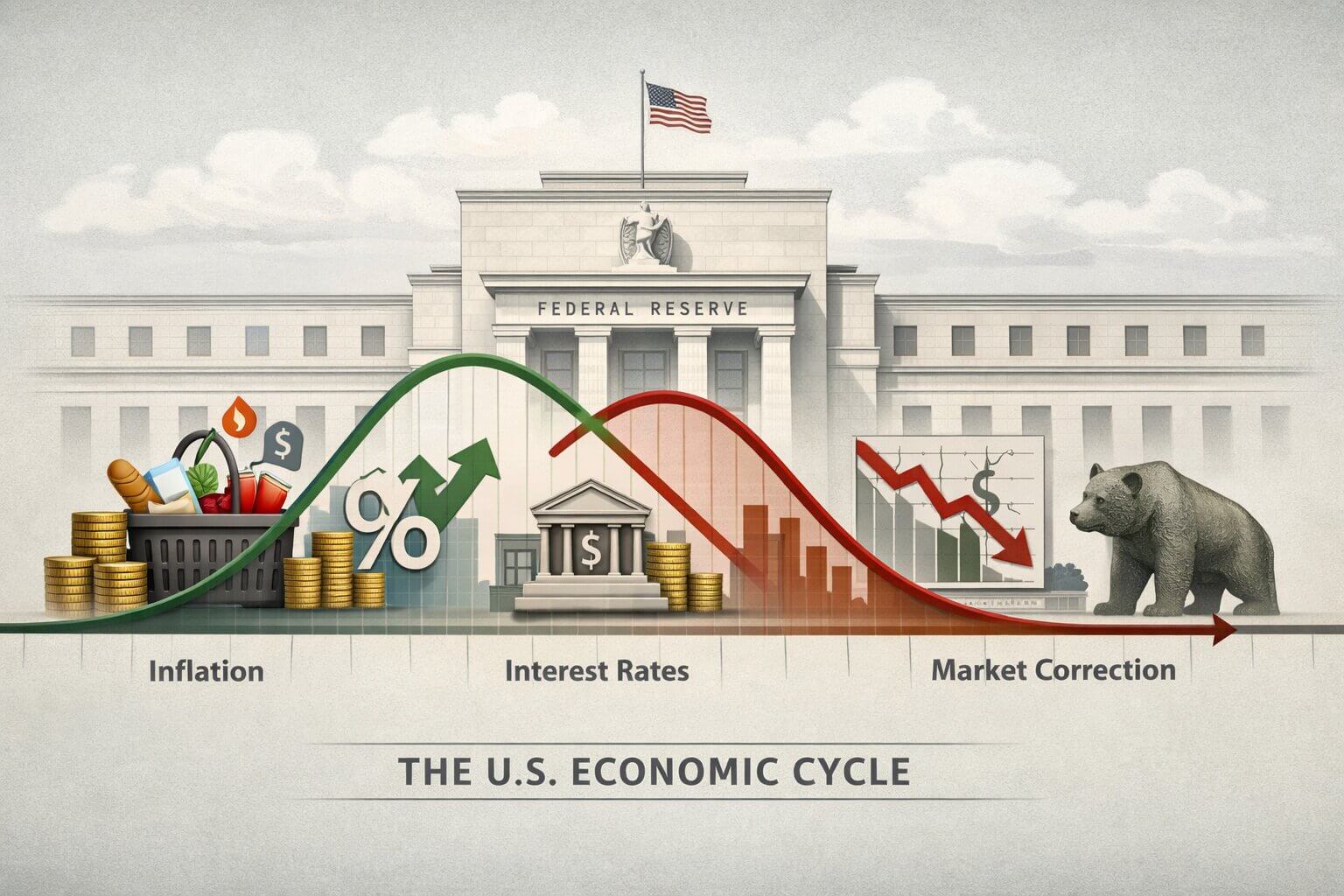
Periods of expansion—especially those fueled by prolonged low interest rates—tend to encourage risk-taking. Capital becomes cheap, credit expands, and both businesses and consumers take on higher levels of leverage. Over time, inefficiencies accumulate: marginal projects get funded, speculative bubbles form, and pricing signals become distorted.
Eventually, monetary tightening or external shocks expose these imbalances. Growth slows, credit conditions tighten, and the economy contracts.
In this sense, recessions are less anomalies than corrections—painful, but often necessary.
The “Cleansing” Mechanism: What Gets Reset
Economists have long debated the idea that recessions serve a “cleansing” function. While the term may sound clinical, it reflects several tangible economic processes.
Excess Leverage Unwinding
During expansions, debt levels often rise faster than income or productivity. A downturn forces deleveraging—through reduced borrowing, asset sales, or defaults—bringing balance sheets back into alignment.
Asset Bubbles Deflate
From equities to real estate to speculative assets, periods of easy money tend to inflate valuations beyond fundamentals. Recessions compress these valuations, restoring more rational pricing and reducing systemic risk.
Capital Reallocation
Boom periods can misallocate capital toward less productive sectors. A contraction forces investors and firms to reassess priorities, redirecting resources toward more efficient uses.
Restoring Pricing Discipline
Perhaps most relevant in today’s environment, recessions can help curb inflation. As demand weakens, companies lose pricing power, and cost pressures ease. This dynamic can complement monetary policy in bringing inflation back toward target levels.
The Cost: Why Recessions Are Still Painful
Acknowledging the corrective role of recessions does not diminish their human and economic cost.
Labor markets typically deteriorate quickly during downturns. Unemployment rises, wage growth slows, and job security weakens. Businesses—especially smaller or highly leveraged firms—face bankruptcy or restructuring.
The burden is rarely distributed evenly. Lower-income households, which have less financial cushion, tend to bear the brunt of economic contractions. Credit conditions tighten most sharply for those already on the margins.
In short, recessions may serve a macroeconomic purpose, but they are not “good” in any human sense.
Soft Landing or Necessary Reset?
The Federal Reserve now faces a delicate balancing act. Inflation remains above target as of early 2026, even as growth slows. Cutting rates too quickly risks reigniting price pressures; maintaining restrictive policy risks pushing the economy into contraction.
This tension raises a fundamental question: can the U.S. economy achieve a soft landing, or has the cycle advanced too far?
Some economists argue that avoiding a recession entirely may simply delay necessary adjustments. If imbalances—whether in credit markets, asset valuations, or labor dynamics—are not addressed, they could resurface later in more disruptive ways.
Others contend that improved policy tools and stronger financial system safeguards make a soft landing more achievable than in past cycles.
For markets, the distinction matters. A mild slowdown with stable employment would support risk assets. A sharper contraction, however, could trigger broader repricing across equities, credit, and real estate.
What Investors Should Watch Next
As the debate unfolds, several indicators will be critical in determining the path forward.
Labor Market Signals
Initial jobless claims, payroll growth, and unemployment trends will provide early signals of whether the slowdown is deepening.
Inflation Persistence
If inflation remains sticky despite weakening demand, the Fed may have limited flexibility—raising the risk of policy-induced recession.
Credit Conditions
Tightening lending standards, rising default rates, or stress in corporate credit markets could indicate that financial conditions are becoming restrictive enough to trigger a broader downturn.
The Bottom Line
Recessions are often viewed as failures to be avoided at all costs. But history suggests they also play a role in restoring balance after periods of excess.
As the U.S. economy slows in early 2026, the question is no longer just whether a recession can be avoided—but whether avoiding it is even desirable.
For investors, the challenge lies in navigating this tension: recognizing the long-term benefits of economic resets, while managing the short-term risks they inevitably bring.
AlphaPulse’s view is clear—cycles cannot be eliminated, only managed. And in some cases, the reset is not the problem, but part of the solution.
---
FAQ
Are recessions necessary for economic growth?
Recessions are not desirable, but they can help correct imbalances such as excessive debt, inflated asset prices, and inefficient capital allocation.
What is a soft landing in economics?
A soft landing occurs when inflation declines without triggering a recession or significant unemployment increases.
Why is inflation still a concern in 2026?
Despite slowing growth, inflation remains elevated due to lingering supply pressures and resilient demand in key sectors.
How should investors prepare for a potential recession?
Investors often focus on diversification, liquidity, and high-quality assets during periods of economic uncertainty.
---
Sources and Further Reading
- U.S. fourth-quarter GDP revised to 0.7% — Reuters — 03/13/2026 — https://www.reuters.com/business/us-fourth-quarter-gdp-growth-revised-down-07-2026-03-13/
- U.S. Consumer Sentiment Falls on Energy Prices — Reuters — 03/2026 — https://www.reuters.com/
- Consumer Price Index Summary — U.S. Bureau of Labor Statistics — 02/2026 — https://www.bls.gov/
- Federal Reserve Policy Statement — Federal Reserve — 01/29/2026 — https://www.federalreserve.gov/
- World Economic Outlook Update — IMF — 01/2026 — https://www.imf.org/
- Economic Cycles and Financial Stability — Federal Reserve Bank Research — Various — https://www.federalreserve.gov/
---