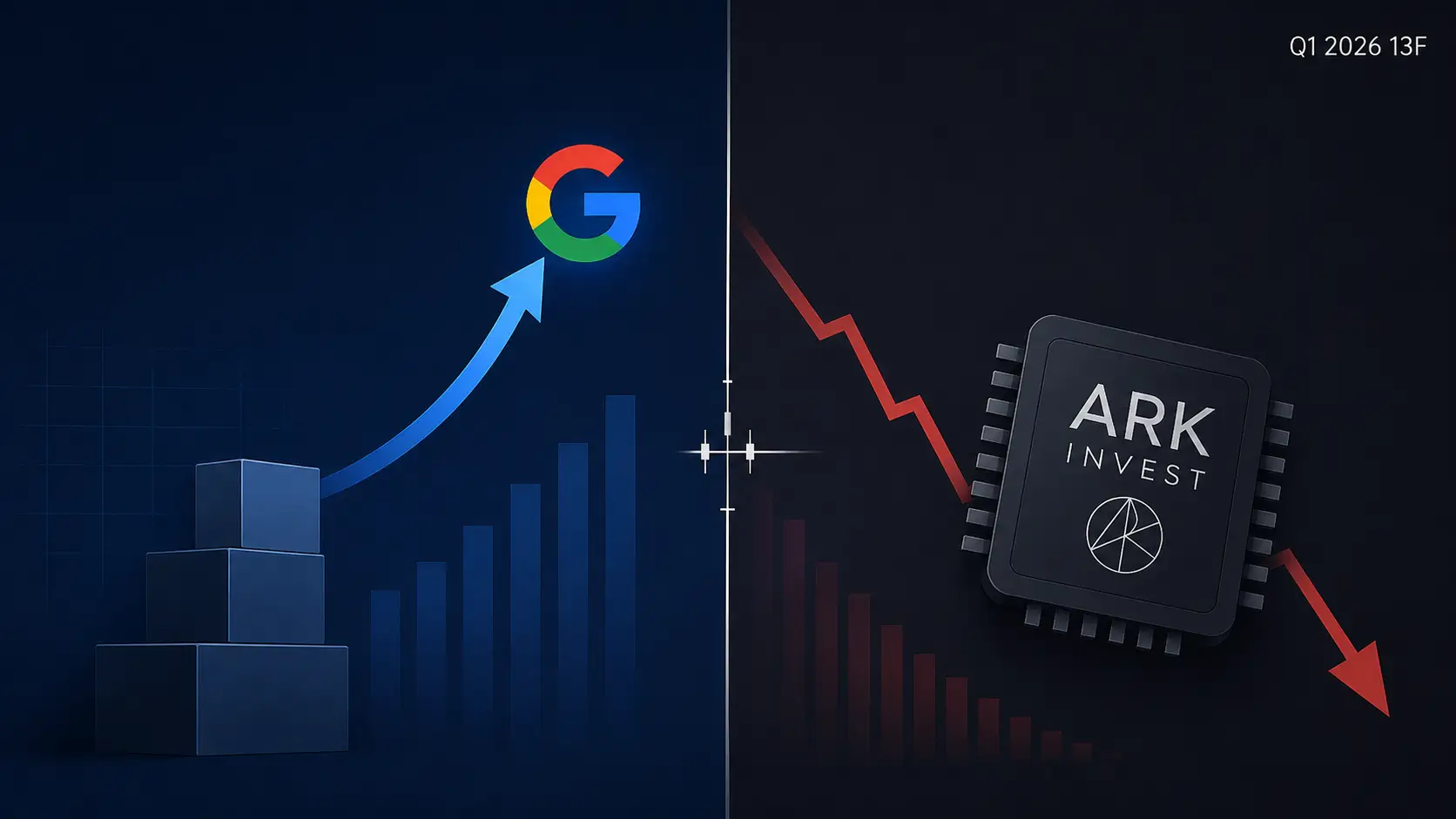
Berkshire Hathaway just tripled its Alphabet stake to $16.6 billion — the firm's biggest tech move since Apple. The disclosure landed in the conglomerate's Q1 2026 13F filing on May 15, 2026, the first quarterly report under new CEO Greg Abel. It also reframes the Berkshire Hathaway AI stock portfolio: a firm long defined by tech avoidance now owns roughly 58 million Alphabet shares.
For sophisticated readers tracking the AI trade, this is not noise. It is one of the largest investment shops on Wall Street picking a specific lane within AI — and walking away from cyclical bets that defined Buffett's earlier playbook. Meanwhile, Cathie Wood's ARK funds spent May trimming the very semiconductor names that drove their 2026 rally. The contrast tells you something about how institutional capital is splitting on AI exposure.
Inside Berkshire Hathaway's AI Stock Portfolio Shift
Berkshire raised its Alphabet position by roughly 224% in Q1 2026, adding around 40 million shares to reach 57,835,013 shares as of March 31, 2026. At quarter-end values, that stake was worth approximately $16.6 billion — Berkshire's seventh-largest holding by weight at about 5.9% of the equity portfolio.
The math behind the move is straightforward. Alphabet reported Q1 2026 revenue of $109.9 billion, up 22% year over year. Google Cloud crossed $20 billion in quarterly revenue for the first time, up 63% year over year, with operating margins expanding to 32.9%. Free cash flow over the trailing twelve months reached $64.4 billion.
That profile fits a Berkshire-grade thesis. Alphabet is profitable today, generates substantial cash, and offers AI exposure through Google Cloud, Search, and Gemini without the speculative valuation gymnastics required for pure-play AI infrastructure. This is the kind of repositioning smart money is making in the 2026 market shift — paying for AI through cash-flowing platforms rather than narrative-driven names.
What Abel Cut Tells You More
The exits matter as much as the additions. Berkshire dumped its entire stakes in Visa, Mastercard, Amazon, UnitedHealth, and Domino's Pizza in Q1 2026, alongside 11 other smaller positions. Total proceeds from equity sales reached approximately $24.1 billion against roughly $16 billion in purchases. The portfolio shrank from $274 billion to $263 billion, and the number of holdings fell from 40 to 26.
Apple, still Berkshire's largest single position at roughly 22% of the portfolio, was trimmed further but remains the cornerstone. The top five names — Apple, American Express, Coca-Cola, Bank of America, and Chevron — now account for about 68% of equity exposure. Cash and Treasuries rose to roughly $397.6 billion.
One caveat for readers parsing the filing: longtime investment manager Todd Combs left Berkshire for JPMorgan Chase in December 2025. Several of the Q1 exits — Visa, Mastercard, Domino's — were Combs-era positions being unwound. Day-to-day stock decisions now sit with Abel and Ted Weschler, with Buffett, 95, still chairing the board.
ARK Goes the Other Way
While Berkshire bought platform AI, Cathie Wood's ARK Invest spent May banking profits on chip names. ARK sold roughly $28 million combined of Advanced Micro Devices and Taiwan Semiconductor on May 18, 2026, alone. From April 10 through early May 2026, ARK trimmed approximately $79.9 million in AMD shares across its funds, and on May 14 to 15 it liquidated about 100,549 TSM shares worth roughly $40.6 million.
The performance gap explains the rotation. AMD is up roughly 98% year to date through May 2026, against the S&P 500's roughly 8% gain. The iShares Semiconductor ETF (SOXX) fell about 4% on May 15, 2026, in a broader chip pullback. ARK's flagship Innovation ETF, by contrast, is down roughly 3.8% year to date.
Proceeds have rotated into Alphabet and Meta — the same platform-layer AI names Berkshire just loaded into. The bifurcation is real: institutional money is treating semiconductors as a trade and large-cap AI platforms as a hold.
What This Means for the AI Trade
For readers calibrating AI exposure, the takeaway is sharper than the headlines suggest. "Buffett-grade" AI now means cash-flowing platforms with durable moats, not pure-play infrastructure or narrative-driven small caps. ARK's rotation suggests even AI bulls are taking risk off the highest-flying chip names. Both moves point to crowding into the same handful of mega-cap winners — a setup that historically compresses forward returns.
The risk worth watching: Alphabet trades roughly 38% above where Berkshire built its Q1 position. If AI capex disappoints or antitrust pressure intensifies, the platform thesis tightens fast. The next Berkshire 13F covering Q2 2026 lands in mid-August. That filing — and Alphabet's July earnings — will show whether the AI reshaping of the global economy keeps rewarding the platform layer, or whether the trade has finally crowded itself out.
Frequently Asked Questions
What AI stocks does Berkshire Hathaway now own? Berkshire's largest AI-adjacent position is Alphabet, with roughly 57.8 million shares worth approximately $16.6 billion as of March 31, 2026. Apple, still the largest single holding at about 22% of the portfolio, also provides indirect AI exposure through its device and services ecosystem.
Why did Berkshire triple its Alphabet stake in Q1 2026? The decision, made under new CEO Greg Abel, followed Alphabet's Q1 2026 revenue of $109.9 billion (up 22% year over year) and Google Cloud growth of 63%. The stake offers AI exposure through a profitable, cash-generating platform rather than a speculative pure-play.
Who manages Berkshire Hathaway's stock portfolio now? Greg Abel became CEO on January 1, 2026, after Warren Buffett's retirement from the role. Day-to-day investment decisions sit with Abel and Ted Weschler. Todd Combs left for JPMorgan Chase in December 2025. Buffett, 95, remains chairman.
Why is Cathie Wood selling semiconductor stocks? ARK has trimmed AMD and Taiwan Semiconductor through April and May 2026, rotating proceeds into Alphabet and Meta. AMD is up roughly 98% year to date, and ARK appears to be banking profits before the next leg of the AI trade plays out.