Business
Why Companies Still Buy Back Stock Despite High Rates
Understand how buybacks work and what they signal about corporate strategy
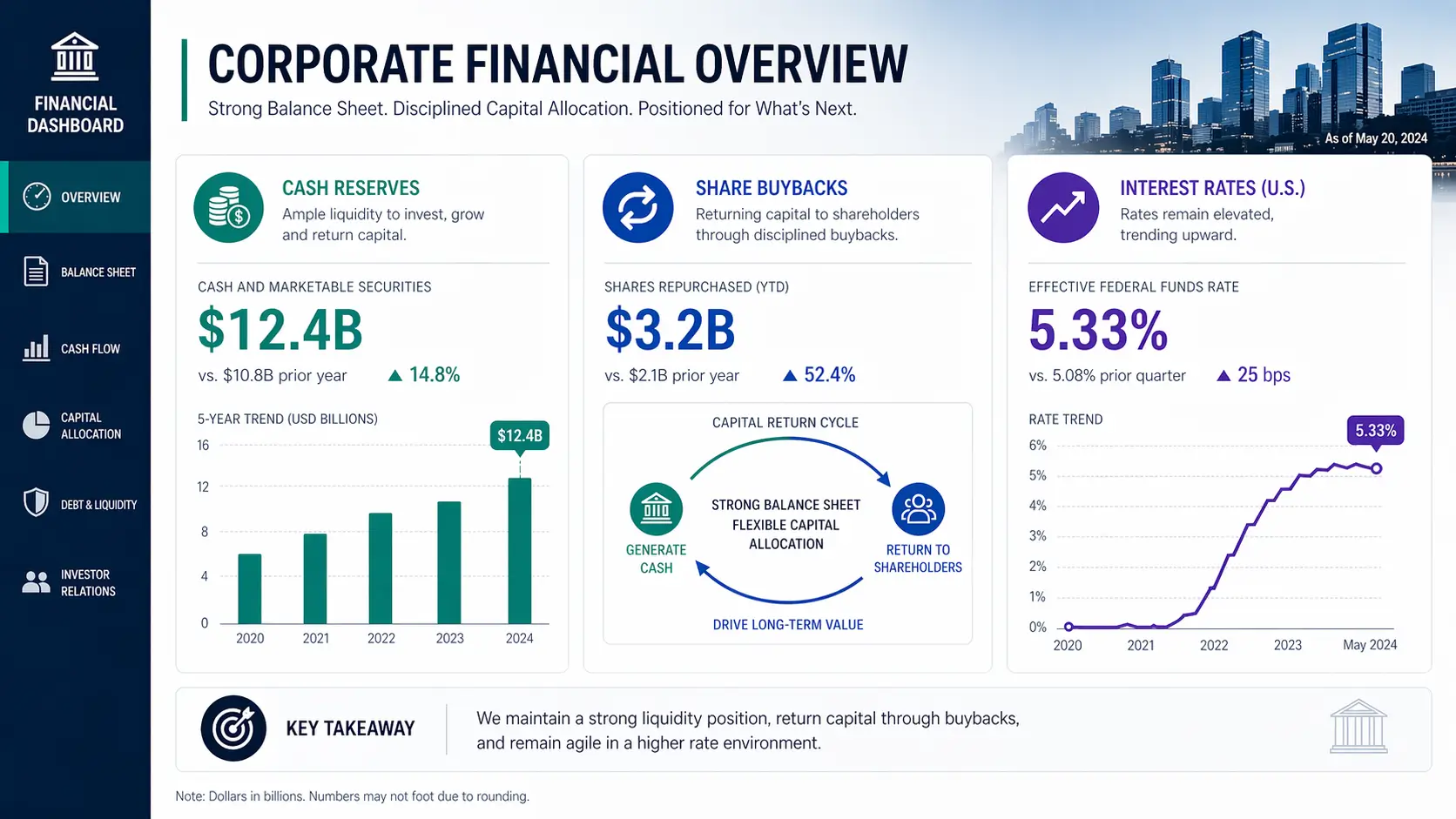
Many investors assume companies will reduce share buybacks when interest rates rise. Borrowing becomes more expensive, and conserving cash seems logical.
Yet buybacks have remained common even after interest rates climbed sharply between 2022 and 2023.
This guide explains why companies continue buying back stock in a higher-rate environment, how these decisions affect earnings and valuations, and what investors should watch when evaluating corporate capital allocation. Understanding this pattern helps investors interpret financial strength, management priorities, and long-term growth potential.
---
What Share Buybacks Are and How They Work
A share buyback occurs when a company purchases its own stock from the market. The number of shares outstanding declines, which can increase earnings per share (EPS).
The mechanics are straightforward.
If total earnings remain steady but the share count falls, each remaining share represents a larger portion of the company’s profits. This is why buybacks often support stock performance during periods of slower growth.
Companies typically fund buybacks using:
- Free cash flow
- Existing cash reserves
- Occasionally, borrowed funds
In today’s higher-rate environment, most large companies rely more heavily on internal cash rather than new debt. This shift reflects a focus on financial stability and disciplined capital management.
---
Why Companies Continue Buybacks Even With Higher Interest Rates
The persistence of buybacks is largely driven by balance sheet strength.
Many corporations accumulated significant cash reserves during the economic expansion following the pandemic. Strong profits and conservative spending left companies with more liquidity than they immediately needed.
That excess capital creates a practical decision.
Management teams must choose whether to:
- Hold cash
- Invest in new projects
- Return money to shareholders
When growth opportunities are uncertain or returns are modest, returning capital becomes a rational option.
Higher interest rates increase financing costs, but they do not eliminate surplus cash. As long as companies generate steady cash flow, buybacks remain financially feasible.
---
How Limited Growth Opportunities Shape Capital Allocation
In mature industries, growth often slows over time. Demand stabilizes, competition intensifies, and large expansion projects become riskier.
This environment encourages efficiency rather than expansion.
Buybacks provide flexibility that long-term investments do not. Companies can adjust repurchase programs quickly if economic conditions change.
That flexibility is especially valuable when interest rates are elevated and economic forecasts are uncertain.
Common signs of this shift include:
- Stable or recurring buyback programs
- Moderate capital spending growth
- Increased focus on profitability and margins
- Emphasis on return on invested capital
For investors, these signals often indicate management is prioritizing predictable returns and risk control.
---
How Buybacks Affect Earnings Per Share and Valuations
Buybacks influence several financial metrics that investors monitor closely.
The most visible impact is on earnings per share. Reducing the share count can raise EPS even if revenue growth is modest.
This effect can support stock valuations in slower economic periods.
Other common benefits include:
- Improved return on equity
- Reduced dilution from employee stock compensation
- Increased shareholder confidence
- More efficient capital structure
However, buybacks have limits.
They do not create new products, expand markets, or increase long-term demand. Sustainable growth still depends on operational performance and strategic investment.
Investors should view buybacks as a financial tool, not a growth engine.
---
Risks and Limitations of Heavy Buyback Activity
Buybacks can strengthen financial performance, but excessive reliance on them introduces risk.
The primary concern is reduced flexibility.
If companies spend too much cash on repurchases, they may have fewer resources available during economic downturns. This can limit investment, slow innovation, or increase borrowing needs later.
Other potential risks include:
- Reduced resilience during recessions
- Underinvestment in technology or infrastructure
- Increased regulatory scrutiny
- Misinterpretation of financial strength
Strong buyback programs are most sustainable when supported by consistent cash flow and conservative balance sheet management.
---
Policy and Regulatory Factors Investors Should Watch
Government policy is becoming an increasingly important factor in corporate buyback decisions.
Regulators and lawmakers have raised concerns that excessive repurchases may divert resources away from long-term investment. The introduction of a federal excise tax on stock buybacks in 2023 signaled a shift in regulatory attention.
Future policy changes could influence:
- The pace of buyback programs
- Corporate tax planning
- Capital allocation strategies
- Investor expectations
Monitoring policy developments helps investors anticipate changes in corporate behavior.
---
Conclusion: What Buybacks Signal About Corporate Strategy
The continued use of share buybacks in a higher-rate environment reflects financial discipline rather than financial stress.
Companies with strong cash flow and stable operations often return excess capital when growth opportunities are limited. This approach can support earnings, stabilize valuations, and maintain investor confidence.
For investors, the key takeaway is practical.
Evaluate buybacks as part of a broader capital allocation strategy. Strong programs typically indicate healthy balance sheets and consistent cash generation. Weak programs often rely on borrowing or replace necessary investment.
Looking ahead, sustained buybacks will likely remain common as long as companies prioritize efficiency, risk management, and predictable returns in a higher-rate economy.
---
## Recommended Reading:
How Corporate Debt Is Becoming the Next Big Market Risk
Will the Fed Cut Rates in 2026? A Simple Investor Guide
---
FAQ
Why do companies buy back stock when interest rates are high?
Companies often fund buybacks with cash and free cash flow rather than borrowing. As long as cash generation remains strong, higher interest rates do not prevent repurchases.
Do buybacks always increase stock prices?
Not necessarily. Buybacks can support earnings per share and investor confidence, but stock prices ultimately depend on business performance and market conditions.
Are buybacks better than dividends?
They serve different purposes. Dividends provide steady income, while buybacks offer flexibility and can improve financial ratios.
When are buybacks considered risky?
Buybacks become risky when companies use excessive debt, reduce investment in growth, or weaken their financial flexibility.
---
Sources and Further Reading
- Financial Accounts of the United States — Federal Reserve — 03/07/2026 — https://www.federalreserve.gov
- S&P 500 Buyback Quarterly Report — S&P Dow Jones Indices — 02/20/2026 — https://www.spglobal.com
- U.S. Stock Buyback Excise Tax Implementation — U.S. Department of the Treasury — 01/01/2023 — https://home.treasury.gov
---