You have probably heard the federal government is handing newborns $1,000. The headline is real, but it hides the rules that decide whether the account is worth your attention. Here are Trump Accounts explained for 2026: who receives the $1,000 seed, how much you can add, how the money is taxed when it comes out, and when a 529 plan or a custodial Roth IRA is the better home for your savings.
Trump Accounts Explained: Who Qualifies for the $1,000 Seed
Trump Accounts were created under the One Big Beautiful Bill Act, signed in 2025. The accounts open July 4, 2026, and no contributions can be made before that date.
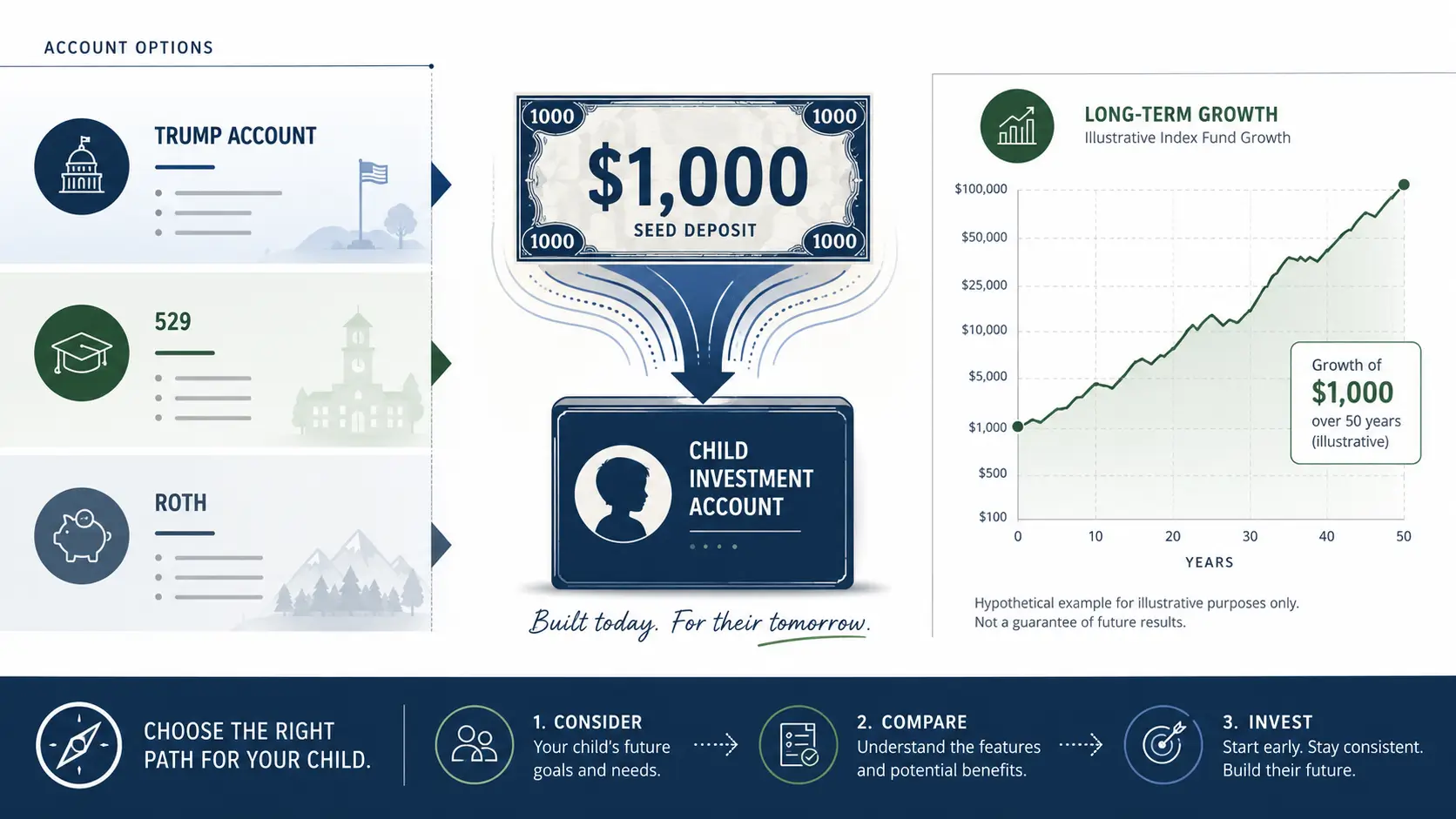
The $1,000 federal seed goes to U.S.-citizen children born between January 1, 2025, and December 31, 2028, who have a Social Security number. The Treasury Department deposits the $1,000 no earlier than July 4, 2026, once the account is confirmed active.
Any child under 18 with a Social Security number can have an account opened, but only the 2025–2028 birth cohort receives the federal money. Separately, up to 25 million children age 10 or younger born before 2025 in qualifying ZIP codes may get a $250 deposit funded by the Michael & Susan Dell Foundation. Each child may hold only one account.
Contribution Rules and How the Money Grows
Starting July 4, 2026, parents, grandparents, and others can contribute up to $5,000 per child per year in after-tax dollars, with the cap indexed for inflation beginning in 2028. Unlike a Roth IRA, there is no earned-income requirement and no income limit on who can contribute.
Employers can add up to $2,500 a year, excluded from the employee's taxable income — but that amount counts toward the same $5,000 limit. The $1,000 federal seed does not count against it.
Money is invested by default in low-cost U.S. stock index funds and is locked until the child turns 18. The White House Council of Economic Advisers estimated in August 2025 that a baby born in 2026 would reach roughly $5,800 by age 18 with no further deposits, or about $303,800 by 18 if maximum contributions are made every year.
The Tax Catch Most Coverage Skips
This is where the "free money" framing breaks down. A Trump Account is structured as a custodial-style traditional IRA. Contributions go in after-tax, growth is tax-deferred, but once the account converts to standard IRA rules at 18, withdrawals are taxed as ordinary income. Pulling money before age 59½ can also trigger a 10% penalty unless it funds a qualified purpose such as higher education, a first home, or a business launch.
That matters because the account is not tax-free, unlike a Roth IRA or a 529 plan used for education. One planning move stands out: converting the account to a Roth at 18, when the child likely has little income and a low tax rate. The conversion still taxes the pre-tax growth, so it is a timing play, not a free pass.
The practical takeaway: the $1,000 seed is genuinely free, but the wrapper around it is mediocre for education savings.
Trump Account vs. 529 vs. Custodial Roth: A Parent's Framework
A 529 plan is built for education. Contributions are after-tax, growth is tax-free, and withdrawals for qualified education expenses are tax-free, with state deductions available in many states. On the FAFSA, a parent-owned 529 is treated more favorably than a child-owned account. A 529 also allows a lifetime $35,000 rollover into the child's Roth IRA. If college is the goal, the 529 usually wins.
A custodial Roth IRA requires the child to have earned income and caps contributions at those earnings, up to the annual IRA limit. Growth and qualified withdrawals are tax-free. For a teenager with a real job, it is hard to beat.
The Trump Account's edge is narrow but real: a free $1,000 seed, a potential employer contribution, and eligibility for any child regardless of whether they have ever worked.
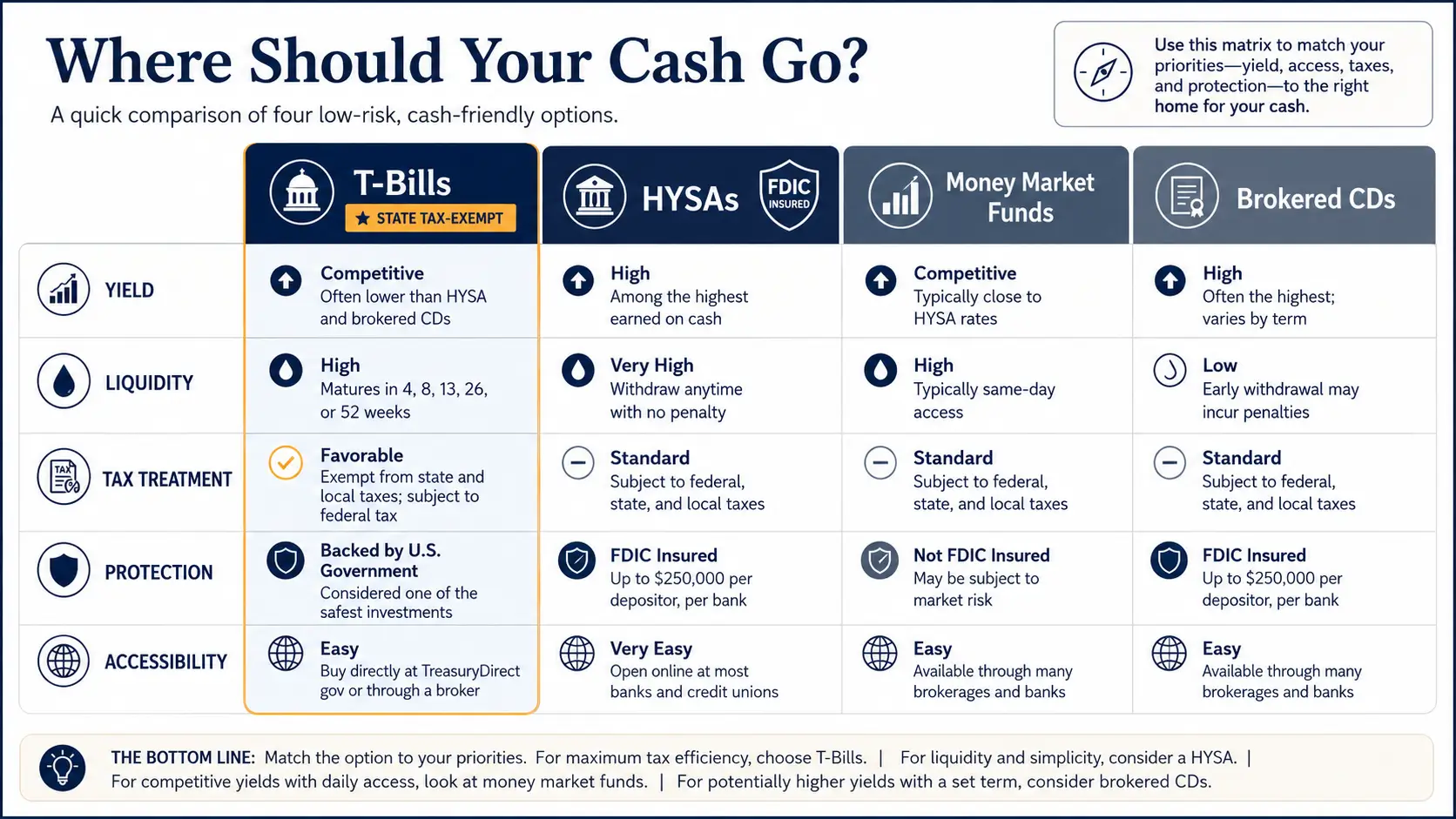
So the framework for most families is simple. Claim the seed when accounts open. If an employer offers matching contributions, take them — tax-excluded money is effectively a raise. Then route additional dollars to a 529 for education or a custodial Roth for a working teen before over-funding the Trump Account. If you may need the cash before your child turns 18, a locked account is the wrong tool, and our guide to where to park cash in 2026 covers liquid alternatives.
What Parents Should Do Now
The clear takeaway: treat the $1,000 seed as a bonus, not a savings strategy. Open the account, capture any employer match, and keep your core education savings in a vehicle with better tax treatment.
Two uncertainties remain worth watching. Trump Accounts will likely be assessed as a student asset on the FAFSA, which can reduce need-based aid more than a parent-owned 529. And the Treasury and IRS are still finalizing enrollment and conversion mechanics through 2026. Before making large contributions, wait for the implementation guidance expected around the July 4, 2026 launch.
Frequently Asked Questions
Who is eligible for the $1,000 Trump Account seed? U.S.-citizen children born between January 1, 2025, and December 31, 2028, with a Social Security number. The Treasury deposits the $1,000 no earlier than July 4, 2026.
Are Trump Account withdrawals tax-free? No. After age 18 the account follows traditional IRA rules, so withdrawals are taxed as ordinary income, with a possible 10% penalty before 59½ unless used for a qualified purpose.
Is a Trump Account better than a 529 plan for college? Usually not. A 529's withdrawals for qualified education are tax-free, while a Trump Account's withdrawals are taxed as ordinary income. Many families use both.
How much can I contribute each year? Up to $5,000 per child per year starting July 4, 2026, including up to $2,500 from an employer. The $1,000 federal seed does not count toward that limit.
Sources and Further Reading
- Trump Accounts Give the Next Generation a Jump Start on Saving — The White House (Council of Economic Advisers) — 08/2025 — https://www.whitehouse.gov/research/2025/08/trump-accounts-give-the-next-generation-a-jump-start-on-saving
- What to Know About the New Trump Accounts for Kids — Vanguard — 01/05/2026 — https://corporate.vanguard.com/content/corporatesite/us/en/corp/articles/what-to-know-about-new-trump-accounts-for-kids.html
- Trump Accounts vs. 529, UTMA/UGMA, and Roth IRAs: Which to Pick to Save for Kids — Fidelity — 04/28/2026 — https://www.fidelity.com/learning-center/personal-finance/trump-accounts-vs-529-utma-ugma-roth-IRA
- Trump Accounts for Kids: Should You Open One for Your Child? — Chase — 04/15/2026 — https://www.chase.com/personal/investments/learning-and-insights/article/trump-accounts-for-kids
- Why Taxable Custodial Accounts Can Beat Trump Accounts for Kids' Savings — Kitces — 02/25/2026 — https://www.kitces.com/blog/taxable-accounts-custodial-kiddie-tax-obbba-trump-accounts-one-big-beautiful-act-roth-rmd-529-plan/