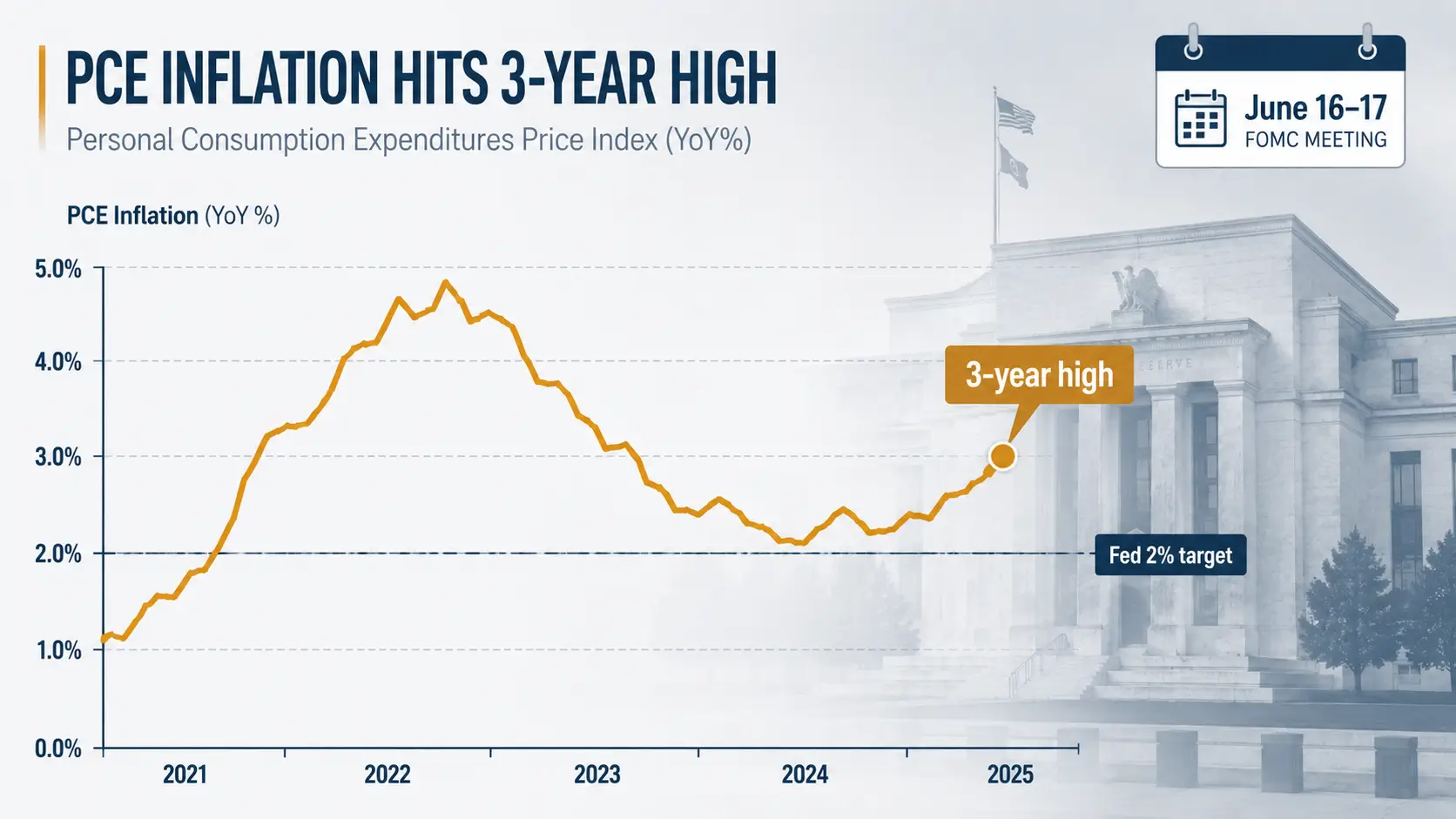
The Fed's preferred inflation gauge hit a three-year high in April — but the details cut both ways. The April PCE inflation 2026 report, released May 28, showed headline prices up 3.8% from a year earlier, the hottest reading since May 2023. Yet the monthly core figure came in softer than expected, handing the Fed a sliver of relief inside an otherwise uncomfortable print.
The net effect does not revive the case for rate cuts. If anything, it confirms the shift markets have already made: the live question is no longer when the Fed eases, but whether new Chair Kevin Warsh has to consider a hike.
What the April PCE Inflation 2026 Print Showed
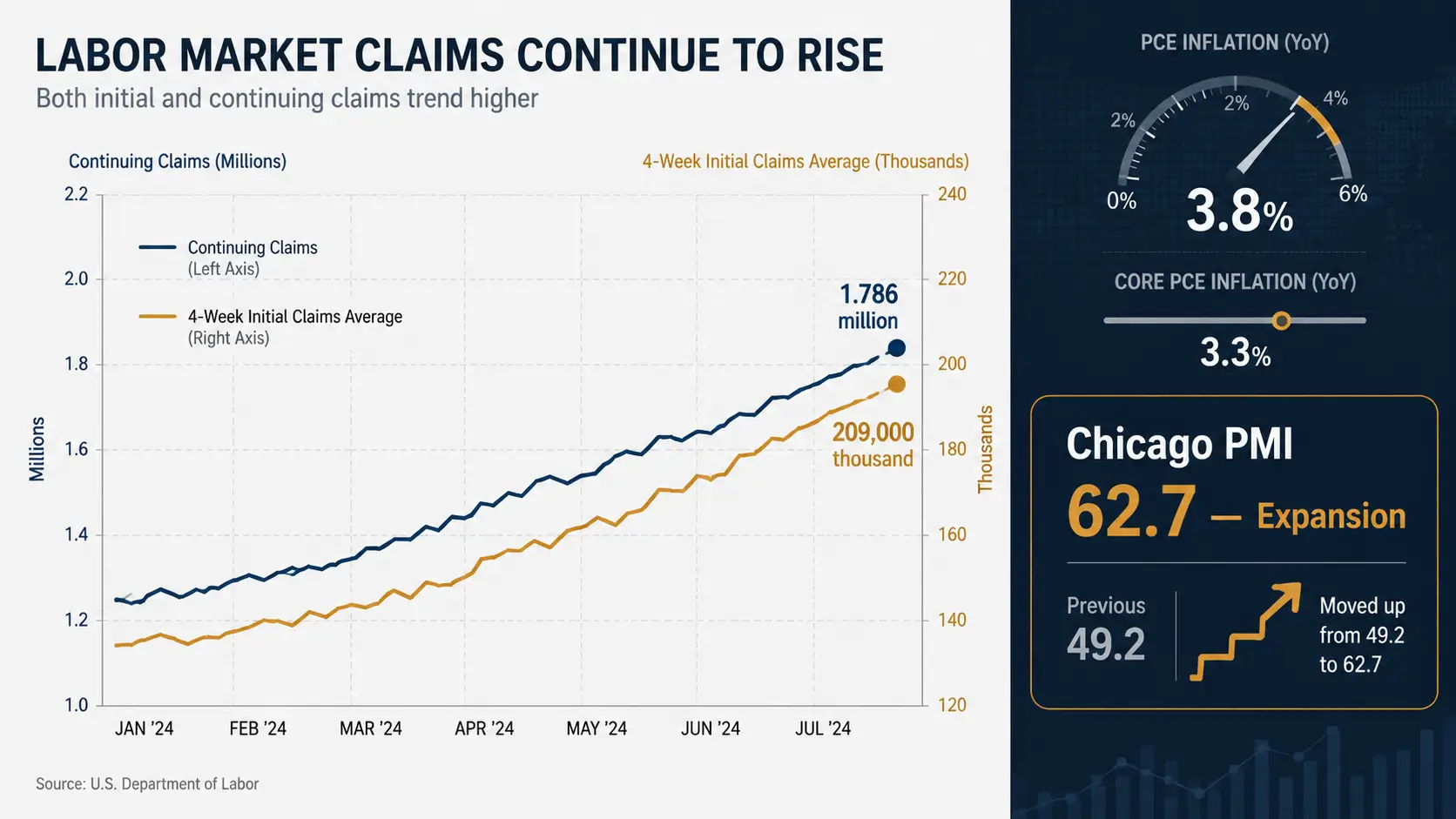
Headline PCE rose 0.4% on the month, below the 0.5% forecast and down from March's 0.7% surge. On an annual basis it accelerated to 3.8% from 3.5%, the highest since May 2023.
Core PCE, the Fed's preferred trend measure, rose just 0.2% for the month — under the 0.3% consensus and a step down from March. But the annual core rate still ticked up to 3.3%, its highest since October 2023.
That split is the story. The monthly softness suggests April's price burst may be cresting, while the annual figures show inflation drifting further from the 2% target, not toward it.
Why the Fed's Hold Just Got Firmer
Markets read the print as confirmation, not a turning point. Traders expect the Fed to stay on hold until at least late 2026 and now price the central bank's next move as a rate increase, possibly in early 2027 — not a cut.
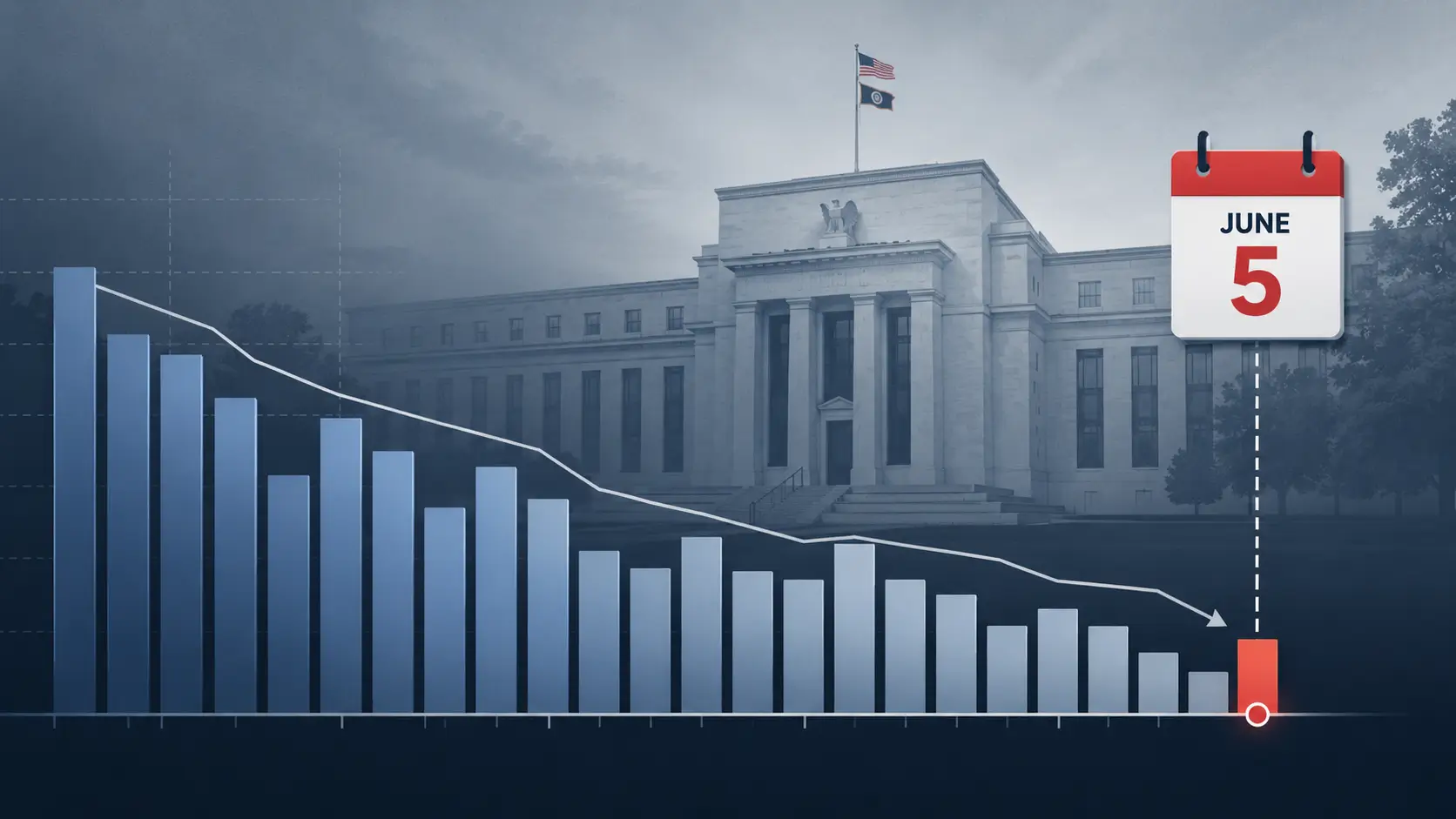
That leaves the June 16–17 meeting, Warsh's first as chair, as a hold with a hawkish lean rather than a live easing decision. Anyone still positioned for 2026 cuts is fighting both the data and the new chair, a tension worth weighing against our investor guide to whether the Fed cuts in 2026.
A second report sharpened the discomfort: first-quarter GDP was revised down to a 1.6% annualized pace from 2%. Slower growth alongside sticky inflation is the combination policymakers least want to manage.
The Consumer Held Up — and Housing Didn't Cool
Demand is not the brake here. Consumer spending rose 0.5% in April, with Americans absorbing higher costs for gas and essentials rather than pulling back. A consumer who keeps spending gives the Fed little reason to rush relief.
The energy shock from the conflict with Iran drove much of the headline jump, but the worry sits deeper in the basket. Housing prices climbed 0.5% on the month, the biggest gain since at least January 2025 — a sign the stickiest component is reaccelerating.
The lone soft spot was super-core services, the prices excluding food, energy, and housing, which rose only 0.2%. That is the thread the doves will pull, and the one the Fed will watch most closely into summer.
What Comes Next
The print sets the table; Warsh decides what's served on June 17, when his first dot plot and press conference arrive. A soft monthly core buys time, but a 3.8% headline and a reaccelerating housing line give the hawks the louder argument.
The risk for markets is duration and rate-sensitive growth equities if Warsh signals the bar for cuts has risen further. For how the committee's internal split is already shaping that call, see the three signals from the May FOMC minutes.
FAQ
What did the April PCE inflation 2026 report show? Headline PCE rose 0.4% in April and 3.8% from a year earlier, the highest annual rate since May 2023. Core PCE rose 0.2% for the month and 3.3% over the year.
Why did core come in soft if headline hit a three-year high? Energy and gasoline, lifted by the Iran conflict, drove most of the headline gain. Core monthly inflation eased to 0.2% on softer super-core services, even as housing prices jumped 0.5% and the annual core rate edged up to 3.3%.
Will the Fed cut rates at the June 2026 meeting? It's highly unlikely. Markets expect the Fed to hold its 3.50%–3.75% range at the June 16–17 meeting and now price its next move as a rate hike, possibly in early 2027, rather than a cut.
What is core PCE and why does the Fed care? Core PCE strips out food and energy to reveal the underlying inflation trend. It is the Fed's preferred gauge for setting policy because it is less volatile than headline measures.
Sources and Further Reading
- War-driven price shock sent April inflation to highest level in nearly three years — CNN Business — 05/28/2026 — https://www.cnn.com/2026/05/28/economy/us-pce-inflation-april
- Core inflation hit an annual rate of 3.3% in April, as expected, Fed's preferred gauge shows — CNBC — 05/28/2026 — https://www.cnbc.com/2026/05/28/core-inflation-hit-an-annual-rate-of-3point3percent-in-april-as-expected-feds-preferred-gauge-shows-.html
- Fed's Favorite Inflation Gauge Hits 3.8%, Highest Since May 2023 — Benzinga — 05/28/2026 — https://www.benzinga.com/markets/macro-economic-events/26/05/52835775/us-pce-inflation-report-april-2026