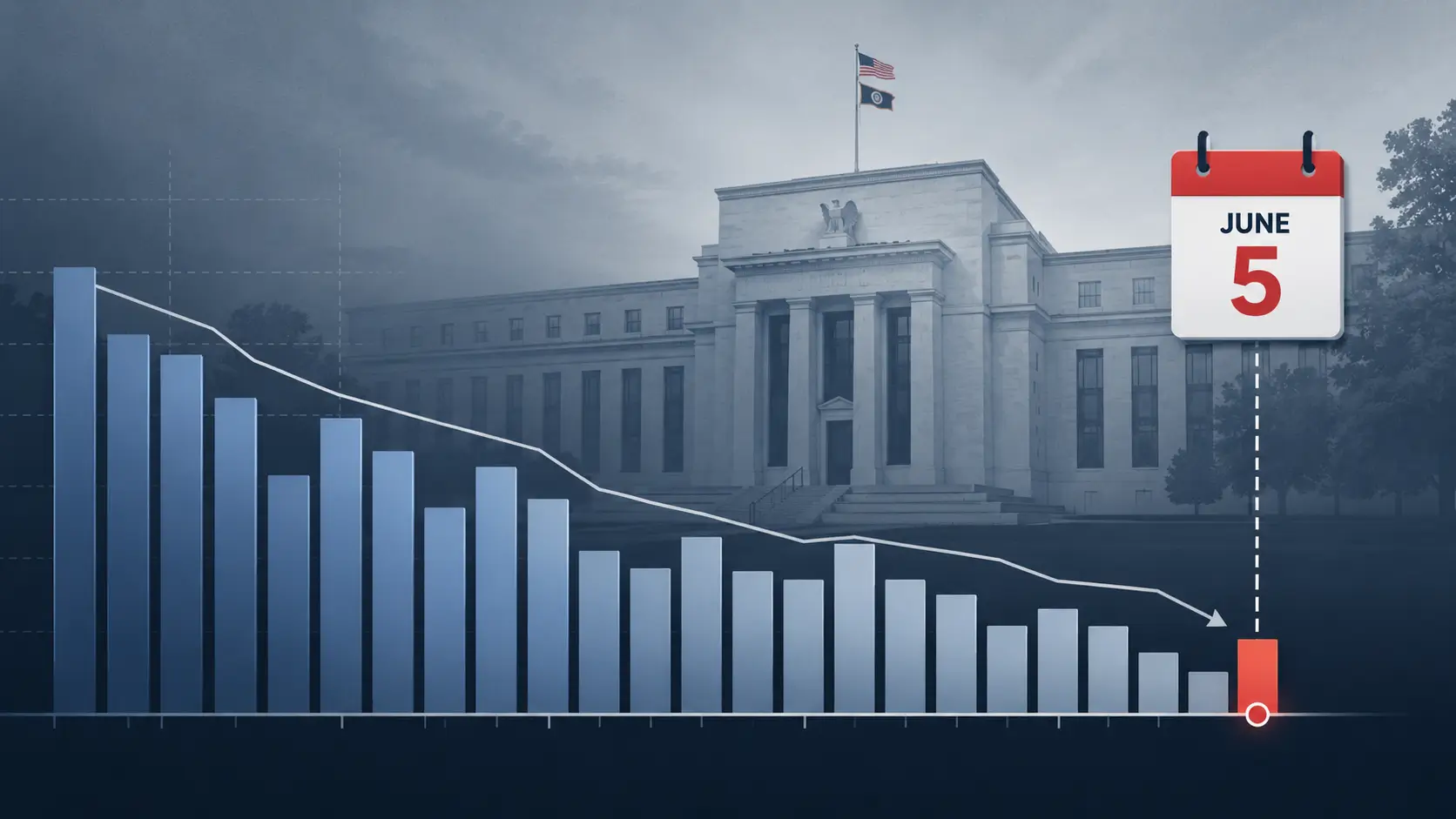
One payroll report now stands between markets and the Fed's first dot plot under Kevin Warsh. The May jobs report 2026 lands Friday, June 5, at 8:30 a.m. ET — eleven days before the June 16–17 policy meeting and the new chair's debut economic projections.
That timing makes this the last clean labor read the Federal Open Market Committee sees before it sets a fresh rate path. And the setup is tense: with inflation reaccelerating, futures price almost no chance of a June cut, and a small but rising probability of a hike later in 2026.
Why the May Jobs Report 2026 Is the Fed's Last Clean Read
The labor market is cooling slowly, not collapsing. Employers added 115,000 jobs in April, reported May 8 — the first back-to-back monthly gain in nearly a year. The unemployment rate held at 4.3%, and average hourly earnings rose 3.6% from a year earlier.
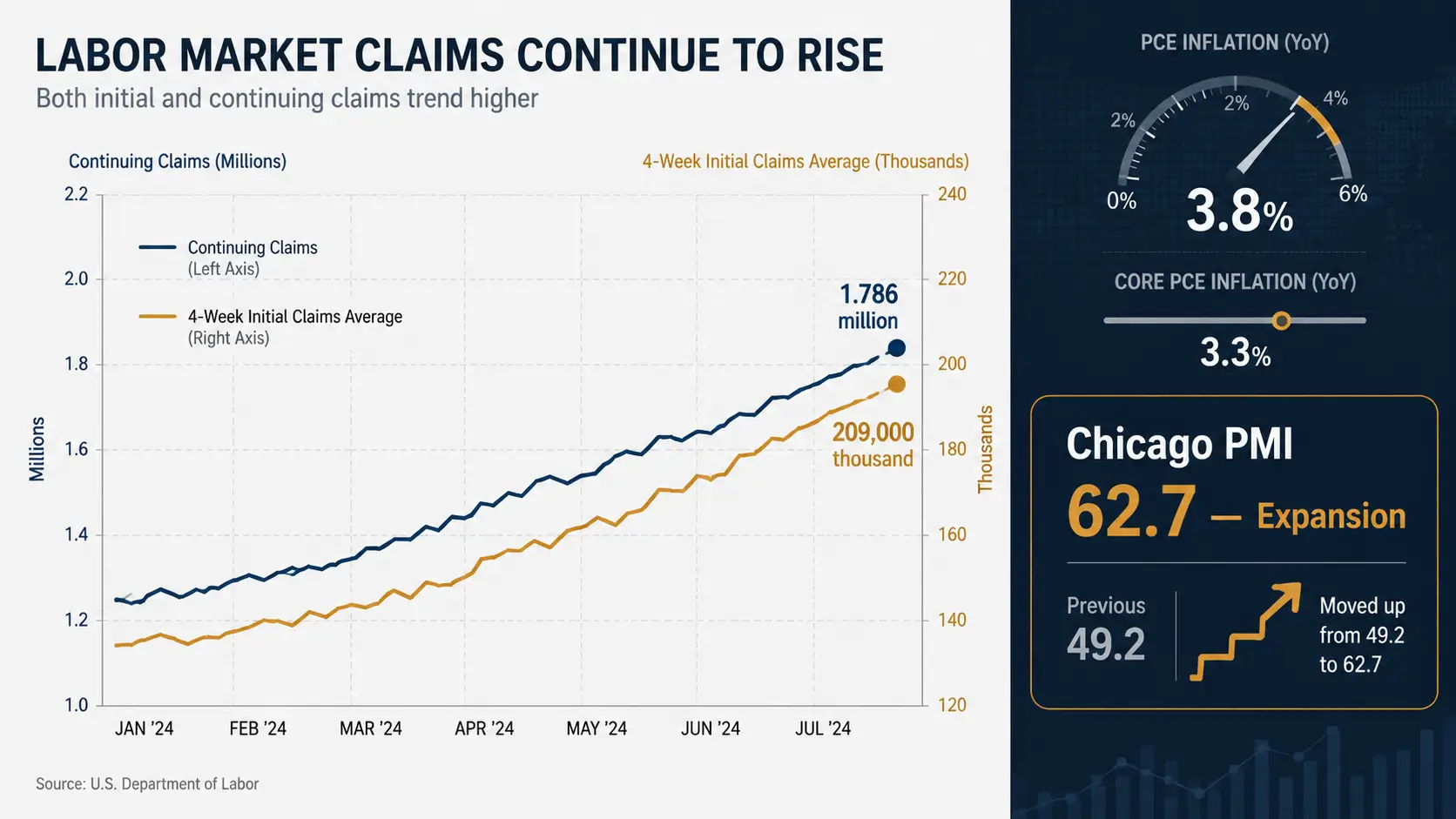
Revisions told a mixed story. March was revised up to 185,000, while February was cut to -156,000. Weekly jobless claims have stayed low, which is why initial claims keep testing the soft-landing thesis week after week — a dynamic worth watching in the latest jobless claims and PMI data.
The May CPI report, due June 10, falls between the jobs report and the meeting. But payrolls move rate expectations more sharply, and this is the last one the committee gets before the dots print.
What a Hot Print Does to the Rate Path
A strong number — job gains back above 150,000 with firm wages — would harden the case for a hold. The Fed has already kept its benchmark at 3.50%–3.75% for three straight meetings.
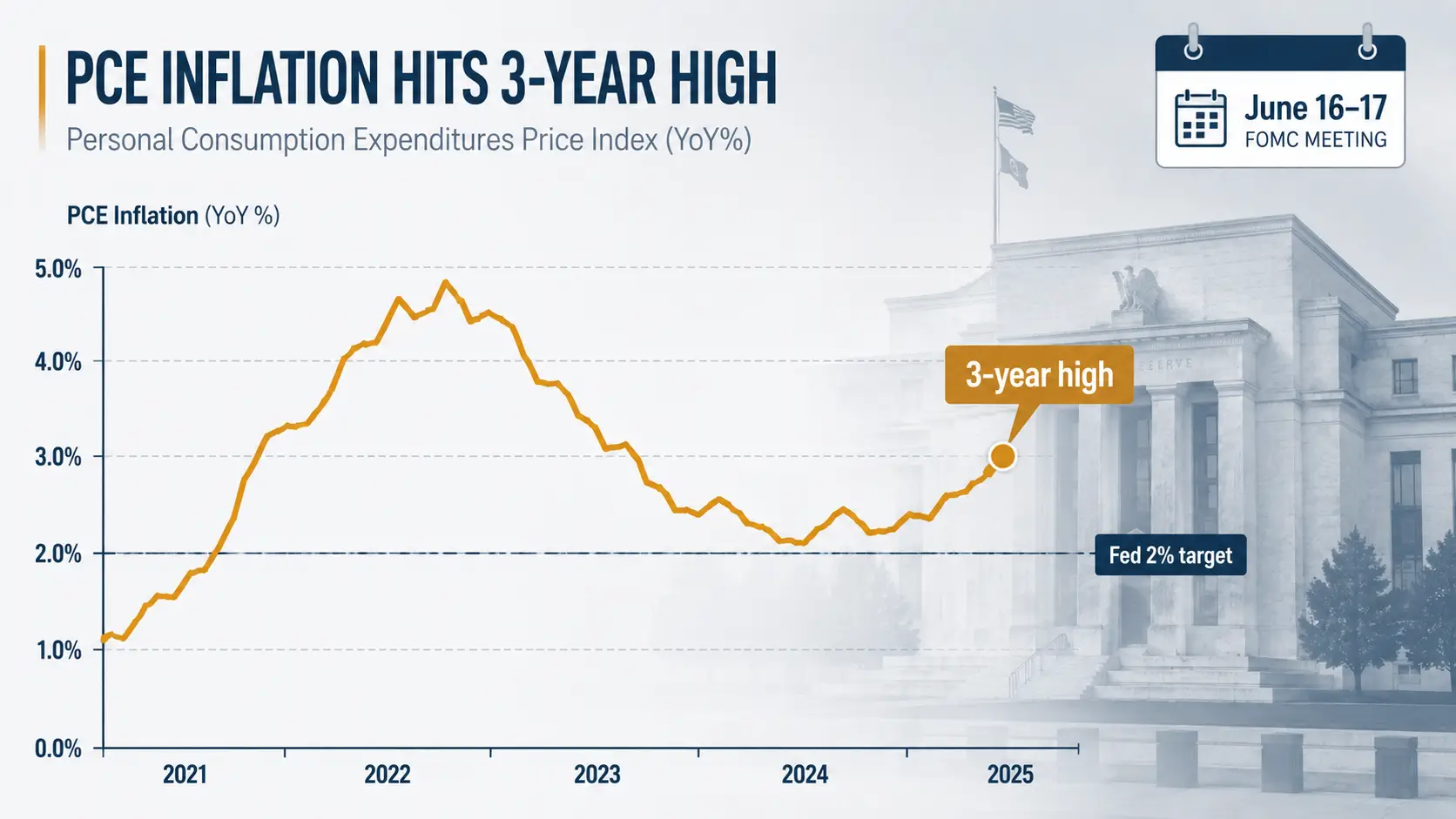
April CPI hit 3.8% year over year, the highest since May 2023, driven partly by energy prices. A hot jobs report stacked on hot inflation would give Warsh cover to signal no cuts in 2026 — and keep alive the slim hike risk markets are now pricing.
For investors, that scenario pressures rate-sensitive assets hardest: long-duration bonds, growth equities, and anything tied to mortgage rates. It also tends to strengthen the dollar and cap rallies in gold.
What a Soft Print Changes
A weak report flips the conversation fast. A sharp drop in payrolls, or unemployment ticking above 4.3%, would revive the argument that hiring is finally cracking rather than merely cooling.
That alone would not force a June move — markets put the odds of a hold near 97%. But it would pressure the dot plot to pencil in cuts later in the year and hand the doves on a divided committee fresh leverage. April's meeting produced four dissents, the most since 1992, so the internal split is real.
The catch for anyone positioning on this outcome: one soft month rarely turns the Fed when inflation still sits near 4%. The committee has shown it will look through a single print.
What to Watch on June 17
Warsh, sworn in May 22 as the 17th Fed chair, releases his first Summary of Economic Projections on June 17. The dot plot — and his first press conference — will signal whether the committee still sees cuts in 2026 or a longer hold.
The May jobs report won't decide that alone. But a hot or soft print is the last data point that can nudge the dots before they're locked, and traders will read it against the three signals from the May FOMC minutes for how unified Warsh's committee really is.
Watch the open on June 5: the move in short-dated Treasury yields will tell you within minutes which scenario the market thinks just landed.
When is the May jobs report 2026 released? Friday, June 5, 2026, at 8:30 a.m. ET, from the Bureau of Labor Statistics. It is the last major labor reading before the June 16–17 FOMC meeting.
Will the Fed cut rates at the June 2026 meeting? Markets see it as unlikely — futures price roughly a 97% chance the Fed holds at 3.50%–3.75%. The bigger question is what the dot plot signals for the rest of 2026.
Why does this jobs report matter so much? It is the final labor data the FOMC sees before releasing new projections under new chair Kevin Warsh. A hot or soft print can shift where the committee places its rate-path dots.
What did the last jobs report show? April payrolls rose 115,000, reported May 8, 2026, with unemployment steady at 4.3%. It marked the first back-to-back monthly gain in nearly a year.
Sources and Further Reading
- Jobs report April 2026 — CNBC — 05/08/2026 — https://www.cnbc.com/2026/05/08/jobs-report-april-2026.html
- Key dates that will define Kevin Warsh's opening months as Fed chair — Mortgage Professional America — 05/24/2026 — https://www.mpamag.com/us/mortgage-industry/industry-trends/key-dates-that-will-define-kevin-warshs-opening-months-as-fed-chair/576298
- What to Expect From Kevin Warsh's Fed in the First 100 Days — Council on Foreign Relations — 05/26/2026 — https://www.cfr.org/articles/what-to-expect-from-kevin-warshs-fed-in-the-first-100-days